

If you have wondered about visiting that great museum in Copenhagen, the Ny Carlsberg Glyptotek, then go now. It will soon be closing for renovation for at least three years (and at my age that can mean for ever). For those in search of modern art, it includes a great nineteenth- and twentieth-century European collection. But I have always gone there for the Romans and Greeks. And more than twenty years ago I was part of a team that showed the highlights of the Glyptotek in London (during another of its temporary periods of closure).
You might not think of Copenhagen as the home of a stunning Roman collection, but it is – put together in the late nineteenth century, one of the glory days of archaeological discovery in Rome. It was the period when the new capital city of Italy was quickly expanding and all kinds of “new” finds (sculpture most spectacularly) were uncovered, as the deep foundations for the new administrative buildings were being dug. The main agent in assembling the collection that became the nucleus of the Ny Carlsberg Glyptotek was Wolfgang Helbig, an archaeologist and dealer, who lived in Rome and worked on behalf of Carl Jacobsen (collector and mastermind of the Carlsberg Brewery business).
Dealing in antiquities often runs close to the legal limits. And there have been some allegations against Helbig, notably for his role in the discovery of (and possibly forgery of) the so-called “Praeneste Fibula”. (That’s an inscribed Italic brooch, made in the seventh century BCE or in the nineteenth century CE, depending on your point of view.) But many certainly genuine pieces unearthed in Rome in the late 1800s were legitimately sold to collectors abroad and Helbig was on the spot to buy some of the best for Jacobsen. Hence the stunning collection in Copenhagen.
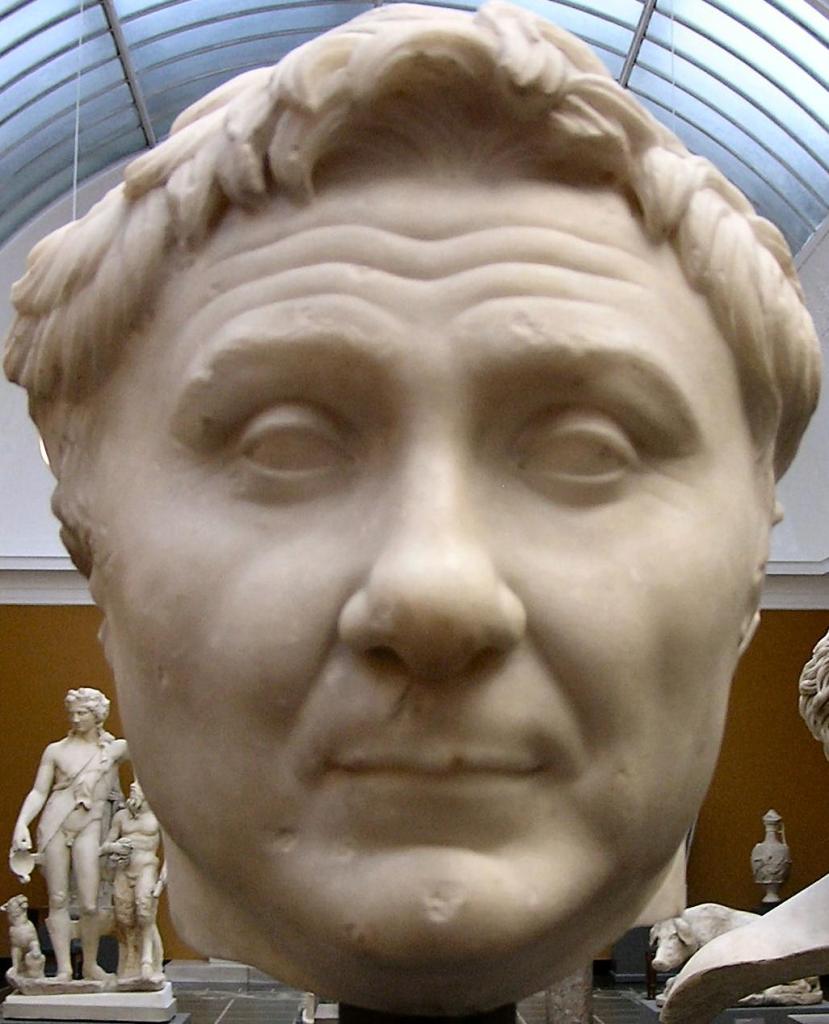
So, if you are going to Copenhagen for the ancient sculpture, there are three things I wouldn’t miss. First is a Roman portrait that alone is worth travelling a few hundred miles for! It is the “Ny Carlsberg Pompey”, a stunning first-century CE version of the head of Pompey the Great, the main adversary of Julius Caesar. This is the head you almost always see when an illustration of Pompey is wanted. It depicts him with the distinctive quiff of the hair, which Pompey had borrowed from earlier statues of Alexander the Great (nicely underlining the title – “the Great” – that he had also borrowed from Alexander).
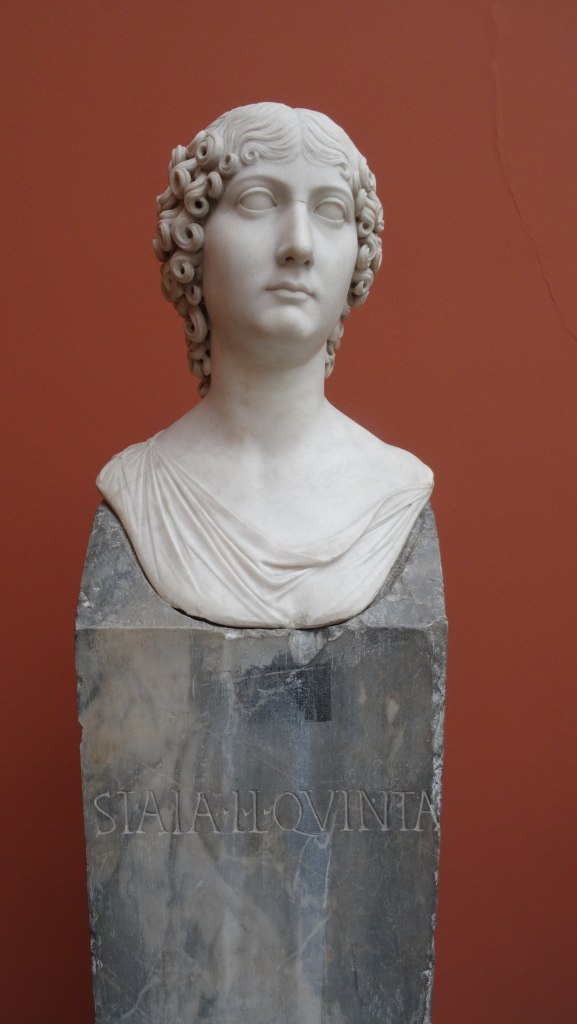
Less famous is an almost equally stunning group of portraits, not from Rome itself, but from the nearby sanctuary-site at Nemi, probably dedications to the site’s patron goddess Diana. The most interesting ones are from outside the traditional elite of emperors, senators and generals. There is a wonderful full-length statue of an actor, Fundilius Doctus, and a beautiful head of an ex-slave, called Staia Quinta. These people must have been rich. You don’t get portraits of this quality on the cheap. But they are from outside the elite group that generally dominate the sculptural record. (You don’t have to go to Copenhagen to find some of this group from Nemi. In Nottingham Castle Museum there is a portrait of the lady Fundilia Rufa, put up by the actor Fundilius (an ex-slave himself) to the woman who had once owned him – though I am not certain that she is currently on show.)
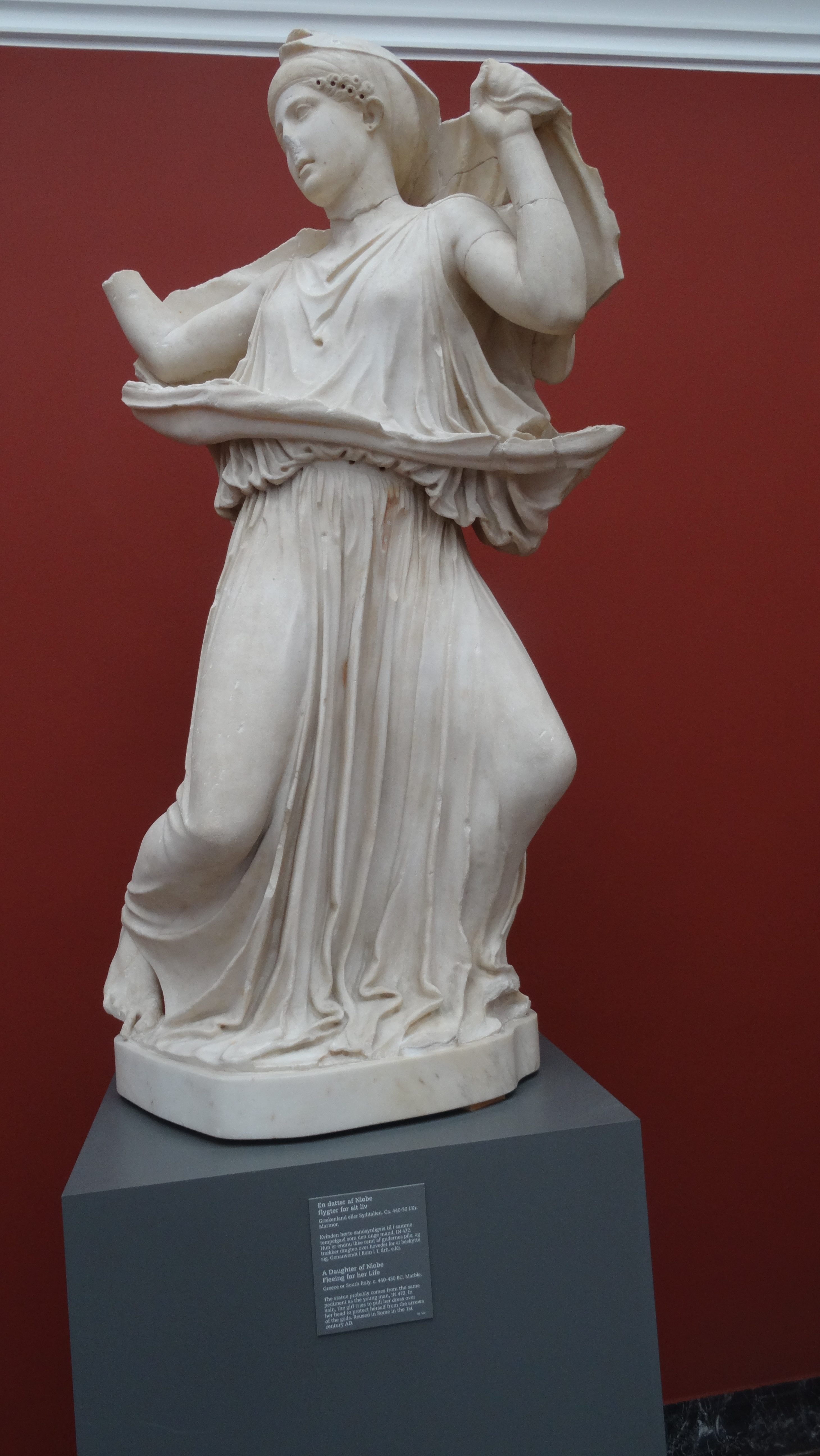
My third choice would be two fifth-century-BCE statues of fleeing, or dying, Niobids. They were the sons and daughters of Niobe who recklessly boasted that she had had more children than Leto, the mother of Artemis and Apollo – and there are no prizes for guessing that the Niobids didn’t last much longer. These sculptures started out as the decoration of a temple somewhere in Greece, but they were at some point brought to Rome (looted, given or purchased – who knows?). They adorned the “Gardens of Sallust” there (eventually part of the emperor’s estate) and were excavated in the late nineteenth century. They are a classic example of statues on the move, from Greece to Rome, to Denmark.
There are plenty more marvellous exhibits at the Ny Carlsberg, but on the principle of “less is more” I would take a break after those three and spend some time lounging in another great sight of the museum – a fantastic Winter Garden, full of palms and other very un-Danish plants and trees. It was there I ended up last week, glass of wine in hand, after giving a lecture, among the sculptures, on the appropriate theme of controversies over museums.
The post The Romans in Copenhagen appeared first on TLS.