

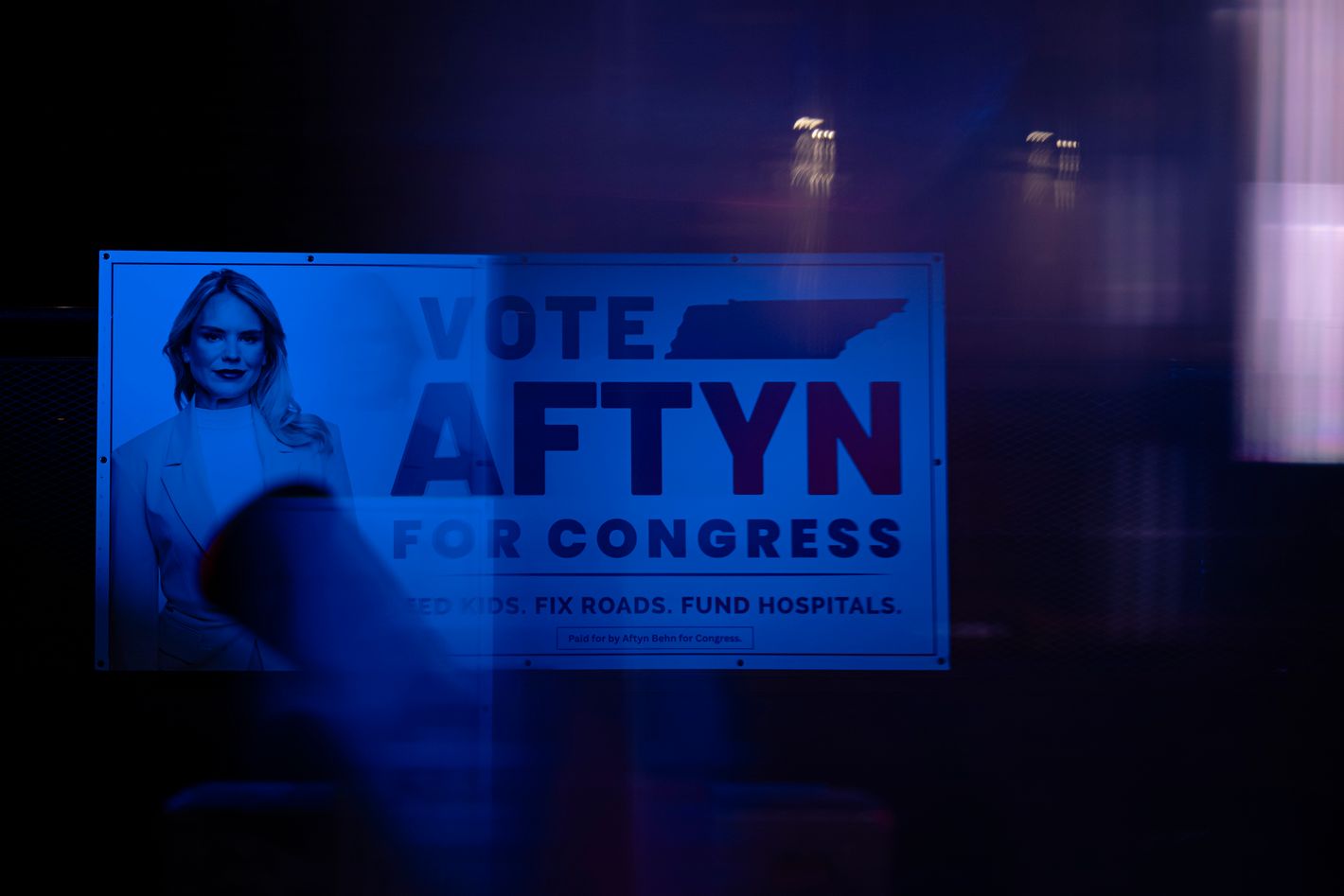
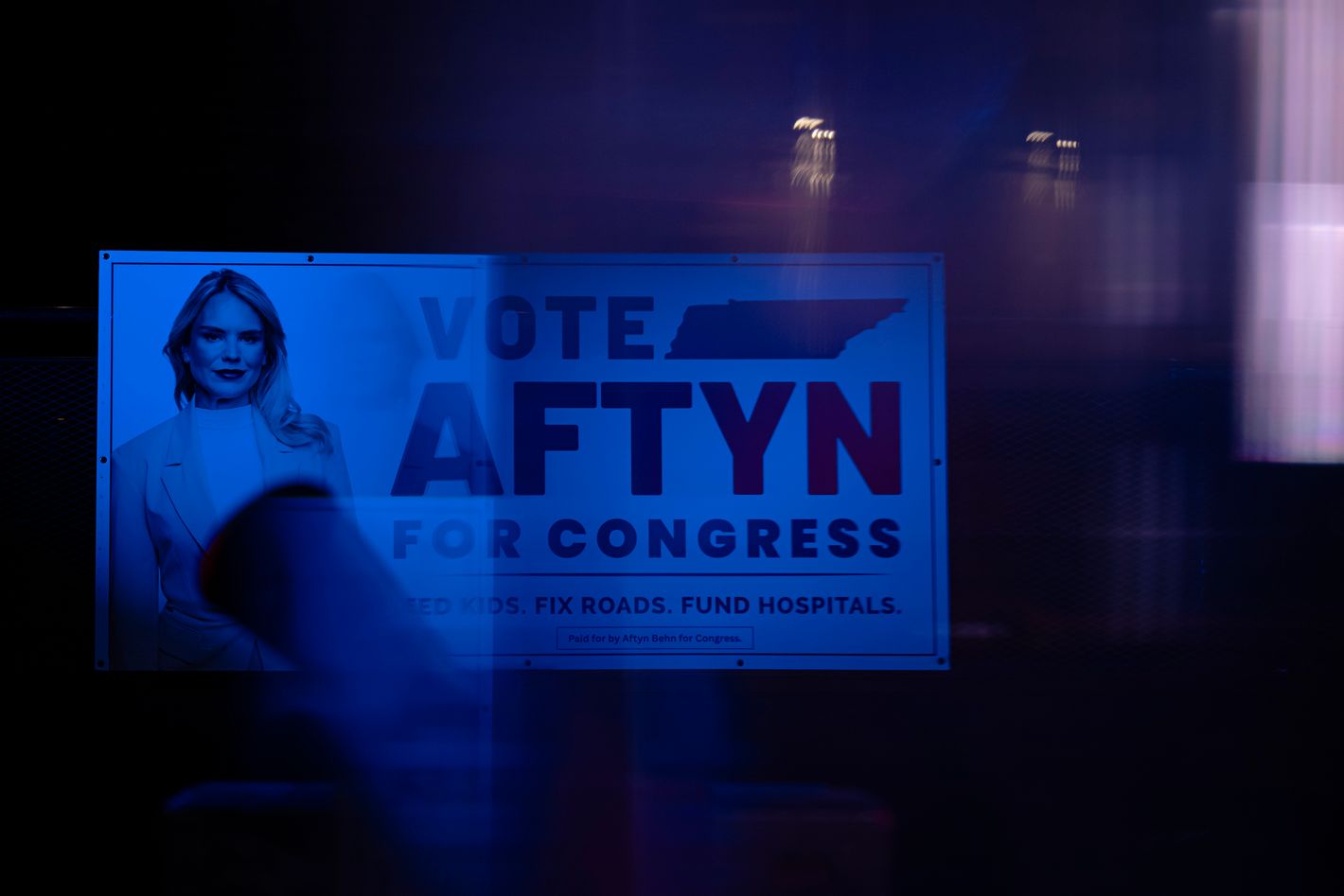
In a another sign of a Democratic comeback after the party’s wretched 2024 performance, a left-bent special-election candidate in a deep-red Tennessee congressional district threw a scare into the GOP and likely expanded next year’s midterm playing field. Democratic state legislator Aftyn Behn lost to Republican newcomer Matt Van Epps in the Seventh Congressional District election to replace recently resigned GOP incumbent Mark Green in the House but made it a close race, losing by just under 8 percent in late returns. Kamala Harris lost to Donald Trump in this district by 22 percent in 2024.
This wasn’t an out-of-nowhere upset bid. Polls showed a close race all along in a polyglot district that runs from Kentucky to Alabama and includes a chunk of Nashville. To defend this GOP stronghold, Republicans and their MAGA allies spent heavily on ads pounding Behn as a radical supporter of transgender rights and disparager of the police and of (gasp!) country music. Speaker Mike Johnson campaigned with Van Epps, and Donald Trump called into a couple of rallies for the candidate.
Democrats heavily backed Behn financially. What distinguished this progressive activist from the usual red-district Democrat is that she didn’t have the usual protective coloration of cultural traditionalism or ideological moderation. She campaigned in this southern-fried district with AOC and DNC chairman Ken Martin, and Kamala Harris made her first post-2024 campaign appearance at a GOTV event aimed at helping the candidate. Even Al Gore pitched in. But reputation aside, Behn ran on the same affordability themes that progressives and centrists alike have been embracing in yet another trial heat for the 2026 midterms. She probably benefited somewhat from frigid Election Day weather; Democrats were more likely than Republicans to vote early. Overall turnout was exceptionally high for an off-year special election.
Behn’s performance was in line with 2025 trends, as explained by Cook Political Report’s Erin Covey:
In special elections this year, Democratic candidates have benefitted from a significant enthusiasm advantage, outperforming Kamala Harris’ 2024 showing by an average of 13 points, per data compiled by The Downballot. In the four U.S. House special elections. Democrats ran ahead of Harris by a larger 18-point margin on average.
It’s too early to say this trend guarantees a significant midterm Democratic wave, but there’s a steady breeze blowing in that direction so far. Trump can be expected to redouble his efforts to rig the midterms via gerrymanders. The outcome is too important to his legacy to be left to voters.