Yesteryear

Joy Harmon (19 Years Old) Being Crowned the “NYC Donut Queen” in 1957 by USO

Joy Harmon (19 Years Old) Being Crowned the “NYC Donut Queen” in 1957 by USO

Joy Harmon, who was just 19 years old at the time, was crowned the “NYC Donut Queen” at the 1957 USO. She’s better known as the blonde in the car wash scene in the 1967 movie Cool Hand Luke.

She was credited simply as “The Girl,” but anyone who ever saw Cool Hand Luke knows her as “Lucille.” Harmon was the 27-year-old actress who tantalized a chain-gang of sweaty convicts in the Paul Newman classic in 1967. In just over 3 minutes of screen time, she left her mark on the film, the 196os, and pop culture at large: the car wash scene in Cool Hand Luke consistently ranks among the most iconic in cinema.
“I was just washing a car to my best ability and having fun with it, with the sponge and everything,” said Harmon. “My concept of the [scene] was not like what came out. I was not aware that there were two meanings to things that I was doing, and I’m still not really that much aware of what they all were.”
Joy Harmon—who had debuted on Broadway in 1958’s Make a Million and then partnered with Groucho Marx on his early 1960s TV show—said she scored the role after Newman marveled at the blueness of her eyes during the audition process. But once she arrived in Stockton, California, to film the scene, Harmon began to have second thoughts. The producers suggested the shoot would be better if Harmon smoked marijuana beforehand in order to act more uninhibited for the camera. “I don’t do that; I never have done that,” Harmon said in the interview in 2017. “I was so upset, and I called my dad and he said, ‘You just come on home. Don’t do the movie.’ I told Mr. Rosenberg I was going home and then they came to the room, and he brought me flowers and chocolate. He said, ‘Don’t worry about it. We’re not doing marijuana; you don’t need it.’ And it worked out fine.”
Most of the credit for the sequence goes to Harmon, who displays the perfect combination of sexual power and mischievousness. But director Stuart Rosenberg clearly was trying to milk the scene for titillating effect—so much so that he had kept wives and girlfriend away from the set for weeks and then surprised the men with Harmon’s appearance so as to capture their genuine reactions. When she emerges from the dilapidated country house, turns on the portable radio and the hose, and goes to work washing the car, Rosenberg pointed the cameras at the men, watching her from a distance. They didn’t require instruction on how to act. “The only one that I talked to was Stuart Rosenberg and the photographer,” Harmon added. “He just worked it like—‘Now, get the sponge, and squeeze it, and wash the car’ and so forth. I just followed [his instruction]. The shots were all like kind of broken up, you know, how he wanted me to do it. It was easy. It was so easy.”
Harmon realized that she’d made an impression after the film came out. In 1968, she married film editor Jeff Gourson, and their Las Vegas honeymoon was comped and their hotel introduced her at shows as “The Girl From Cool Hand Luke.” But she didn’t chase fame, and she eventually left acting to raise her three children. “I was never one who said, ‘Oh, I’ve got to be a big star,’” Harmon said. “I just took whatever came to me. It got to be the point where I would just get calls—I didn’t have to go in and read for it—go in for wardrobe and do scenes in all those TV shows that were out at that time. It was simple and easy and fun.”

See more »

read more
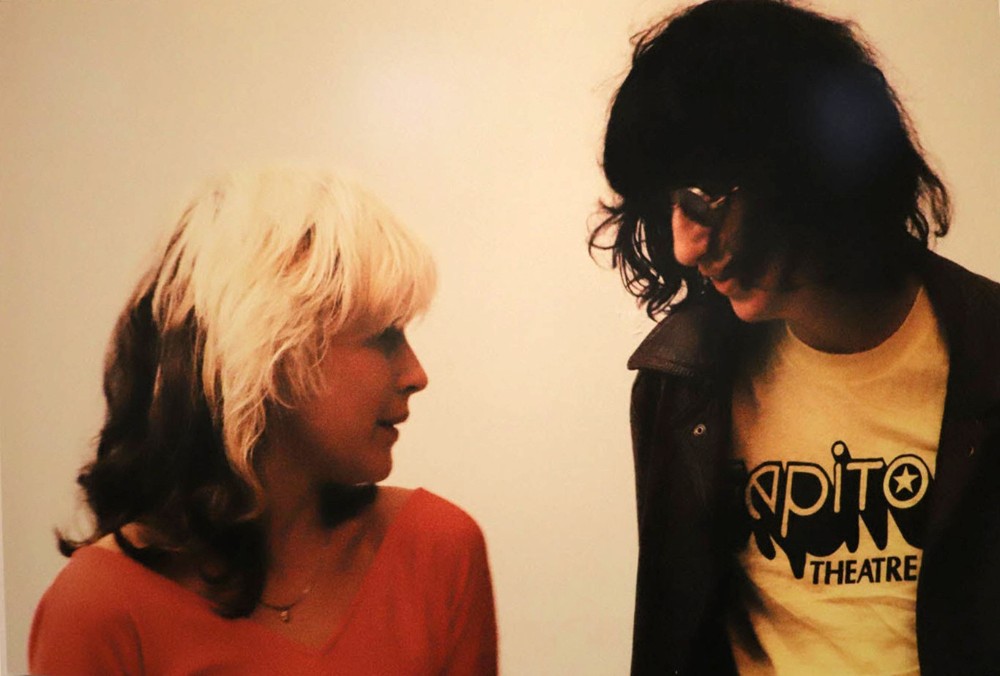
25 Photographs of Joey Ramone and Debbie Harry Together in the 1970s and 1980s

25 Photographs of Joey Ramone and Debbie Harry Together in the 1970s and 1980s

Joey Ramone, the iconic frontman of the Ramones, and Debbie Harry, the celebrated lead singer of Blondie, were two of the most prominent figures in the New York City punk and new wave scene of the 1970s. They were close friends and colleagues who emerged from the same vibrant musical landscape centered around clubs like CBGB.

Their relationship was primarily one of friendship and mutual respect within the burgeoning punk scene. They often played at the same venues and were part of the same community of artists. There are several well-known photographs of them together, including one taken by Blondie’s Chris Stein in 1977 that was used for a photo montage in Punk magazine titled “Mutant Monster Beach Party.”
Both artists were highly influential in shaping the sound and image of punk and new wave. Joey Ramone’s distinctive vocal style and the Ramones’ fast, raw, and melodic punk rock were hugely impactful. Debbie Harry, with her powerful vocals, striking stage presence, and Blondie’s innovative blend of punk, pop, disco, and reggae, also left an indelible mark on music. Their respective bands helped define an era and influenced countless musicians who followed.

See more »

read more
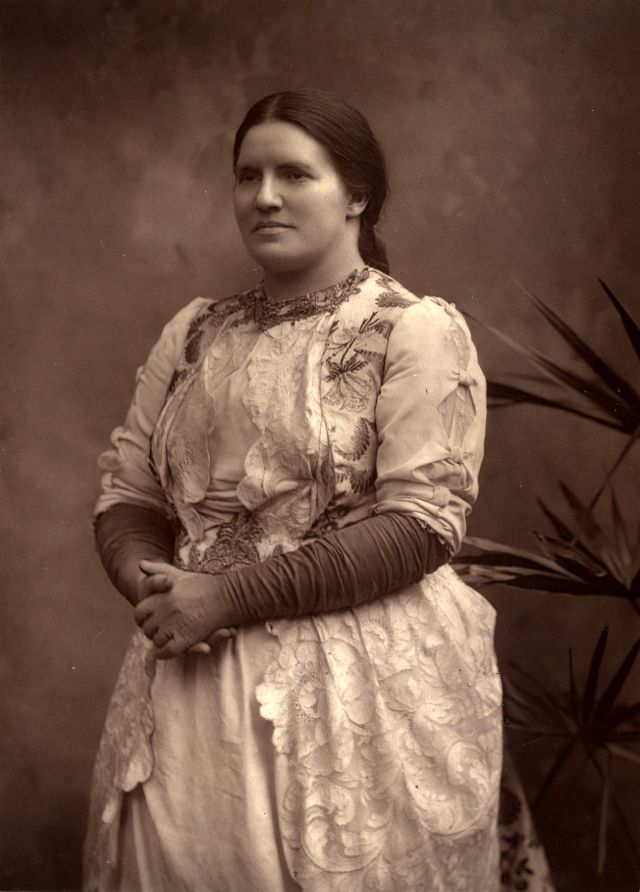
Herbert Rose Barraud’s Stunning Portraits From ‘Men and Women of the Day’ (1888-89)

Herbert Rose Barraud’s Stunning Portraits From ‘Men and Women of the Day’ (1888-89)

Herbert Rose Barraud (1845–1896) was a prominent British portrait photographer who had studios in London and Liverpool. He produced cabinet photos of many famous Victorian statesmen, artists, and members of the aristocracy, many of which were published in his two-volume work, Men and Women of the Day (1888-89).

Most of Barraud’s images were woodburytypes, then a newly developed process which lent itself admirably to portraiture, being able to render middle tones accurately. His studios were at 96 Gloucester Place, Portman Square in 1883; at 263 Oxford Street (“A few doors west of ‘The Circus’”) between 1883 and 1891; at 73 Piccadilly from 1893 to 1896; and at 126 Piccadilly in 1897. Another studio was located at 92 Bold Street, Liverpool.
Below is a selection of stunning portraits from Men and Women of the Day (1888-89) by Herbert Rose Barraud.
Ellen Wallis, 1888

Antoinette Sterling, 1888

Ellen Terry, 1888

Helen Mathers, 1888

Lady Randolph Churchill, 1888

See more »

read more
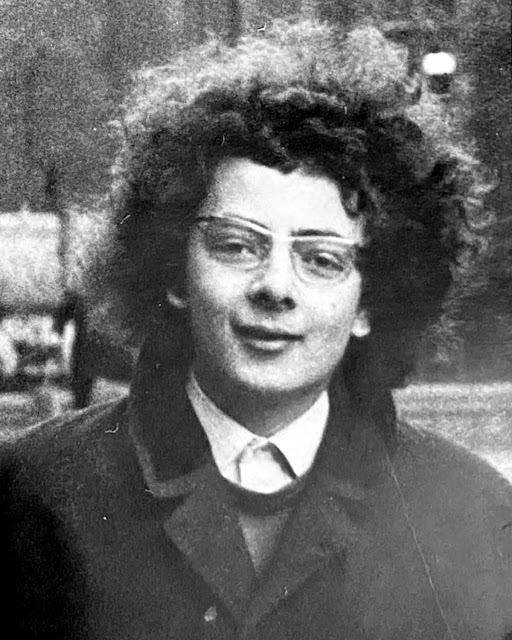
Portrait of 17-Year-Old Rowan Atkinson, Electrical Engineering at Newcastle University, 1972

Portrait of 17-Year-Old Rowan Atkinson, Electrical Engineering at Newcastle University, 1972

Long before he became the face of global comedy, this quiet young man was deeply immersed in circuits, formulas, and the world of electrical engineering.

Captured here in 1972, a young Rowan Atkinson was pursuing his undergraduate studies at Newcastle University. Bright-eyed and sharply dressed, no one could’ve guessed that this soft-spoken student would one day become “Mr. Bean” — a character without words who made the whole world laugh.
17-year-old Rowan Atkinson, electrical engineering student at Newcastle University, 1972.

Rowan was in his first year of university here, having just graduated from the public school St. Bees, where he’d had quite the reputation as a highly intelligent student (especially in science and maths), but also an unruly and rebellious troublemaker. One fellow student remembered him as “the one who is always kept behind after lessons and gets his revenge by writing scurrilous verse in Latin about the master who kept him in.” 
But he could also often be found tinkering with equipment on campus, as he had a great passion for fixing things, and he became a valued member of the school choir and even served as choir secretary. Most notably, though, he had a great talent for the stage, and his performances in school plays left a lasting impression on teachers and peers alike, even prompting his headmaster to tell him, “I have never recommended to anyone that they should take up a career in the entertainment industry, but it would seem silly for you, Atkinson, not at least to try.”
But Rowan, who adored all things electrical and mechanical, put aside his gift for performance for awhile. He followed in the footsteps of his two older brothers and went to Newcastle University, pursuing his passion for engineering. He recalled that he kept to himself and “worked very hard” there, and he was nearly at the top of his class upon earning his undergraduate degree at only 20 years old.
20-year-old Rowan Atkinson, electrical engineering student, pictured tinkering away in his last year at Newcastle University, 1975.

He would next go on to Oxford to do research, and it was there he would discover that he wanted to seriously embrace and pursue a career in comedy and performance. Lucky for all of us!
The info and quotes are from the Rowan Atkinson biography by Bruce Dessau, and Rowan’s Desert Island Discs episode from 1988. (via rowanatkinsonlibrary)
read more
Life in Atlantic City During the Late 1910s and ’20s Through Fascinating Photos

Life in Atlantic City During the Late 1910s and ’20s Through Fascinating Photos

In the late 1910s and 1920s, Atlantic City was alive with energy, drawing crowds from nearby cities who came seeking sun, entertainment, and escape. The Boardwalk was the city’s centerpiece — lined with candy shops, photo studios, and music pavilions — where people dressed in their finest strolled beside the sea.

Men wore straw boaters and linen suits; women embraced the latest flapper styles and dared to show more skin in modern bathing suits. Families posed for seaside portraits, children rode carousels, and couples danced to jazz on the Steel Pier. It was a moment of freedom and fun, as Americans embraced new fashions, looser social norms, and the simple joy of a summer at the shore.
Take a look at these fascinating photos to see what life was like in Atlantic City during the late 1910s and 1920s.

See more »

read more
40 Amazing Studio Portraits of a Young Tom Hanks in the 1980s

40 Amazing Studio Portraits of a Young Tom Hanks in the 1980s

Tom Hanks (born July 9, 1956) is an American actor and filmmaker. Known for both his comedic and dramatic roles, he is one of the most popular and recognizable film stars worldwide, and is regarded as an American cultural icon. His numerous awards include two Academy Awards, seven Emmy Awards, and four Golden Globe Awards; he has also been nominated for five BAFTA Awards and a Tony Award.

Hanks started his career in the late 1970s, but the 1980s marked a significant period of growth. He gained attention for his role in the television series Bosom Buddies where he played one half of a pair of men who dress as women to live in an all-female apartment building.
Hanks made a guest appearance on a 1982 episode of Happy Days where he met writers Lowell Ganz and Babaloo Mandel who were writing the film Splash (1984), to be directed by former Happy Days star Ron Howard. Ganz and Mandel suggested Howard consider Hanks for the film. At first, Howard considered Hanks for the role of the main character’s wisecracking brother, a role that eventually went to John Candy. Instead, Hanks landed the lead role in Splash, which went on to become a surprise box office hit, grossing more than US$69 million. He had a sizable hit with the sex comedy Bachelor Party, also in 1984. In 1983–84, Hanks made three guest appearances on Family Ties as Elyse Keaton’s alcoholic brother Ned Donnelly.
With Nothing in Common (1986), Hanks began to extend himself from comedic roles to dramatic. In an interview with Rolling Stone, Hanks commented on his experience: “It changed my desires about working in movies. Part of it was the nature of the material, what we were trying to say. But besides that, it focused on people’s relationships. The story was about a guy and his father, unlike, say, The Money Pit, where the story is really about a guy and his house.” In 1987, he had signed an agreement with The Walt Disney Studios where he had starred to a talent pool in an acting/producing pact. After a few more flops and a moderate success with the comedy Dragnet (1987), Hanks’ stature in the film industry rose.
The broad success of the fantasy comedy Big (1988) established Hanks as a major Hollywood talent, both as a box office draw and within the industry as an actor. For his performance in the film, Hanks earned his first nomination for the Academy Award for Best Actor. Big was followed later that year by Punchline, in which he and Sally Field co-starred as struggling comedians. Hanks then suffered a run of box-office underperformers: The ‘Burbs (1989), Joe Versus the Volcano (1990) and The Bonfire of the Vanities (1990). In the last, he portrayed a greedy Wall Street figure who gets enmeshed in a hit-and-run accident. Turner & Hooch (1989) was Hanks’ only financially successful film of the period.

See more »

read more
“We Are the Girls That Kill the Rats” – Girls of the Women’s Land Army Were Employed as Rat Catchers During WWII

“We Are the Girls That Kill the Rats” – Girls of the Women’s Land Army Were Employed as Rat Catchers During WWII

Pests such as rats posed a serious threat to supplies of food and animal fodder on British farms. During wartime, there were thought to be over 50 million rats in Britain. To help counter this threat, teams of land girls were trained to work in anti-vermin squads. Two land girls are reputed to have killed 12,000 rats in just one year. Land girls in anti-vermin squads also were also trained to kill foxes, rabbits and moles.

This was just one of many vital and often physically demanding tasks undertaken by the Land girls, who stepped in to fill the agricultural labor gaps left by men serving in the armed forces. Their work ranged from plowing and harvesting to dairy farming and working in the Women’s Timber Corps (“Lumber Jills”).

See more »

read more
Glamorous Photos of Nelly Nyad From the 1950s

Glamorous Photos of Nelly Nyad From the 1950s

Nelly Nyad was a fashion model active in the early 1950s, best known for her striking elegance and collaboration with renowned photographer Milton H. Greene. Though not as widely known today as some of her contemporaries, Nyad became a standout presence in high-fashion editorials during the postwar era, embodying the refined glamour of early 1950s couture.

Nyad was featured in a celebrated series of photographs taken by Greene in 1952 for Life Magazine, with locations ranging from Madrid to Mallorca. In these images, Nyad modeled exquisite gowns and accessories by leading fashion houses such as Jeanne Lanvin, Jeanne Pottier, and Spanish designer Rodriguez, often set against dramatic backdrops like historic architecture and art museums. The series captured both her poise and Greene’s signature visual style — soft lighting, rich textures, and timeless composition.
Take a look at these glamorous photos to see portraits of Nelly Nyad as a model from the 1950s.
Nellie Nyad in black faille cocktail dress with deep décolleté by Paquin,adorned with two ruby and diamond clips from Boucheron, photo by Philippe Pottier, 1950

Nellie Nyad wearing a bright red satin cocktail dress by Jeanne Lanvin, the wrapped skirt is held by diamond flower clip by Mellerio dits Meller, photo by Philippe Pottier, 1950

Nelly Nyad in pink faille and embroidered gray tulle evening sheath by Balenciaga, photo by Philippe Pottier, 1950

Nelly Nyad in white satin evening gown draped diagonally across the hips, bodice features a wing collar, by Jeanne Lanvin, photo by Philippe Pottier, 1950

“The Embrace” Nelly Nyad, photo by Milton Greene, 1952

See more »

read more
Judy Garland and Her Fifth Husband, Mickey Deans, Arriving at London’s Heathrow Airport on May 21, 1969

Judy Garland and Her Fifth Husband, Mickey Deans, Arriving at London’s Heathrow Airport on May 21, 1969

On May 21, 1969 Judy Garland, accompanied by her husband Mickey Deans, was at London’s Heathrow airport boarding a plane to the United States. Judy would stay in the States for a little less than a month before returning to her home in England in mid-June. She would die one month and one day after these photographs on June 22nd, 1969 at 47 years old, making them one of the last public photographs of the legendary star.

read more
Amazing Posters by Henri-Gabriel Ibels in the Late 19th Century

Amazing Posters by Henri-Gabriel Ibels in the Late 19th Century

Henri-Gabriel Ibels (1867–1936) was a French painter, illustrator, and printmaker associated with the Post-Impressionist and Symbolist movements, and closely linked to the avant-garde art scene of late 19th-century Paris. He is perhaps best known for his involvement with the Nabis, a group of young artists inspired by Paul Gauguin who sought to infuse modern art with symbolic meaning and decorative style.

Ibels studied at the Académie Julian, where he met key figures like Pierre Bonnard, Édouard Vuillard, and Maurice Denis. Unlike some of his Nabis peers, Ibels leaned toward social realism and satire, often depicting scenes of everyday life, cabarets, the circus, and the working class. His work blended bold outlines, flat areas of color, and an expressive style influenced by both Japanese prints and the French caricature tradition.
Though less widely known today than some of his contemporaries, Henri-Gabriel Ibels played a significant role in the development of modern graphic art and helped bridge the worlds of fine art, illustration, and theater design during a vibrant and transitional period in French visual culture. Below is a collection of amazing posters illustrated by Henri-Gabriel Ibels from the 1890s.
Program for Le Grappin & L’Affranchie, 1892

Horloge, J. Mévisto, 1892

La Mort Des Gueux, 1892

Circus, 1893

Hamlet, circa 1893

See more »

read more