Yesteryear

The Story Behind George Michael’s 1990 “Listen Without Prejudice Vol. 1” Album Cover

The Story Behind George Michael’s 1990 “Listen Without Prejudice Vol. 1” Album Cover

Simon Halfon is a graphic designer and film producer most noted for his work with the Jam, the Style Council, and Paul Weller. He has also worked with Oasis, Nick Heyward and George Michael, among others. His work on the Style Council’s house music efforts was noticed by Michael, who had Halfon apply a similar approach to his Listen Without Prejudice Vol. 1 album in 1990.

“Working with George on Listen Without Prejudice – was a big moment for me,” Halfon said in an interview. “He was truly one of the good guys and a great friend. It’s still probably my personal favorite sleeve. Great record from a great artist.”

The album cover for Listen Without Prejudice Vol. 1 does not feature George Michael himself. Instead, it features a 1940 photograph of a crowded Coney Island beach by Arthur “Weegee” Fellig. The decision to omit his image was a deliberate one, reflecting his desire for the music to stand on its own and not be solely associated with his celebrity.
Here is Halfon’s description of how the album cover came about:
“George had in mind that, with this record, he wanted to be judged solely on the music, with no image of himself on the cover. His initial thought was a completely plain sleeve – his preferences were blue or white, with silver lettering. I’d been down that particular road with The Style Council, and the orange cover for The Cost of Loving, so I needed no further encouragement. Management on the other hand were not quite so convinced… explaining, in no uncertain terms, that no one would even stock this record with this cover. He could be quite convincing so it was, quite literally, back to the drawing board.
“I’d bought George a coffee table book for his birthday in June. It was an anthology of 20th Century photography, and we started flicking through it for some kind of inspiration, now that the blue cover had been nixed. Immediately, Weegee’s 1940 image of (what was estimated to be) over a million sunbathers jumped off the page. We both looked at each other and said, ‘That’s the cover.’ No typography on the front, just letting the image speak for itself. We were both fans of Peter Saville’s work and I think there was a little bit of that influence on this sleeve. Rolling Stone magazine in 1991 listed this as one of the LP covers of the year, which was pretty cool. Such a great LP; in my opinion it’s the definitive George Michael album.”
read more
Big Hair, Bold Dresses & Tulle: 30 Vintage Photos That Screamed ’80s Prom

Big Hair, Bold Dresses & Tulle: 30 Vintage Photos That Screamed ’80s Prom

1980s prom styles were defined by extravagance, color, and statement-making fashion. Inspired by pop icons, Hollywood glamour, and the bold trends of the decade, prom looks in the ’80s were anything but subtle.

For girls, prom dresses were often made of shiny fabrics like satin or taffeta, with dramatic features such as puffed sleeves, dropped waists, sweetheart necklines, and layers of tulle. Ruffles, lace, sequins, and bold colors—such as electric blue, fuchsia, and metallic gold—were everywhere. Strapless gowns became increasingly popular, often paired with matching gloves, chunky costume jewelry, and sparkling clutch purses. Hair was typically teased high and sprayed into place, with styles like voluminous curls, side ponytails, and crimped textures all in fashion. Accessories included pearl necklaces, oversized earrings, and floral corsages worn on the wrist.
Boys’ prom style ranged from classic to quirky. Traditional tuxedos were common, but often with ’80s flair: pastel-colored jackets, ruffled dress shirts, velvet bow ties, and satin cummerbunds in vibrant hues. Some opted for all-white or all-black suits, while others coordinated their outfits with their date’s dress color. Hairstyles for guys included mullets, slicked-back looks, or feathered cuts, often styled with gel for extra shine.

Scroll through these vintage photos to relive the bold and unforgettable prom styles of the 1980s.

See more »

read more
30 Glamorous Photos of a Young and Beautiful Barbara Stanwyck in the 1930s

30 Glamorous Photos of a Young and Beautiful Barbara Stanwyck in the 1930s

Barbara Stanwyck (July 16, 1907 – January 20, 1990) was an American actress and dancer. A stage, film, and television star, during her 60-year professional career, she was known for her strong, realistic screen presence and versatility. She was a favorite of directors, including Cecil B. DeMille, Fritz Lang, and Frank Capra, and made 86 films in 38 years before turning to television. She received numerous accolades, including three Primetime Emmy Awards, a Golden Globe Award, and was nominated for four Academy Awards.

Orphaned at the age of four and partially raised in foster homes, she always worked. One of her directors, Jacques Tourneur, said of her, “She only lives for two things, and both of them are work.” She made her debut on stage in the chorus as a Ziegfeld girl in 1923 at age 16, and within a few years was acting in plays. Her first lead role, which was in the hit Burlesque (1927), established her as a Broadway star. In 1929, she transitioned from the stage to the film industry, and began acting in talking pictures.
Stanwyck’s career truly took off with Frank Capra’s romantic drama Ladies of Leisure (1930). This marked the beginning of a fruitful collaboration with Capra, with whom she made several other notable films, including The Miracle Woman (1931), Forbidden (1932), the controversial The Bitter Tea of General Yen (1933), and Gambling Lady (1934).
Stanwyck became a significant figure in the “Pre-Code” era (roughly 1930-1934), where films had more freedom from censorship. She excelled in roles that were often provocative and showcased women with agency, such as in Night Nurse (1931) and especially Baby Face (1933). In Baby Face, she famously played Lily Powers, a woman who ruthlessly uses her sexuality to climb the corporate ladder, a role that was highly controversial at the time.
Throughout the 1930s, Stanwyck demonstrated her ability to seamlessly transition between genres. While she was masterful in dramas and melodramas, she also began to showcase her talent for comedy, paving the way for her later success in screwball comedies. Her star rose steadily, and by the late 1930s, she was considered among the elite of Hollywood actresses. She often played “good girls from the wrong side of the tracks” who overcame adversity.
A significant milestone in her 1930s career was her performance in Stella Dallas (1937), for which she received her first Academy Award nomination for Best Actress. In this powerful melodrama, she played a self-sacrificing mother who gives up her own happiness for her daughter’s well-being.
Beyond those already mentioned, other notable films from this period include Ten Cents a Dance (1931), So Big! (1932), Annie Oakley (1935), and Golden Boy (1939), where she helped launch the career of William Holden.

See more »

read more
25 Fascinating Vintage Photos Show Off the Unparalleled Legs of Ginger Rogers

25 Fascinating Vintage Photos Show Off the Unparalleled Legs of Ginger Rogers

Ginger Rogers was renowned not only for her exceptional dancing skills but also for her elegant and well-toned legs. Her legs were often highlighted in her dance routines and films, contributing to her iconic status in Hollywood. Known for her partnership with Fred Astaire, she captivated audiences with her grace, agility, and impeccable form. Her physical fitness and dedication to dance played a significant role in maintaining her famed legs throughout her career.
Ginger Rogers—whose birth name was Virginia Katherine McMath—was born on July 16, 1911, in Independence, Missouri. At a young age, McMath acquired the nickname “Ginger” from her cousin who was unable to pronounce Virginia. Soon after her birth, her parents divorced, and Ginger was then raised by her mother and later her stepfather.
After taking the last name of her stepfather, John Rogers, she was then known as Ginger Rogers. As a young girl, her mother placed her in many shows in Texas to cultivate her ability to perform. Ginger toured with a vaudeville troupe for a while, and in 1929, she finally got her shot at fame on Broadway when she performed in Top Speed. Just a year later, she appeared in her first motion picture Young Man of Manhattan.
She would later become associated with Fred Astaire and perform in several films with him, including Flying Down to Rio (their first film together, 1933), Top Hat (1934), Follow the Fleet (1939), and a few others.
In 1940, she won an Academy Award for her performance in the film Kitty Foyle. She went on to appear in many other films, and in 1965, she appeared in her last one Harlow. She then went on to do theatre work for many years and occasionally appeared on TV shows.
Rogers died on April 25, 1995, at the age of 83.

See more »

read more
30 Beautiful Photos of Marpessa Dawn in the 1950s and 1960s

30 Beautiful Photos of Marpessa Dawn in the 1950s and 1960s

Marpessa Dawn was an American actress and model who rose to international fame in the late 1950s. Born on January 3, 1934, in Pittsburgh, Pennsylvania, she moved to Europe as a young woman, where she found far greater opportunities in the arts than were available to her in the United States at the time.

Dawn is best known for her starring role as Eurydice in the 1959 film Black Orpheus (Orfeu Negro), directed by Marcel Camus. The film, a retelling of the Greek myth of Orpheus and Eurydice set during Carnival in Rio de Janeiro, became a global sensation. It won the Palme d’Or at the Cannes Film Festival and the Academy Award for Best Foreign Language Film, bringing both the film and Marpessa widespread acclaim. Her performance was praised for its grace, vulnerability, and quiet strength.
Dawn continued to act in European films and television through the 1960s and 1970s, primarily in France. Though she never achieved the same level of fame again as she had with Black Orpheus, she remained a respected figure in cinema and was seen as a symbol of beauty and talent during a time when roles for Black actresses were extremely limited.
Dawn passed away on August 25, 2008, in Paris, just weeks before her Black Orpheus co-star, Breno Mello. Take a look at these beautiful photos to see portraits of a young Marpessa Dawn in the 1950s and 1960s.

See more »

read more
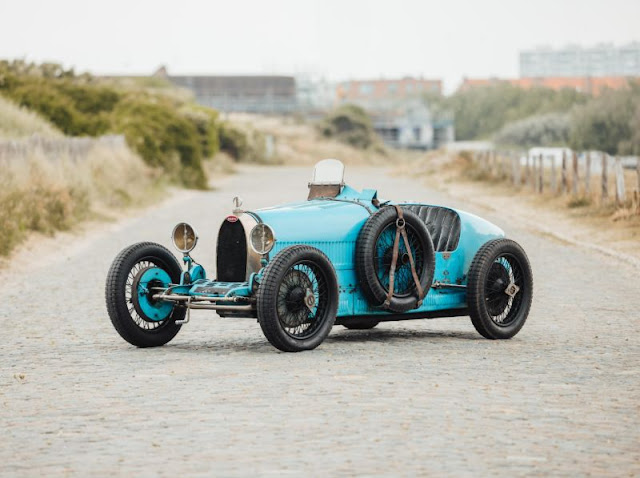
Amazing Photos of the 1929 Bugatti Type 37 Grand Prix

Amazing Photos of the 1929 Bugatti Type 37 Grand Prix

The 1929 Bugatti Type 37 Grand Prix is a standout model in the history of racing cars, blending engineering precision with elegant design. Produced by Bugatti under the leadership of Ettore Bugatti, the Type 37 was a true racing machine of its era, renowned for its speed, handling, and performance.

The Type 37 was powered by a 1.5-liter inline-four engine, capable of producing around 90 horsepower, which gave it the ability to reach speeds of 120 km/h (75 mph). Its lightweight, aerodynamic body was crafted from aluminum, contributing to its nimble handling on tight, twisty race tracks. The car also featured a 4-speed manual transmission, providing a smooth and responsive driving experience.
Designed primarily for Grand Prix and Formula racing, the Type 37 quickly became a force on European racing circuits, including events like the Targa Florio and Grand Prix de Monaco. With its powerful yet efficient engine, the Type 37 proved successful in a variety of racing conditions and built a reputation for reliability and performance.
Even today, the Type 37 is considered one of Bugatti’s most iconic and beloved models, a symbol of early 20th-century automotive excellence. Here is a collection of amazing photos of the 1929 Bugatti Type 37 Grand Prix.

See more »

read more
Amazing Photographs of Madonna Performing at Live Aid at the JFK Stadium in Philadelphia, 1985

Amazing Photographs of Madonna Performing at Live Aid at the JFK Stadium in Philadelphia, 1985

Live Aid was a benefit event on July 13, 1985, organised by Bob Geldof and Midge Ure to raise money to fight famine in Ethiopia. It consisted of two concerts, which were held simultaneously at Wembley Stadium, London and at the JFK Stadium in Philadelphia.

The shows were attended by respectively 72,000 and 100,000 people, while the TV broadcast reached a massive 1,9 billion global audience. It was the largest benefit event of its time.

The star-studded line-up was unprecedented and included performances from practically every icon of the 1980s: Queen, David Bowie, U2, Sting, Phil Collins, Elton John, Rolling Stones, Bob Dylan, Eric Clapton, Paul McCartney, The Who and many more.

Madonna, who was one of the new revelations at that time, was part of the afternoon schedule in Philadelphia, starting her half hour set at 16:27. She was introduced by Bette Midler at the concert: “I want you to know I have no idea why I was asked to introduce this next act — because you all know, I am the soul of good taste and decorum.  However we are thrilled to be able to introduce to you today a woman whose name has been on everyone’s lips for the last six months. A woman who pulled herself up by her bra straps and has been known to let them down occasionally.”
Madonna performed “Holiday” and her most recent single “Into the Groove,” before premiering “Love Makes the World Go Round,” from her upcoming album True Blue, which would be released only a year after Live Aid. For this final performance, Madonna was joined on stage by Thompson Twins and Nile Rodgers. In return, Madonna made an appearance during Thomson Twins’ set.

See more »

read more
Tina Turner Photographed by Richard Avedon for Vogue Magazine, 1971

Tina Turner Photographed by Richard Avedon for Vogue Magazine, 1971

Tina Turner in 1971 was at the peak of her dynamic career, captivating audiences worldwide with her electrifying performances and unique voice. At that time, she was performing as part of the Ike & Tina Turner Revue, a powerhouse duo that combined rock, soul, and rhythm and blues. Their hits included “Proud Mary,” which became one of their signature songs after its release in 1971.

Tina favored glamorous, bold outfits that highlighted her legs and matched her high-octane performances. In 1971, she often wore sequined or fringed mini dresses that shimmered under stage lights, paired with high heels. These outfits allowed her to move freely while accentuating her energetic dance moves.
Here, Tina Turner photographed by Richard Avedon in New York for Vogue magazine on June 13, 1971. These photographs of Tina capture the visual truth that every one of Avedon’s photographs does, with no exceptions. He saw right through to the truth of anyone and everyone. Tina’s ferocity tells her truth.

read more
Rarely Seen Photos of Teenage Linda Ronstadt Before Her Popular Rise to Fame

Rarely Seen Photos of Teenage Linda Ronstadt Before Her Popular Rise to Fame

Linda Ronstadt, born on July 15, 1946, in Tucson, Arizona, spent her childhood and early teenage years in the 1950s and early 1960s surrounded by music. Her family was very musical, with her mother playing the ukulele and her father singing Mexican songs and playing guitar. By the age of six, Linda was already singing harmony with her family. She recalled to People magazine, she thought, “Well, I won’t have to add, because I am going to sing.”

She grew up listening to a wide range of genres, including her father’s Spanish-language albums, country and western, top 40, blues, and gospel. She has stated that she doesn’t record any type of music she didn’t hear in her family’s living room by the time she was 10, highlighting the profound influence of her early musical environment.
In her early teens, around age 14, Linda began performing in local clubs and pizza parlors with her older brother Pete and sister Suzie. They formed a folk trio, sometimes billing themselves as “the Union City Ramblers” or “the Three Ronstadts,” and even recorded themselves as “the New Union Ramblers.” Their repertoire included folk, country, bluegrass, and Mexican music.
By 1964, at the age of 18, Ronstadt decided to pursue music professionally. She briefly attended the University of Arizona but left after a couple of months to move to Los Angeles. There, she teamed up with Tucson native Bob Kimmel and Kenny Edwards to form the folk-rock band The Stone Poneys in 1964. This marked the true beginning of her professional career, leading to their signing with Capitol Records in 1966 and their breakthrough hit “Different Drum” in 1967.
Below are some photographs of Ronstadt from the 1950s and early 1960s, as she wasn’t famous yet:

See more »

read more
Glamorous Fashion Photography by Bob Stone in the Early 1970s

Glamorous Fashion Photography by Bob Stone in the Early 1970s

Bob Stone was an American fashion and editorial photographer active primarily during the 1960s and 1970s. Born in Los Angeles, he studied art at UCLA before beginning his photography career in Hollywood. He later moved to New York City, where he became a prominent figure in the fashion industry, known for his sleek, glamorous style and sharply composed images.

Throughout his career, Bob Stone worked with major fashion publications including Vogue, Harper’s Bazaar, Cosmopolitan, and GQ. His editorial photography often featured prominent models of the time such as Anjelica Huston and Apollonia van Ravenstein, capturing the spirit of high fashion with a refined and modern aesthetic. His work was characterized by clean compositions, sophisticated styling, and a strong sense of elegance that defined the visual culture of the era.
In addition to his editorial success, Stone was also a sought-after commercial photographer. He created advertising campaigns for major brands like Revlon, Clairol, Elizabeth Arden, Saks Fifth Avenue, American Airlines, Pepsi, and MCA. His images balanced artistry with commercial appeal, making his work both visually striking and widely accessible.

Anjelica Huston, make-up by Charles Revson, photo by Bob Stone, Vogue, October 1, 1972

Anjelica Huston in white mink coat by Pierre Cardin, photo by Bob Stone, Vogue, October 1, 1972

Anjelica Huston wearing fur coat, photo by Bob Stone, 1972

Apollonia van Ravenstein standing on the sidewalk in front of a grey wall wearing grey wrap skirt, grey wool jersey cardigan jacket, ribbed black cashmere pull, and ivory silk shirt by Halston, photo by Bob Stone, Vogue, August 15, 1972

Apollonia van Ravenstein wearing a cream ribbed sweater by Valerie Louthan, handcraft tan cashmere scarf, and Mr. Martin multicolor houndstooth hat, photo by Bob Stone, Vogue, August 15, 1972

See more »

read more