Yesteryear

35 Rarely Seen Photos of Zelda Fitzgerald, the First American Flapper

35 Rarely Seen Photos of Zelda Fitzgerald, the First American Flapper

Zelda Fitzgerald (née Sayre; July 24, 1900 – March 10, 1948) was an American novelist, painter, and socialite, famously known as the wife and muse of author F. Scott Fitzgerald and an icon of the Jazz Age.

Born into a prominent Southern family in Montgomery, Alabama, Zelda was known for her beauty, vivacity, and rebellious spirit from a young age. She challenged societal norms with her spirited behavior, becoming a local celebrity.
In 1920, she married the aspiring writer F. Scott Fitzgerald shortly after the success of his debut novel, This Side of Paradise. Their highly publicized and often tumultuous marriage made them overnight celebrities and epitomized the decadent, free-wheeling lifestyle of the Jazz Age. Zelda’s personality and experiences heavily influenced many of the female characters in F. Scott Fitzgerald’s novels, including The Great Gatsby and Tender Is the Night, solidifying her image as the “first American flapper.”
While often seen as her husband’s muse, Zelda was a talented artist in her own right. She pursued various creative outlets. She wrote articles and short stories for magazines and published a semi-autobiographical novel, Save Me the Waltz (1932), which offered a contrasting perspective to her husband’s portrayal of their life.
Zelda created numerous paintings, including cityscapes, illustrations for fairy tales, and portraits. Her work has gained more recognition posthumously. She became intensely dedicated to ballet in her late twenties, practicing for hours a day, though she ultimately realized she started too late for a professional career.
Zelda experienced significant mental health issues, with her first major breakdown occurring in 1930. She was diagnosed with schizophrenia, though later experts have suggested she may have suffered from bipolar disorder. She spent many of her later years in and out of psychiatric clinics.
Zelda Fitzgerald died tragically in a fire at Highland Hospital in Asheville, North Carolina, in 1948, where she was a patient.

See more »

read more
Ernesto García Cabral: Mexico’s Art Deco Visionary

Ernesto García Cabral: Mexico’s Art Deco Visionary

Ernesto García Cabral (1890–1968) was a prolific Mexican illustrator, caricaturist, and painter, often referred to as “El Chango” Cabral. He is widely regarded as one of the most influential visual artists in early 20th-century Mexico and Latin America.

Cabral’s work spanned a variety of styles, from Art Deco to Expressionism, and he became especially known for his bold use of color, elegant linework, and rhythmic compositions. Throughout his career, he illustrated for more than 150 magazines and newspapers, including Revista de Revistas, Jueves de Excélsior, and Revista Mundial, contributing thousands of covers, illustrations, and political cartoons.
In the 1920s and 1930s, Cabral’s stylized depictions of fashion, cinema, cabaret, and politics captured the energy of the Jazz Age and Mexico’s post-revolutionary cultural renaissance. His work continues to be exhibited in galleries and admired by collectors and art historians worldwide.
Boredom, circa 1920s

“¿Quién acaricia?, Revista de Revistas, circa 1920s

“Aires de primavera”, Revista de Revistas, México, circa 1920s

“El presente y el futuro”, Revista de Revistas, circa 1920s

Fashion plate, circa 1920s

See more »

read more
Before Her Iconic Role as  as Wonder Woman, Lynda Carter Was Crowned Miss World USA in 1972

Before Her Iconic Role as as Wonder Woman, Lynda Carter Was Crowned Miss World USA in 1972

Lynda Jean Carter (born July 24, 1951) is an American actress, singer, and beauty pageant contestant, best known for her portrayal of Wonder Woman in the television series Wonder Woman, aired on ABC and later on CBS from 1975 to 1979.

Before her acting career, in 1972, Lynda Carter, a 21-year-old aspiring singer and actress from Phoenix, Arizona, entered the Miss World USA pageant — the American qualifier for the global Miss World competition. Known for her striking beauty, grace, and confidence, Carter represented Arizona and won the national title, becoming Miss World USA 1972.
After her national victory, she traveled to London to compete in the Miss World 1972 pageant. Although she didn’t win the international crown, she made it into the Top 15 semifinalists, gaining international attention and admiration.
Carter later reflected that while she appreciated her pageant experience, her real ambition was to succeed in entertainment. Shortly after her pageant days, she began landing small roles in TV and film. Just a few years later, in 1975, she was cast as Wonder Woman in the hit television series Wonder Woman, which made her a cultural icon.
Carter’s Miss World USA title was a springboard to a remarkable career. Unlike many beauty queens of the era who faded into obscurity, Carter became a household name — not just for her beauty but for her talent, charisma, and lasting impact on pop culture. She remains one of the most iconic figures to emerge from the pageant world, often remembered as a trailblazing beauty queen who used her crown as a stepping stone to something much bigger.

See more »

read more
35 Gorgeous Portraits of Carol Lynley From the 1960s

35 Gorgeous Portraits of Carol Lynley From the 1960s

Carol Lynley was an American actress and former child model best known for her work in film and television during the 1950s through the 1970s. Born in 1942, she rose to fame with her performance in Blue Denim (1959) and became widely recognized for her role as Nonnie in the disaster film The Poseidon Adventure (1972), where she famously sang “The Morning After.”

Lynley was known for her fresh-faced beauty and often portrayed emotionally intense or vulnerable characters. Her career included a mix of dramatic films, TV appearances, and theater work. She remained a notable pop culture figure of her era until her passing in 2019.
Take a look at these gorgeous photos to see portraits of a young Carol Lynley from the 1960s.

See more »

read more
Amazing Photos of Jet the Dog, Who Could Serve You a Beer in a Preston Pub in the 1950s

Amazing Photos of Jet the Dog, Who Could Serve You a Beer in a Preston Pub in the 1950s

Jet, the black Labrador Retriever, from Preston, was the star of a Sunday Mirror double-page feature back in February 1953 after it was discovered that the canine had a plethora of special talents. He was owned by Jimmy Gainer, a professional rat-catcher, who has trained Jet to catch rats and just as a sideline, can pour out beer and fetch change from the till.

Though Jet was mostly employed to help her owner get rid of pesky vermin she was also well versed in the pub trade. Jimmy had taught Jet to pour out bottles of beer in several of the city’s pubs, which the pair usually frequented after a tough day of rat catching.
But that’s not all.
Jet was not merely a one-trick dog, she could also take cash from customers, put the money into the old till and give them their change.

read more
Elegant Fashion Illustrations by Fernando Bosc From the 1940s and ’50s

Elegant Fashion Illustrations by Fernando Bosc From the 1940s and ’50s

Fernando Bosc was a French fashion illustrator active during the 1940s and early 1950s, best known for his elegant promotional art featured in couture magazines and advertising. He produced illustrations for major French fashion houses such as Lucien Lelong, Christian Dior, Jacques Heim, Balenciaga, Paquin, Marcelle Chaumont, and others.

Bosc’s illustrations are characterized by refined line work, timeless compositions, and a subtle yet sophisticated palette, capturing the glamour of haute couture. His imagery celebrated evening gowns, hats, and accessories in fashion campaigns—rendered with precision and an artistic flourish typical of mid‑century French elegance.
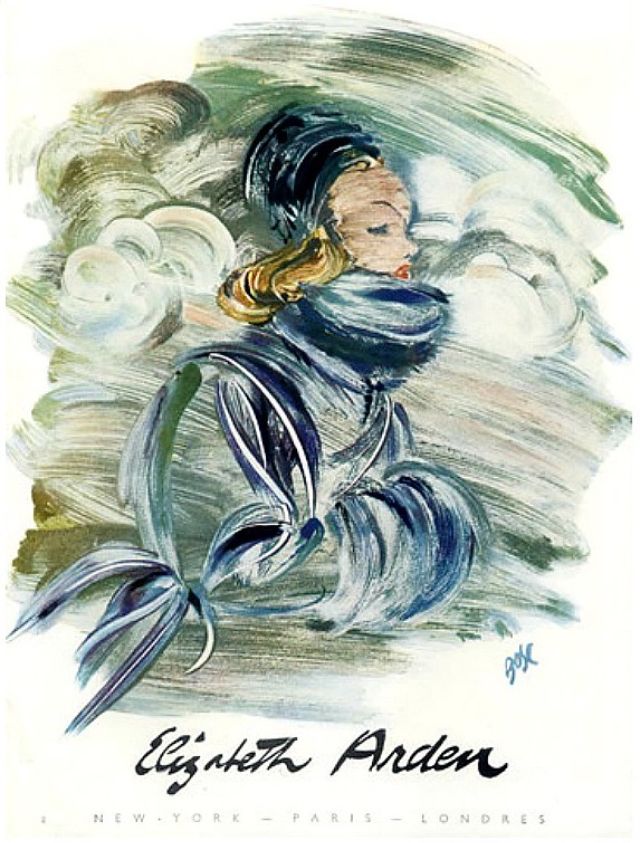
Bosc’s work often appeared in publications like L’Art et la Mode and Plaisir de France, including a notable 1945 illustration for Elizabeth Arden perfume and a vibrant 1947 cover for the fashion magazine L’Art et la Mode. These vintage works by Fernando Bosc offer a glimpse into the elegance of mid-century fashion illustration.
Elizabeth Arden advertisement illustrated by Fernando Bosc, 1945

Bianchini’s imported Lorganza dress by Pauline Trigère, illustrated by Fernando Bosc, Vogue, October 1, 1947

Elizabeth Arden advertisement by Fernando Bosc, 1947

Black draped gown by Jean Dessès, pink tulle embroidered with pearls and strasse by Pierre Balmain, illustrated by Fernando Bosc, 1948

Design is in fine navy and white wool with white embroidered polka-dots by Martial and Armand, illustrated by Fernando Bosc, 1948

See more »

read more
Photos of Ozzy Osbourne, Eric Clapton and Grace Jones Attend the International Rock Awards, 1989

Photos of Ozzy Osbourne, Eric Clapton and Grace Jones Attend the International Rock Awards, 1989

Ozzy Osbourne, Eric Clapton and Grace Jones were present at the International Rock Awards in New York City in 1989. The event took place on May 31, 1989, at the 69th Battalion State Armory (68 Lexington Avenue) in New York City.

Notably, Ozzy Osbourne and Grace Jones presented the MVP Guitarist Award to Eric Clapton at the ceremony. Osbourne later recounted an anecdote about this meeting, initially believing Clapton hated him due to a pose he was asked to strike for a photo, only to realize years later that Clapton had also recently been through rehab and was likely feeling similarly anxious.
The International Rock Awards was a music award ceremony in the United States that aimed to honor top musicians in the rock music genre. The inaugural event took place on May 31, 1989, in New York City. The awards were broadcast on ABC for three years, from 1989 to 1991. The 1989 event was specifically called “The Coca-Cola International Rock Awards,” indicating a sponsorship by The Coca-Cola Company. While it was seen as an attempt to build up to the Grammy Awards, it ultimately failed to attract sufficient viewers to remain successful.

See more »

read more
Beautiful Pics of Young Slash With His Parents

Beautiful Pics of Young Slash With His Parents

Guns N’ Roses guitarist Saul Hudson aka Slash was born in Hampstead on July 23,1965 to parents Ola and Anthony Hudson. When Saul was a child the family moved from London to Stoke on Trent before heading off to sunny Los Angeles in America. His mother Ola was a professional costume designer for various musicians, during her time she styled John Lennon, David Bowie, The Pointer Sisters, Ringo Starr and Diana Ross.

Saul’s dad Anthony was also involved in the music business. The English born artist worked for Geffen records in the 1970s, during his time there he created LP covers for Neil Young and illustrated the 1974 Joni Mitchell album Court and Spark.
When Slash spoke about his mixed background he said, “As a musician, I’ve always been amused that I’m both British and black; particularly because so many American musicians seem to aspire to be British while so many British musicians, in the sixties in particular, went to such great pains to be black.”

read more
40 Vintage Photos of the Leeson Estate Outing for Kids Around 1939–40

40 Vintage Photos of the Leeson Estate Outing for Kids Around 1939–40

A large outing for the kids of Leeson Estate, Twickenham, probably around 1939-40, was a local community event likely organized for children living in or around the Leeson Estate.

Taking place just before or during the early years of World War II, the outing offered a rare moment of joy and normalcy amid a time of growing uncertainty. Children dressed in their best clothes were taken on a day trip—the location is Butlins in Littlehampton, on the Sussex coast—where they played games, shared food, and posed for group photos. Events like this reflected the strong sense of community and care for children’s well-being during challenging times.

See more »

read more
35 Vintage Studio Portraits of People With Their Dogs From the Late 1800s

35 Vintage Studio Portraits of People With Their Dogs From the Late 1800s

In the late 19th century, people across social classes often posed with their dogs in photographs and portraits, reflecting the growing sentimental value placed on pets. Dogs were not only working animals—used for guarding, hunting, or herding—but increasingly seen as companions and family members.

In these studio portraits, well-dressed individuals, children, and even entire families were frequently pictured with their dogs, symbolizing loyalty, affection, and social standing. This era marked a shift toward the modern concept of the pet, as Victorians embraced a more emotional and domestic bond with their animals.

See more »

read more