

I recorded a podcast this week in one of my favourite galleries ever: that is Leighton House Museum in Holland Park. It was the home of the nineteenth-century artist Frederic Leighton, who developed it as his studio and as his (expanding) living quarters over thirty years with the architect George Aitchison. Its star room is the stunningly decorated, if now rather awkwardly named, “Arab Hall” – inspired by the decorative schemes of the Middle East, with a gilded dome and tiled walls. With characteristic late Victorian irony, Leighton described it as “a little addition for the sake of something beautiful to look at once in a while”.
I have been quite a frequent visitor over the years, enjoying the house (plus its great garden), but this was the first time I had gone back after being in Washington DC for several months. I discovered that it is about to celebrate its centenary as a museum, open to the public.
Going there now, you would never guess its chequered history since Leighton died in 1896. It is easy to mistake it for a kind of Sir John Soane’s Museum – a house left untouched after its famous proprietor passed away, as a memorial to its creator by its creator. But the fact is that Leighton’s house was more or less stripped, and sold off, after his death. Bringing it back together and tracking down the original contents to make it “his” house again has been the work of decades, and especially of curators there since 2008.
To celebrate this anniversary, there is going to be an exhibition of the house’s transformation, including people’s memories of visiting over the years, and the changes brought about (it suffered bomb damage twice in the Second World War, and the luscious decoration you now see replaced some rather perfunctory whitewash applied after his death). And they have had fun commissioning paper sculptures to display in place of some of the objects still missing.
That is all coming up in October. Until September 21, though, they have a great little show of the “Victorian Treasures”, largely from the Cecil French bequest. I confess I had never heard of French, but the paintings he collected in the early twentieth century included some real gems. I hadn’t seen before Lawrence Alma-Tadema’s painting of the Roman festival of Pomona (a goddess of fruits and orchards). It’s one of his semi-Pompeian-inspired versions of Roman everyday life – romanticizing, inaccurate but marvellously beguiling. Nor did I know John William Waterhouse’s “Mariana in the South”. This takes its cue from Tennyson’s poem of that name: here Mariana is looking in the mirror, as she prays for the lover who has abandoned her to return. Great Victorian stuff, picked up by French before such Victorian stuff had become fashionable again.
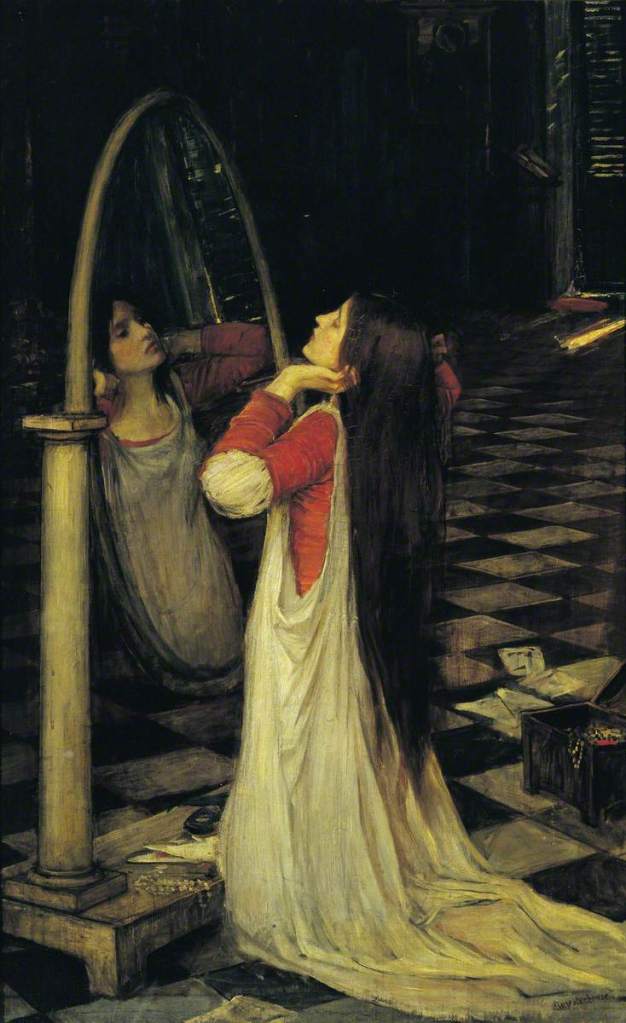
These paintings are, in a sense, “out of the way”. French bequeathed his collection to the London Borough of Hammersmith and Fulham. It is one of the good things about UK philanthropy that wonderful works of art sometimes get dispersed to local collections, and I would not for a minute want to change that. But it does mean that some of those things go under the radar.
So, if – like me – you are keen on Victorian painting and don’t know this collection, go along to Leighton House soonest!
The post Leighton House at 100 appeared first on TLS.