

Last weekend I tagged along with the husband, when he went to Venice to see the exhibition Painted Gold: El Greco and art between Crete and Venice, on show in the Ducal Palace. The theme is the complex inter-relationship between painting in Crete and painting in Venice in the Renaissance and beyond. Crete was part of the Venetian empire for centuries. So how did that major centre of icon painting from the fifteenth century on (I mean Crete) relate to the artistic practice of imperial Venice? What does Venice do to the icon (and vice versa)? It is beautifully displayed, wonderfully lit and really makes the icons sing (they don’t always). It is on until September 29 (and you can buy a ticket online, and then jump the queue of people visiting the Ducal Palace).
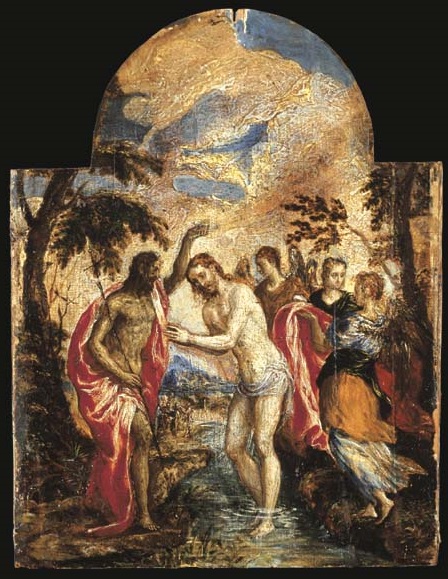
Most visitors to the exhibition seemed to have come for the paintings by El Greco, done after he had arrived in Venice around 1567. These definitely make the show worth it. There are paintings here that even big fans of El Greco will very likely not have seen, mostly completed in the 1560s and 70s. They include a tiny painting of the “Baptism of Jesus” from Heraklion, and a much bigger “Adoration of the Magi”, rediscovered in Rome.
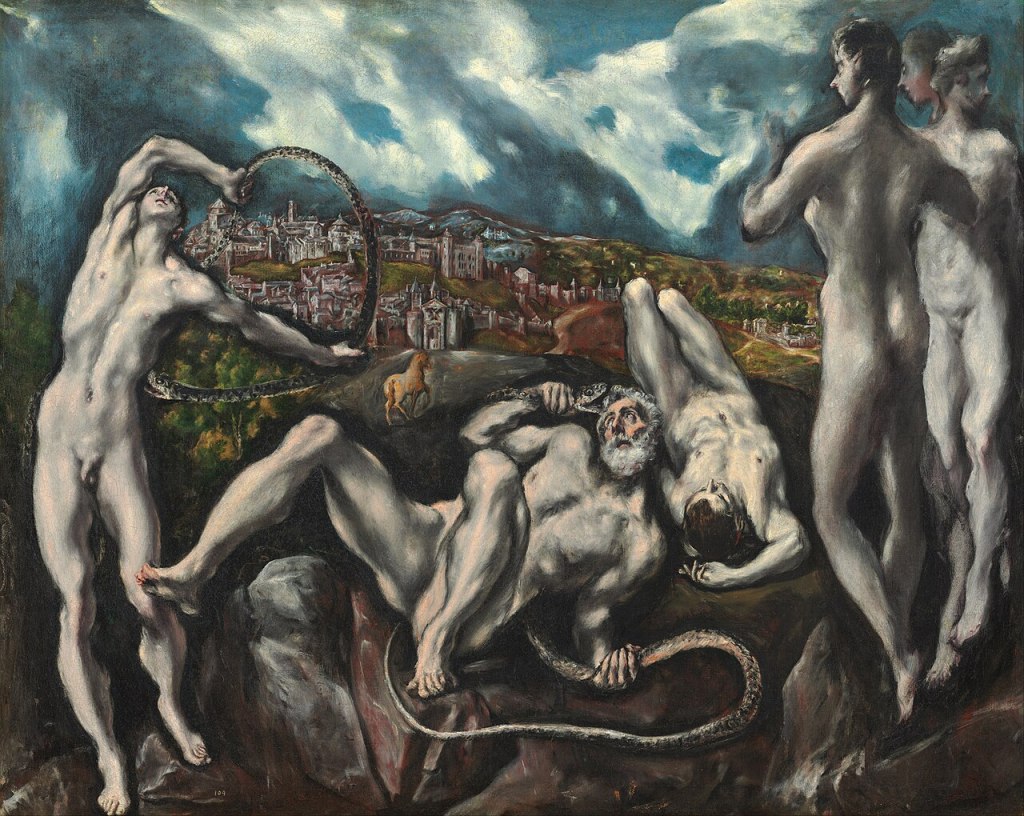
I am not an expert in early El Greco. I have done quite a lot of work on very late El Greco, and just made a little introductory video to his “Laocoon” in the National Gallery in Washington DC. When I get a minute, I shall be writing an article on that painting (having had a wonderful chance to spend a few months with it in Washington). But I am no expert on the Creto-Venetian period of El Greco’s work. So this was an eye-opener.
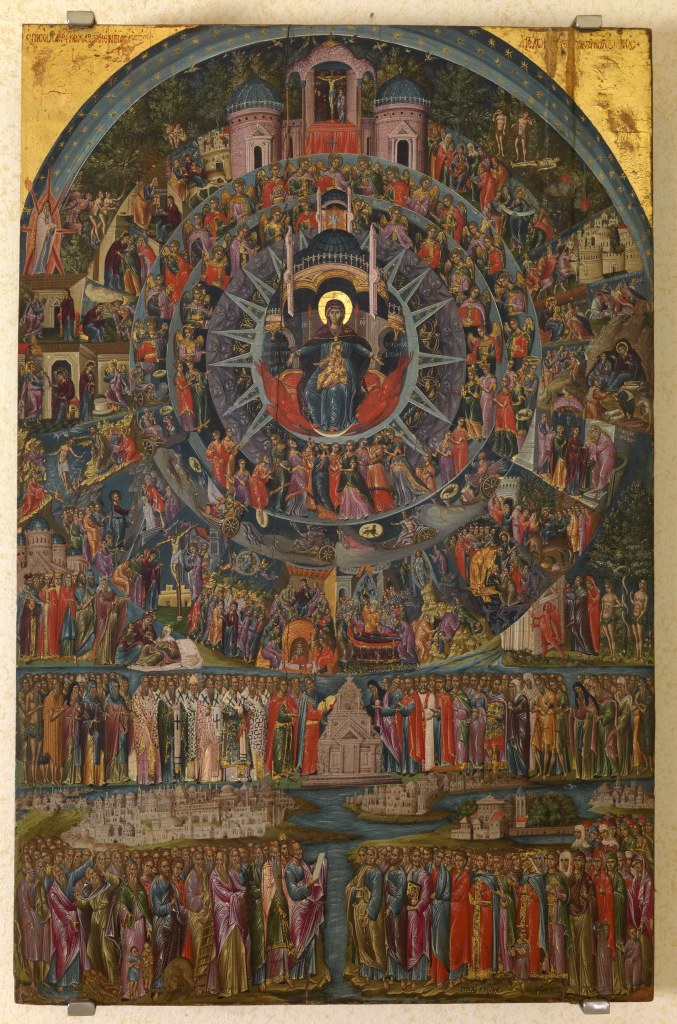
But the El Greco paintings apart, I was intrigued by Georgios Klontzas’s painting “In thee rejoiceth”. It is an extraordinary sixteenth-century image featuring the Virgin at the centre, surrounded by staggeringly detailed miniature scenes from Christian theology, from Adam and Eve to the Annunciation. (The tile is drawn from a hymn written by the early Christian John of Damascus.) I confess I knew nothing of Klontzas, but my expert guide (and husband) told me that he was very likely to have been El Greco’s teacher.
I had just one long visit to the exhibition (the husband did it three times). But for the rest I spent the time buying some cheap Venetian velvet slippers, and writing lectures, looking over the lagoon. A time to die for.
The post Icons in Venice appeared first on TLS.