

I get loads of questions at this time of year about what to visit in Greece and Italy, off the beaten track. To put it another way: where can I go, and not have to queue and not find the place submerged with other people (even if they are keen ruin-visitors like me)? There is a problem here: every tourist – and I am a tourist more often than I am an academic – wants to find a place where other tourists don’t go; but the more you enthusiastically recommend it, the more crowded it is likely to get.
Leaving that aside, here are some not so very “secret” recommendations, for escaping the crowds, in three popular ancient destinations. To be honest, never mind the hordes of people queuing to get inside, the Colosseum isn’t worth the disappointment when you do finally get in there (don’t tell, but it’s much better from the outside!). All the same, there are still a few places you can visit in Rome, near Pompeii and in Athens, where you can often have a fabulous site more or less to yourself. Tourism with an old-fashioned feel.
OK: three places and a few tips.
Rome
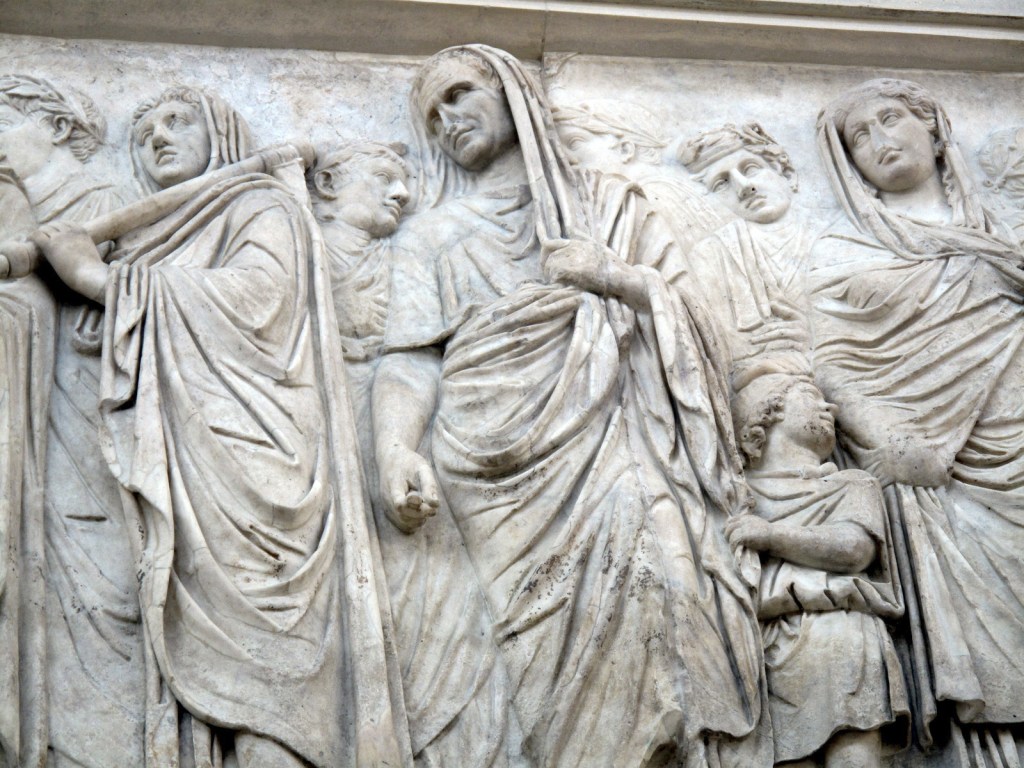
The Augustan Altar of Peace (Ara Pacis). This is not very far off the beaten track but it doesn’t attract anything like the footfall of the Colosseum or Forum. It is a ceremonial altar erected between 13 and 9 BCE to mark the return of Augustus, the first Roman emperor, from campaigns abroad (“Altar of Pacification” might be a better translation). It is absolutely covered with sculpture: figures from the imperial family, images from Roman myth etc – and that’s why it’s well worth going to see (it really is some of the best ancient marble work that there is). It was excavated largely in the 1930s and the bits were pieced together by Mussolini’s archaeologists, and it is now housed in a pavilion (designed by Richard Meier) overlooking the Tiber, a twenty-minute walk from the Piazza Venezia.
The area nearby is currently being given a makeover (presumably to attract more tourists – so get there fast). Its centrepiece is Augustus’ vast tomb, not currently visitable, but you still get a sense of its original impact (and dynastic ambitions) from the outside. The recovery of this “Mausoleum” (as it’s usually called) was also a Mussolini project. His archaeologists cleared away the concert hall that had been built on top of it (the appropriately named “Augusteo”) to expose the ancient remains, more or less as you now see them.
Pompeii
It’s always fairly easy to find a quiet spot somewhere on the main site itself, especially since the number of daily tickets has been limited. I am afraid that the brothel usually has the biggest queues (and as with the Colosseum, you won’t miss much if you pass it by). But if you want a really splendid site to wander around in more peace, then go to the Villa of Poppaea (“Villa A” as it is also known) at Oplontis (in modern Torre Annunziata). This is a really “A list” Roman villa, with a vast Olympic sized ancient swimming pool, some of the most stunning Roman painting anywhere and traces of such domestic things as surviving shutters on some of the windows. I wouldn’t be so sure that it was the property of the emperor Nero’s wife Poppaea, as the advertising likes to claim, but it certainly belonged to some absolute plutocrat.
There is a rail station at Torre Annunziata, but it is a bit of a schlep (thirty minutes-ish on foot) from there to the villa – and it’s not a particularly scenic little town. There is a shuttle bus from the main Pompeii site, which I haven’t tried but, if it works (!), that looks like the answer.
Athens
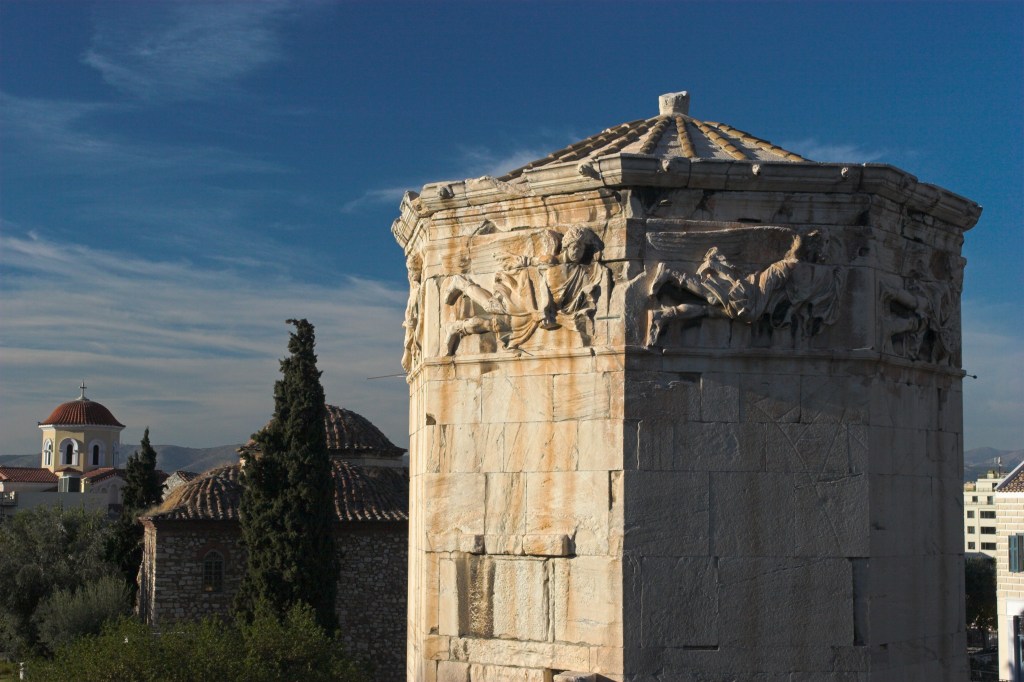
The Acropolis itself is bucket list territory, and in the summer very hot and a sweaty climb. It’s getting increasingly regimented (online timed tickets, whistles loudly blown at you for any misdemeanour, etc), and there is little advantage in going for an early slot, because that’s what everyone else tries to do. The Roman agora (or forum) has become a bit more regimented too, but it’s where I go for a cooler, calmer place. It was originally the commercial heart of the Roman city, bankrolled by Julius Caesar and Augustus. But the star building that survives is the so-called Tower of the Winds, built in the first century BCE to house a large water clock, and marvellously decorated near roof level with sculpted figures of the different winds (hence the modern name).
It’s a walk across the Plaka district from the Acropolis, and close to Monastiraki metro station, and there are plenty of decently priced restaurants in the area, for afterwards.
Enjoy!
The post Off the beaten track: tourist tips appeared first on TLS.