
On a large, elaborately decorated silver cauldron found in Denmark, there are the figures of three curious musicians, who appear to be playing long vertical trumpets – the men underneath puff into the tube, and the sound emerges from the animal’s head at the top. The cauldron (known from its find-spot as the “Gundestrup cauldron”) dates to sometime in the Iron Age and the instrument the musicians are playing has been identified as a carnyxi – played in battle and designed to put the fear of god into the enemy.
It is probably what the Greek historian, Polybius, had in mind when he wrote (in Book 2, 29 of his Histories) of the fearsome military techniques of the “Celts”:
For there were among them such innumerable horns and trumpets, which were being blown simultaneously in all parts of their army, and their cries were so loud and piercing, that the noise seemed not to come merely from trumpets and human voices, but from the whole countryside at once.
More recently, carnyces (if that’s the right plural) have made cameo appearances among enemy armies in both versions, one and two, of the Gladiator movie.
The remains of quite a few of them – the real thing, that is – have been found in archaeological contexts across northern Europe. But no example is more complete than a very recent discovery in Norfolk, in a hoard which included a long carnyx, as well as some kind of metal military standard in the shape of a boar’s head, plus some metal shield bosses (presumably the wooden shields themselves had disintegrated, leaving only the metal).
There has been a good bit of justifiable excitement about this, with a replica being raucously played on the BBC’s Today programme. And there has been some less justifiable speculation about whether there might be a connection between this discovery and the rebellion of Queen Boudicca (do we have here some remains of her fighting force?). It’s not impossible, of course. But there is a terrible tendency to try to link Boudicca with any major British find made in East Anglia, if it can possibly be dated to within half a century of her uprising – even when there is no hard evidence for the link at all.
There are anyway some more intriguing questions about this new discovery. Number one on my list is the circumstances of the original deposit. This group of objects doesn’t look like a casual loss after battle, the casual detritus of conflict. And some other carnyces have been discovered in interesting groups of military material. A notable find in France, for example, includes the remains of seven such instruments, which again appears intentional. (I hate to use the overused word “ritual” – but in this case “ritual deposit” after battle, whether by winners or losers, doesn’t look implausible.)
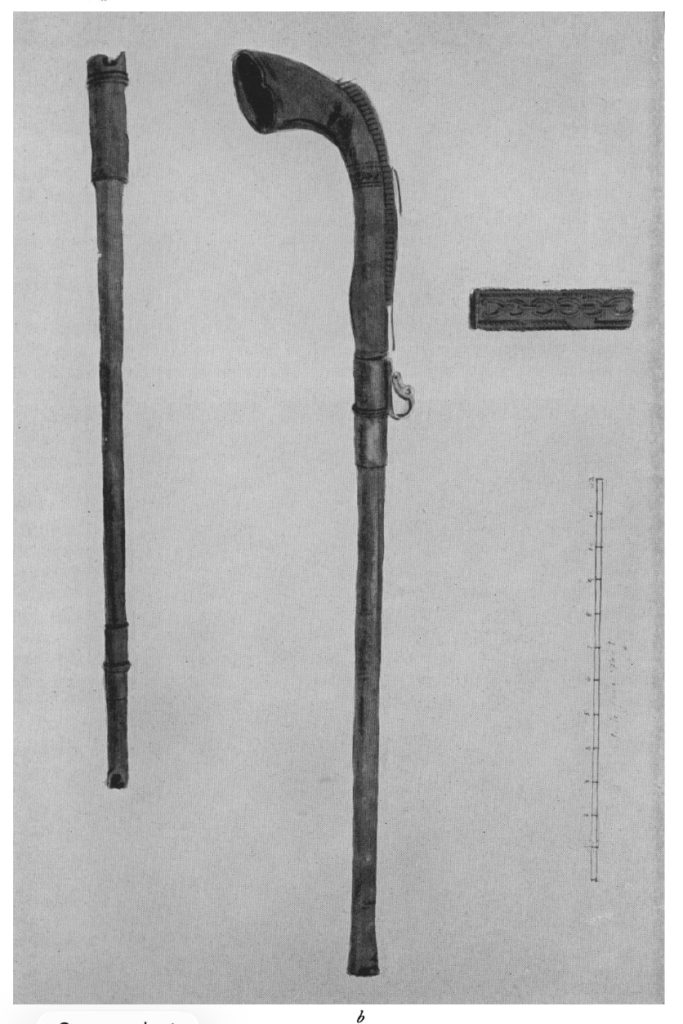
One thing is for sure, though: this “new” carnyx will be carefully preserved and displayed – unlike one of its unfortunate predecessors, found in the late eighteenth century at Tattershall Ferry in Lincolnshire, and seen here in its original publication. Not long after it had been unearthed, it was melted down by eager antiquarians, keen to discover the composition of the metal. After surviving almost 2,000 years, the precious remains were sacrificed to the cause of science.