


This piece is part of The Vulgarian, a Creative Underworld series devoted to clarity with claws and a disdain for polite pretense. Unsentimental in spirit and surgical in tone, it slices through sanctimony to serve up big ideas—sharp, deliberate, and unconcerned with convention. Proceed with your pearls clutched.
The Vulgarian Reviews:
The Gilded Age Season 3, Episode 1: “Who Is in Charge Here?”
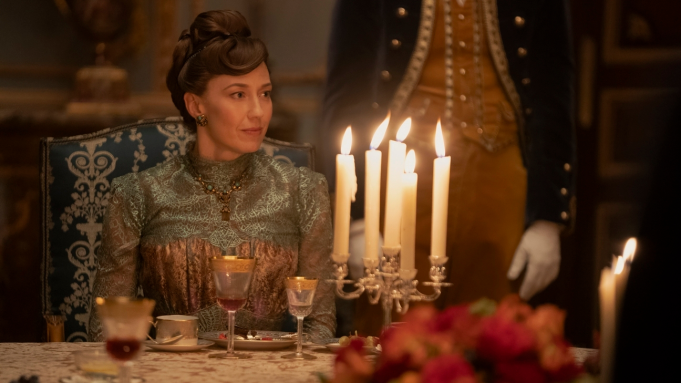
From the first gilded frame to the last corseted gasp, The Gilded Age kicks off its third season by snapping its lace-trimmed gloves and asking, “May I disrupt your expectations?” And then it does—gleefully, gloriously, with a carnivorous smile.
Bertha the Bulldozer
Bertha Russell isn’t merely ambitious—she’s a social battering ram in pearls. This episode finds her gunning for an English title like it’s the next railroad baron on her Monopoly board. She’s trading opera boxes like artillery shells and dangling her daughter in front of British nobility with the finesse of a duchess-shaped cattle auctioneer. Every frame she’s in is a masterclass in weaponized civility. She doesn’t host tea parties—she leads tactical operations disguised as luncheons.
Gladys Goes Rogue
Just when you think she’ll curtsy herself into oblivion, Gladys shatters her glass menagerie. Fleeing the Newport pressure cooker, she defies her mother with the quiet fire of a girl who’s had enough peacocking and pretense. Her escape isn’t just romantic rebellion—it’s a seismic threat to the control Bertha wields with lace-clad fists. It’s the first truly unpredictable move from a character who’s been too finely coiffed for chaos—until now.
Peggy’s Pain, Society’s Shame
Peggy Scott returns with purpose—and she’s not here for anyone’s comfort. The episode’s most cutting moment arrives when a Black woman is denied medical help by a white doctor, revealing the rot beneath all the rococo. Peggy isn’t given a savior arc—she’s given something rarer: moral clarity without melodrama. Her pain is a scalpel, slicing through the show’s polished veneer to expose the disease of racism that even chandeliers can’t distract from.
Who’s Actually in Charge Here?
It’s the question that lingers long after the credits roll, and the answer is as layered as a bustle. Is it Bertha, rewriting the rules with brute elegance? Is it Gladys, quietly torching the script? Is it Peggy, standing firm as the truth teller in a sea of lies by omission? Or is it the system itself—rigged, gaudy, and still terrifyingly familiar? This episode doesn’t offer clean answers. But it makes damn sure you’re asking. ♦