

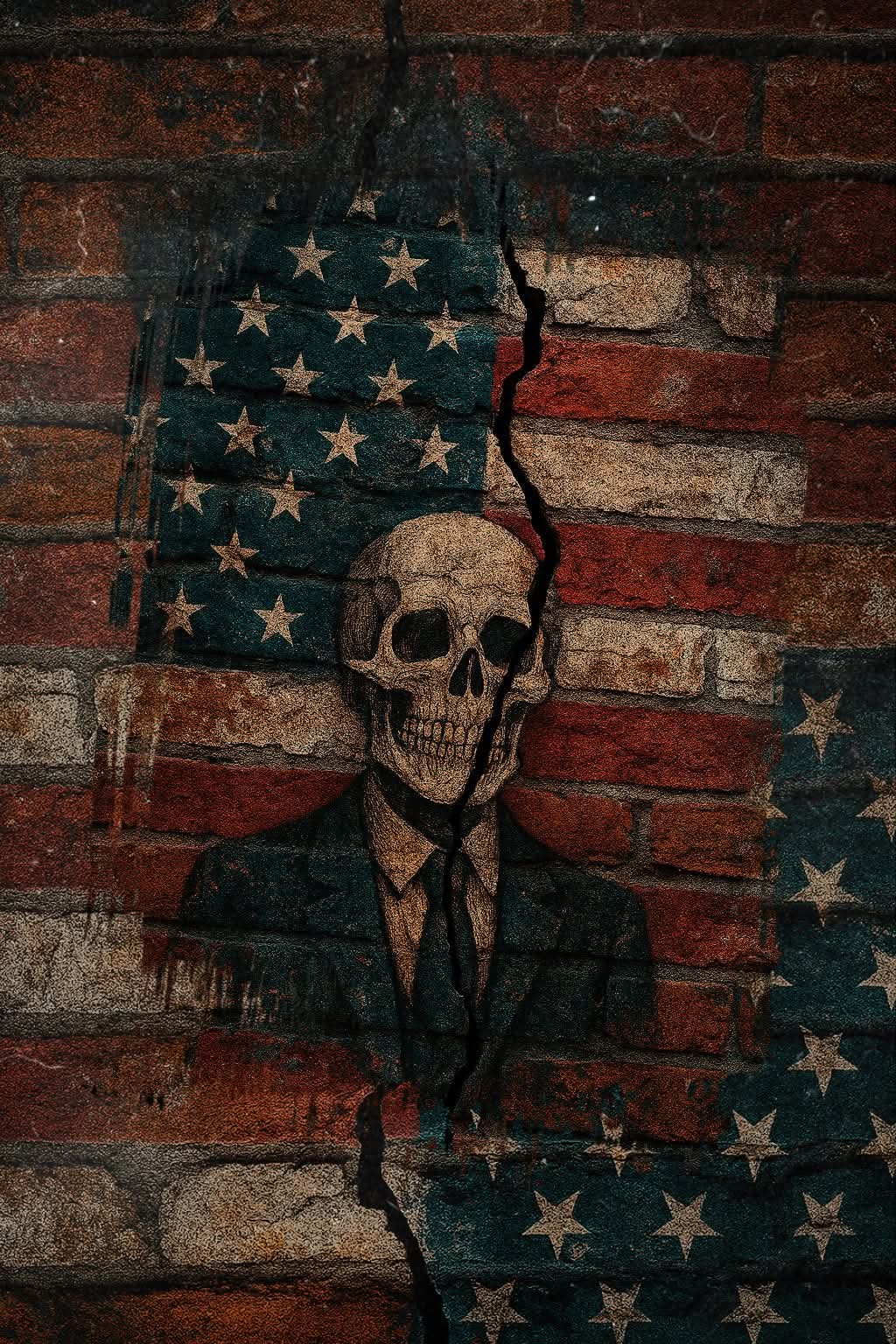
You Voted for the Boot. Now It’s on Your Neck.
By Sprite Gravier
There’s a particular kind of American rot that doesn’t smell until it’s burning. You can’t see it in the flag-waving or the church picnics or the small-town parades. You see it in the budget line that cuts food stamps while preserving oil subsidies. You see it in the ICE van idling outside a preschool. You see it in the farmer who voted for deportations and now wonders why his crops are rotting in the field.
This is not a story of surprise. It’s a story of willful ignorance, of greed dressed up as patriotism, of cruelty mistaken for strength. It’s a story of voters who knew exactly what they were buying—and now want a refund because the pain finally reached their doorstep.
The Machinery of Cruelty
Let’s be clear: the Trump administration didn’t hide its intentions. The Republican Study Committee’s budget proposed slashing $4.5 trillion from Medicaid, CHIP, and ACA coverage over ten years. ICE expanded its tactics to include warrantless arrests, military-style raids, and deportation flights that rival Cold War exile programs. Children were separated from parents. Asylum seekers were treated like invaders. And the voters cheered.
They cheered because they believed something was being stolen from them—jobs, culture, safety. They believed the lie that undocumented immigrants were the reason their towns were dying, not the corporations that outsourced their factories or the politicians who gutted their schools. They believed that cruelty would never touch them.
And now? Their hospitals are closing. Their farms are failing. Their children are hungry. The boot they helped lace is now on their own necks.
The Concentration Camp Next Door
Yes, concentration camps. When you detain thousands of civilians—including children—in overcrowded, unsanitary facilities with no due process, you don’t get to call it “border enforcement.” You get to call it what it is: state-sponsored cruelty. The Trump administration built these camps with full transparency. They were photographed, documented, debated. And still, the voters came. Still, they said: “He tells it like it is.”
What they meant was: “He tells me I’m better than someone else.”
The Farmer and the Furnace
Consider the Midwest farmer who voted red, twice. He wanted “law and order.” He wanted “American jobs.” He also wanted cheap labor, stable markets, and federal aid. What he got was a trade war, deported workers, and a bankruptcy notice. Now he’s on local news saying, “I didn’t think it would be this bad.”
But it was always going to be this bad. Because cruelty is not a scalpel—it’s a sledgehammer. And once you swing it, you don’t get to choose who it hits.
The Reckoning
There is no redemption arc here. Not yet. There is only the reckoning: the moment when voters realize they weren’t protecting their country—they were selling it off piece by piece. For tax breaks. For slogans. For the illusion of control.
“In Greed We Trust” isn’t just a motto. It’s a confession. It’s the quiet prayer whispered in voting booths and campaign rallies and ICE vans. It’s the reason Rosa doesn’t tuck her children in at night. It’s the reason Eli’s fields are empty. It’s the reason America is no longer a place—it’s a transaction.
And the bill is due. ♦