
Yesteryear

35 Stunning Photos of Elizabeth Montgomery in the 1960s

35 Stunning Photos of Elizabeth Montgomery in the 1960s

Elizabeth Montgomery was an American actress best known for her iconic role as Samantha Stephens in the classic television sitcom Bewitched (1964–1972). Born 1933 in Los Angeles, California, she was the daughter of actor Robert Montgomery and Broadway actress Elizabeth Daniel Bryan Allen, giving her an early entry into the entertainment industry.

Montgomery’s career spanned four decades, beginning with her TV debut in 1951 on her father’s show, Robert Montgomery Presents. She gained fame with a variety of dramatic and comedic roles, but it was Bewitched that made her a household name. Her portrayal of a good-natured witch trying to live a normal suburban life became a cultural touchstone, and her signature nose twitch is still widely recognized.
After Bewitched, Montgomery deliberately took on more challenging and socially conscious roles to break away from typecasting. These included performances in made-for-TV movies like A Case of Rape (1974), The Legend of Lizzie Borden (1975), and Amos (1985), showcasing her dramatic range.
Beyond acting, Montgomery was known for her political activism and support for liberal causes, including LGBTQ+ rights, women’s rights, and opposition to the Vietnam War. She passed away from colon cancer in 1995, at the age of 62. Take a look at these stunning photos to see the beauty of a young Elizabeth Montgomery in the 1960s.

See more »

read more
Amazing Photos of the 1955 Studebaker Champion Regal Conestoga

Amazing Photos of the 1955 Studebaker Champion Regal Conestoga

The 1955 Studebaker Champion Regal Conestoga was a distinctive two-door station wagon produced by the Studebaker Corporation in South Bend, Indiana. It was part of the Champion Regal line and marked a notable entry in mid-century American automotive design. The name “Conestoga” referenced Studebaker’s 19th-century heritage as a manufacturer of covered wagons, underscoring a link between the company’s past and its then-modern line of family vehicles.

Under the hood, the car featured a 3.0-liter (185.6 cubic inch) L-head inline-six engine that produced 101 horsepower at 4,000 rpm. It came equipped with a three-speed manual transmission, controlled by a column-mounted shifter. The car rode on a 116.5-inch wheelbase and weighed approximately 2,790 pounds. Its standout feature was the two-piece tailgate and liftgate, allowing greater flexibility for loading and unloading cargo—ideal for both family use and utility.
The design reflected the clean lines and streamlined aesthetic of 1950s American cars, with a relatively modest size compared to other station wagons of the time. Inside, it offered practical space and comfort, positioning it as a functional but stylish vehicle. Only 1,372 units of the 1955 Conestoga were produced, making it a rare and collectible model today.

Below is a set of amazing photos of the 1955 Studebaker Champion Regal Conestoga.

See more »

read more
“Universe 25” Experiment, One of the Most Disturbing Studies in the History of Science by John B. Calhoun

“Universe 25” Experiment, One of the Most Disturbing Studies in the History of Science by John B. Calhoun

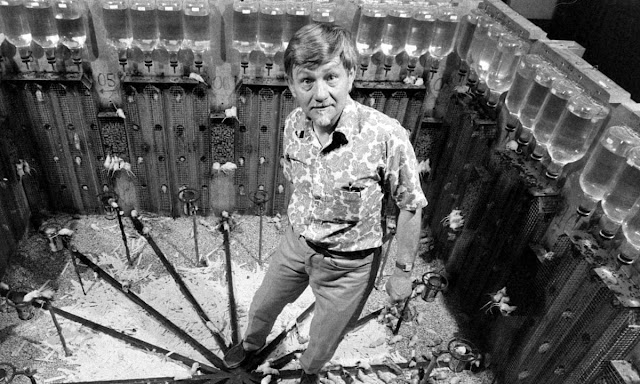
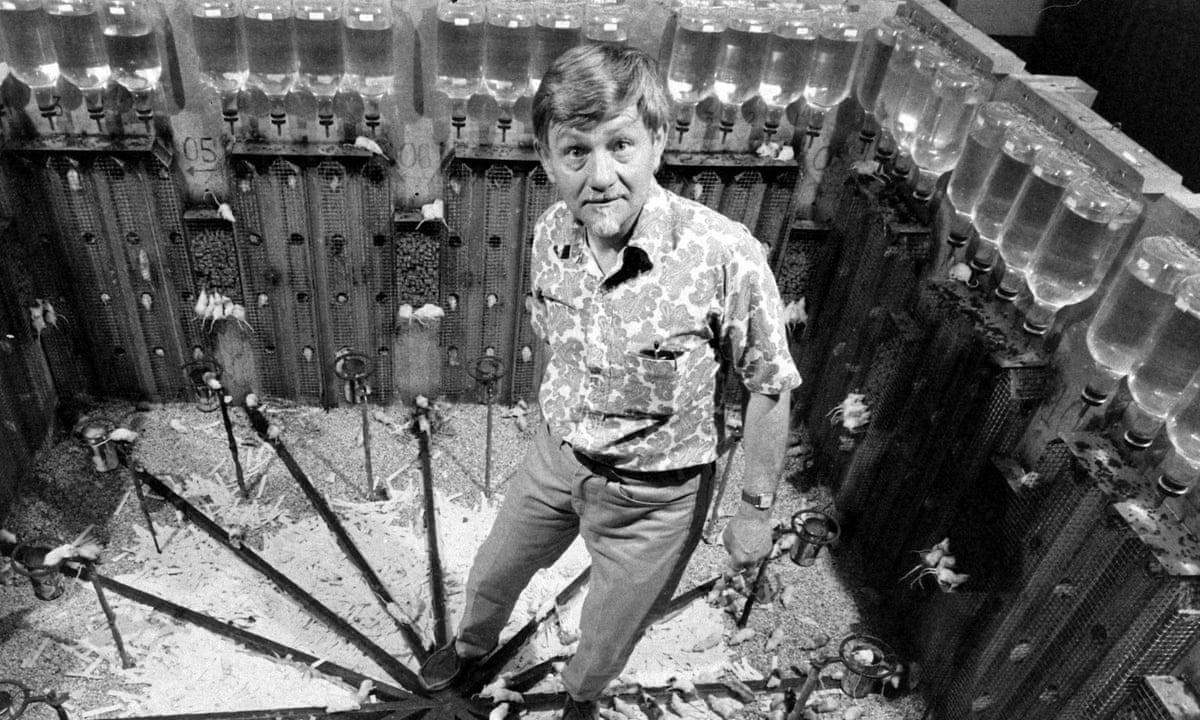
John B. Calhoun was an American ethologist and behavioral researcher who is most famous for his “Universe 25” experiment. Conducted between 1968-1973, the experiment examined the effects of overpopulation on behavior in mice.

Calhoun designed an ideal environment for rats, called “mouse utopia,” with abundant food, water and space, in order to study the social dynamics of a growing population.
Initially, the colony prospered, but after 317 days, population growth began to stagnate. Upon reaching 600 mice, serious social problems arose: hierarchies were established, the strongest individuals began to attack others, and aggressive and maladaptive behaviors emerged, such as violence between females and a lack of reproductive interest in males. As passive, non-reproductive (beautiful mice) males dominated, the birth rate plummeted, juvenile mortality reached 100%, and the colony collapsed into cannibalism and homosexuality.
The experiment was repeated 25 times, each time with similar results, and has been used to model the study of social collapse and urban sociology.
Calhoun saw the fate of the population of mice as a metaphor for the potential fate of man. He characterized the social breakdown as a “second death.” His study has been cited by writers such as Bill Perkins as a warning of the dangers of living in an “increasingly crowded and impersonal world.” Others took different lessons; medical historian Edmund Ramsden has hypothesized that the mouse society fell from excessive social interaction, rather than density per se.

See more »

read more
Marky Mark: 20 Nostalgic Photos of Young Mark Wahlberg in the 1990s

Marky Mark: 20 Nostalgic Photos of Young Mark Wahlberg in the 1990s

Mark Wahlberg (born June 5, 1971), formerly known by his stage name Marky Mark, is an American actor, producer, and former rapper. His work as a leading man spans the comedy, drama, and action genres. He has received multiple accolades, including a BAFTA Award, and nominations for two Academy Awards, three Golden Globe Awards, and nine Primetime Emmy Awards.

Wahlberg was born in Boston. As a youth, he took part in a number of violent and racially motivated attacks, resulting in a felony conviction. He gained fame as a member of the hip hop group Marky Mark and the Funky Bunch in the 1990s, with whom he released the albums Music for the People (1991) and You Gotta Believe (1992). Wahlberg made his screen debut in Renaissance Man (1994) and had his first starring role in Fear (1996).
His truly breakthrough performance was as Eddie Adams, also known as Dirk Diggler, a porn actor, in the critically acclaimed film Boogie Nights (1997). This role significantly boosted his acting career. Wahlberg continued to build his filmography with roles in Traveller (1997), The Big Hit (1998), The Corruptor (1999), and Three Kings (1999).
The 1990s were a period of significant transformation for Mark Wahlberg, marked by his initial success in music, his eventual transition to acting, and the lingering shadow of his past controversies.

See more »

read more

Mystery of Al Capone’s Vaults, The

1 9 8 6 (USA) 1 x 120 minute episode Geraldo Rivera began his career in the early 1970s as an investigative journalist. His story about patients and students with intellectual abilities at two facilities in New York caught the attention of John Lennon, and together, Lennon and Rivera produced a benefit concert called “One to […]
read more
30 Gorgeous Photos of Irene Papas in the 1950s and ’60s

30 Gorgeous Photos of Irene Papas in the 1950s and ’60s

Born 1929 as Eirini Lelekou, Greek actress and singer Irene Papas starred in over 70 films in a career spanning more than 50 years. She gained international recognition through such popular award-winning films as The Guns of Navarone (1961), Zorba the Greek (1964) and Z (1969). She was a powerful protagonist in films including The Trojan Women (1971) and Iphigenia (1977). She played the title roles in Antigone (1961) and Electra (1962). She had a fine singing voice, on display in the 1968 recording Songs of Theodorakis.

Papas won Best Actress awards at the Berlin International Film Festival for Antigone and from the National Board of Review for The Trojan Women. Her career awards include the Golden Arrow Award in 1993 at Hamptons International Film Festival, and the Golden Lion Award in 2009 at the Venice Biennale.
Papas spent her final years in home care at her niece’s house in Kifissia. She died there in 2022, at the age of 93. Take a look at these gorgeous photos to see portraits of Irene Papas in the 1950s and 1960s.

See more »

read more
The Story of Josef Menšík, the Last Owner and Knight of Strakonicku Castle in Dobrš

The Story of Josef Menšík, the Last Owner and Knight of Strakonicku Castle in Dobrš

This is Josef Menšík, the last owner and knight of Strakonicku castle in Dobrš who tried to stop a convoy of German tanks while wearing a suit of armor and seated on a horse when they tried to cross into Czechoslovakia in 1938.

Born in 1870 in the Bohemian Forest, Menšík developed a fascination with history from a young age.
In 1911, he purchased the crumbling Dobrš Castle and dedicated his life to restoring it. He rejected modern conveniences, living without electricity, and filled the fortress with medieval artifacts, many of which he smuggled from abroad.
For decades, Menšík lived as a self-styled knight. Locals often saw him riding his horse in full armor, teaching history to anyone willing to listen. His castle became a place for schoolchildren to visit and learn about the Middle Ages while seeing his amazing collection of relics.

In 1938, as German forces were about to invade Czechoslovakia, Menšík’s beliefs were tested. Following the Munich Agreement, Nazi tanks began crossing into the Sudetenland. Most citizens could do little but watch in despair as their country was occupied.
Menšík refused to stay passive. When he heard that German forces were coming near Bučina, he put on his armor, got on his horse, and rode out to block the road. Armed with a sword and halberd, he positioned himself directly in the path of the advancing tanks.
The German soldiers were stunned by the surreal sight. Some hesitated, unsure of how to respond, while others laughed or gestured dismissively, believing Menšík to be mad. Eventually, the tanks moved forward, forcing him aside, but his act of defiance, though it didn’t stop the occupation, inspired many.
Josef Menšík lived to see the end of the war but passed away in 1945 at the age of 75. He became a local legend, remembered as a man who stood by his principles and dared to face an invader.
read more

Gre-Gory – “Big Bad Vampire Bat”

Mattel’s Gre-Gory was an 8-inch-tall rubber toy bat with a 12-inch wingspan. Gre-Gory’s chest was devoid of flesh or bone, leaving his internal biology visible. By pressing a button on his back, you could make his “red liquid” (the adverts were careful not to call it blood) flow. The comic book ad ordered kids to […]
read more

Blob, The (1988)

Chuck Russell’s remake of the 1958 classic film sported a screenplay by Frank (The Shawshank Redemption) Darabont and some truly gnarly effects when the titular monster devours and digests its victims. Cheerleader Meg Penny (Shawnee Smith) is out on her first date with football player Paul Taylor (Donovan Leitch, son of the singer-songwriter Donovan). While […]
read more
40 Amazing Photographs of a Young Angelina Jolie in the 1990s

40 Amazing Photographs of a Young Angelina Jolie in the 1990s

Angelina Jolie (born June 4, 1975) is an American actress, filmmaker, and humanitarian. The recipient of numerous accolades, including two Academy Awards, a Tony Award and three Golden Globe Awards, she has been named Hollywood’s highest-paid actress multiple times.

Jolie committed to acting professionally at the age of 16, but initially found it difficult to pass auditions, often being told that her demeanor was “too dark.” She appeared in five of her brother’s student films, made while he attended the USC School of Cinema-Television, as well as in several music videos.
Jolie started her professional film career in 1993, when she played her first leading role in the direct-to-video science-fiction sequel Cyborg 2. She was so disappointed with the film that she did not audition again for a year. Following a supporting role in the independent film Without Evidence (1995), she starred in her first major studio film, Hackers (1995). The film failed to make a profit at the box office, but developed a cult following after its video release. The role in Hackers is considered Jolie’s breakthrough.
Jolie’s career prospects improved after she won a Golden Globe Award for her performance in TNT’s George Wallace (1997). The film was well received by critics, and Jolie received a nomination for a Primetime Emmy Award for Outstanding Supporting Actress in a Miniseries or a Movie for her performance.
Jolie portrayed supermodel Gia Carangi in HBO’s Gia (1998). The television film chronicles the destruction of Carangi’s life and career as a result of her addiction to heroin, and her decline and death from AIDS in the mid-1980s. For the second consecutive year, Jolie won a Golden Globe Award and received an Emmy Award nomination. She also won her first Screen Actors Guild Award.
Following the previously filmed gangster film Hell’s Kitchen (1998), Jolie returned to the screen in Playing by Heart (1998), part of an ensemble cast that included Sean Connery, Gillian Anderson, and Ryan Phillippe. The film received predominantly positive reviews, and Jolie was praised in particular. She won the Breakthrough Performance Award from the National Board of Review.
Jolie next took the supporting role of Lisa, a sociopathic patient in a psychiatric hospital, in Girl, Interrupted (1999), an adaptation of Susanna Kaysen’s 1993 memoir. She won the Golden Globe Award for Best Supporting Actress – Motion Picture, the Screen Actors Guild Award for Outstanding Performance by a Female Actor in a Supporting Role and the Academy Award for Best Supporting Actress for her performance in the film.
In 2000, Jolie appeared in her first summer blockbuster, Gone in 60 Seconds, which became her highest-grossing film to that point, earning $237.2 million internationally. She later explained that the film had been a welcome relief after her emotionally demanding role in Girl, Interrupted.

See more »

read more