
Yesteryear

Patricia Prunonosa: A Timeless Muse of 1950s Parisian Fashion

Patricia Prunonosa: A Timeless Muse of 1950s Parisian Fashion

Patricia Prunonosa was a prominent French fashion model during the 1950s, known for her refined elegance and distinctive presence in haute couture photography. Frequently featured in the collections of designer Jacques Fath, she became a recognizable figure in post-war Paris fashion, embodying the graceful sophistication of the era.

Prunonosa was photographed by renowned artists such as Walde Huth, often styled in luxurious ensembles—velvet dresses, fur-trimmed coats, and structured silhouettes—that captured the spirit of mid-century couture. Her appearances in fashion editorials and campaigns positioned her as a symbol of classic Parisian glamour.
Prunonosa’s beauty and poise also earned her a place in major fashion magazines, including Vogue, where she modeled elegant streetwear and formal evening attire against the backdrop of Parisian architecture. With a serene, self-assured expression and graceful posture, she helped define the visual language of fashion in the 1950s.
Though less remembered today than some of her contemporaries, Patricia Prunonosa remains a striking figure in vintage fashion photography—an icon of understated luxury and a muse to some of the greatest fashion minds of her time.
Patricia Prunonosa wearing gown by Jacques Fath, photo by Willy Maywald, Paris, 1950

Patricia Prunonosa in a grey three-quarter astrakhan coat, featuring large cuffs and shawl collar, by Revillon, photo by Georges Saad at Versailles, 1952

Patricia Prunonosa in raw silk dress in anthracite and ivory by Givenchy, photo by Seeberger, 1952

Patricia Prunonosa in a black light-weight wool dress by Jacques Fath, photo by Willy Maywald, Paris, 1953

Patricia Prunonosa in anthracite satin and black cut velvet evening dress and stole by Christian Dior, photo by Georges Saad, 1953

See more »

read more
Grand Slam Bombs Awaiting Delivery, January 7, 1945

Grand Slam Bombs Awaiting Delivery, January 7, 1945

This remarkable photograph showcases the immense scale of the Grand Slam bomb, one of the most powerful weapons used during World War II. Captured on January 7, 1945, at the Elswick Works factory in Newcastle, England, the image reveals rows of freshly manufactured Grand Slam bombs, lined up and ready for deployment.

Weighing a staggering 22,000 pounds (10,000 kilograms), these bombs were designed to penetrate deep into heavily fortified structures, delivering devastating destruction. Their creation represented a major breakthrough in aerial warfare, highlighting the extraordinary engineering and industrial capabilities of the era.
Preserved by Tyne & Wear Archives & Museums, this rare photograph offers a glimpse into the immense wartime production efforts that contributed to the Allied victory. It stands as a powerful testament to both the technological advancements and the sacrifices made during one of the most critical periods in history.
read more
Amazing Photos of the 1936 Pontiac Six Motorhome

Amazing Photos of the 1936 Pontiac Six Motorhome

A rare survivor of the 1930s motorhome era, this 1936 Pontiac Six Motorhome exemplifies early innovation in mobile living. Built on the sturdy chassis of a Pontiac Six—General Motors’ reliable mid-range model—this vehicle was transformed from a conventional automobile into a custom coach-built motorhome, blending automotive engineering with the comforts of home.

At a time when recreational vehicles were still a novelty, and long before factory-made RVs became widespread, bespoke motorhomes like this one represented luxury, adventure, and craftsmanship. The wooden coachwork and metal fittings were often handcrafted by skilled artisans, and interiors featured space-saving ingenuity: fold-out furniture, built-in cabinetry, and small kitchenettes designed for life on the road.
Powered by Pontiac’s dependable inline-six engine, the vehicle combined mobility with mechanical reliability, enabling extended travel at a time when paved highways were still developing across North America.
The 1936 Pontiac Six Motorhome is more than just a vehicle—it’s a rolling time capsule from the golden age of road travel, reflecting the American spirit of exploration and the growing desire for freedom through mobility during the interwar years.

See more »

read more
20 Throwback Portraits of a Young and Beautiful Nicole Kidman in the 1980s

20 Throwback Portraits of a Young and Beautiful Nicole Kidman in the 1980s

Nicole Kidman (born June 29, 1967) is an Australian and American actress and producer. Known for her work in film and television productions across many genres, she has consistently ranked among the world’s highest-paid actresses since the late 1990s. Her accolades include an Academy Award, two Primetime Emmy Awards, a British Academy Film Award, and six Golden Globe Awards.

Kidman’s career in the 1980s was primarily in Australian film and television, where she quickly rose to prominence before making her international breakthrough at the end of the decade.
In 1983, 16-year-old Kidman made her film debut in a remake of the Australian holiday classic Bush Christmas. The same year, she had a supporting role in the TV series Five Mile Creek and appeared in the action comedy BMX Bandits, which is often cited as her first memorable step in acting.
Throughout the mid-1980s, Kidman continued to build her resume with roles in various Australian films like Windrider (1986) and television programs. She began gaining significant recognition in Australia with her role in the 1987 miniseries Vietnam, for which she won her first Australian Film Institute Award. She followed this with another Australian Film Institute Award for her performance in Emerald City (1988).
Kidman then starred alongside Sam Neill in the 1989 thriller Dead Calm as Rae Ingram, the wife of a naval officer who is menaced by a castaway at sea, played by Billy Zane. The film proved to be her breakthrough role, one of the first films for which she gained international recognition. Regarding her performance, Variety commented how “throughout the film, Kidman is excellent. She gives the character of Rae real tenacity and energy.” Meanwhile, critic Roger Ebert noted the excellent chemistry between the leads, stating, “Kidman and Zane do generate real, palpable hatred in their scenes together.”
Kidman followed that up with the Australian miniseries Bangkok Hilton before moving on to star alongside her then-boyfriend and future ex-husband, Tom Cruise, in the 1990 sports action film Days of Thunder, as a young doctor who falls in love with a NASCAR driver. It was considered her international breakout film and was among the year’s highest-grossing films.

See more »

read more
25 Fascinating Portraits of a Young Anne Murray in the 1970s

25 Fascinating Portraits of a Young Anne Murray in the 1970s

Anne Murray (born June 20, 1945) is a retired Canadian country, pop and adult contemporary music singer who has sold over 55 million album copies worldwide during her over 40-year career. She has won four Grammys including the Grammy Award for Best Female Pop Vocal Performance in 1979.

While released at the very end of 1969, “Snowbird” became a massive hit in 1970, reaching #1 on Billboard’s Adult Contemporary chart and making Murray the first Canadian woman to earn a gold record in the United States. This song typified her signature crossover sound.
Murray skillfully blended country, pop, and adult contemporary styles, appealing to a wide audience. She had 28 songs on the Billboard Hot 100 chart, eight #1 hits on the Adult Contemporary chart, and 25 Top 10 hits on the Hot Country Songs chart throughout her career.
Murray released 14 albums in the 1970s, with several reaching the Top 10 in Canada, including the chart-toppers “Annie” (1972) and “Let’s Keep It That Way” (1978).
Known for her warm alto voice, wholesome image, and stylistic versatility, Anne Murray became a “queen of middle-of-the-road (MOR) and country radio” during the 1970s and 1980s. She was cited as an influence by subsequent Canadian stars like k.d. lang, Jann Arden, Shania Twain, and Sarah McLachlan.

See more »

read more
Venice in 1891 Through Fascinating Photos

Venice in 1891 Through Fascinating Photos

In the 1890s, Venice was a city suspended between past and present. Though politically part of unified Italy, it remained steeped in history—its canals, palaces, and churches largely unchanged. Artists and travelers flocked to capture its romantic decay, while local life continued around gondolas, boatyards, and quiet squares.

These fascinating photos of Italian photographer Ferdinando Ongania (1842–1911) were published in the 1890s in the two volume Calli e Canali in Venezia (Streets and Canals in Venice) that contained one hundred photogravures of the canals, streets and inhabitants of Venice.
Gondola, Venice, 1891

Equestrian Statue of Bartolomeo Colleoni, Venice, 1891

Arsenale, Venice, 1891

Basilica di Santa Maria della Salute, Venice, 1891

Bridge of Sighs, Venice, 1891

See more »

read more
The Story of John Wheeldon, a Famous and Unusual Rat-Catcher in England in the Early 20th Century

The Story of John Wheeldon, a Famous and Unusual Rat-Catcher in England in the Early 20th Century

John Wheeldon, later known as John Gaunt, achieved widespread renown as a most unusual rat-catcher. His fame was reported widely across local and national newspapers from the early 1900s until his death in 1924. He was still recorded in magazines as late as the 1950s.

John Gaunt with his three terriers, three fox cubs and ferret.

John was the son of Robert Gaunt and Joanna Poyser Wheeldon. He was born at Heage in Q2 of 1850 a few months before his parents were married and so was recorded as John Wheeldon.
On December 13, 1875, John Wheeldon married Rose Ann Petts at Derby. At his marriage he was aged 25 and his wife was aged 19; both recorded as living on Duffield Road, Derby. John had no father recorded. This was not unusual when the father’s surname differed. John was working as a smith and Rose Ann as a machine worker.
Sometime in the early 1900s John Gaunt’s expertise at rat catching became famous. As well as rat-catching he was also a prize-winning member of Ambergate Cottage Garden Society.
John lived in Sawmills, England but worked for the Midland Railway Company, as a rat-catcher. He was the only person known to have successfully trained foxes to kill rats for economic use, and claimed they were better then terriers because they could hold five rats in their mouths at once. The rat-catcher had to be quick, because unlike the terrier, foxes did not kill the rats outright. His two best foxes where killed accidentally by gamekeepers.
John with his tame fox and two terriers.
Such was his national fame he was described in a book as a “great sportsman and Englishman.” What follows are a few of the many newspaper articles about his time as a rat caches.
Derbyshire Times, February 7, 1900:

John Gaunt of Ambergate had an interview with the Council on the question of rat-catching. The Hurst Hill tip is a terrible nuisance to the tenant near. Gaunt was engaged as professional rat-catcher at £3 per year and will make periodical visits.

Aberdeen People’s Journal, December 23, 1905:

John Gaunt who lives near Ambergate, Derbyshire, and is the official rat-catcher to the Midland Railway, has trained a fox to be as expert as reliable a rat-catcher as any of his dogs.

Leominster News, December 29, 1905:

All railway companies suffer from periodical plagues of rats at their big warehouses, especially at the granaries. At Newark the Great Northern have recently been caused very considerable loss and trouble by the swarms of rodents, numbering thousands which infest the place. John Gaunt, who lives near Ambergate, is the official rat-catcher to the Midland Railway , and with his pack of terriers is an interesting and familiar figure in the district. He is usually to be seen carrying fox under his arm. It is a tame fox, which he has trained to be as expert a rat-catcher as any of his dogs.

John died on November 14, 1924 at the home of William Lees, grocer, in Belper Market Place. He was buried at Crich on November 18, 1924. His obituary was much reported in the press.
Derby Daily Telegraph, November 18, 1924:

The death is announced at the age of 82, of John Gaunt the famous Derbyshire ratcatcher.Gaunt lived for many years at Saw Mills, Ambergate but had latterly resided at Belper. A sketch of his somewhat remarkable career appeared in these columns in July last. He was for many years the official rat-catcher of the old Midland Railway Co. and was one of the few followers of his calling who trained for cubs to work with his terriers in the business of rat extermination. Apart from his one-time railway connection, Gaunt with his four-footed assistants, Gaunt was a familiar figure on various estates in Derbyshire, and the adjoining counties.He was also noted for the skill and resourcefulness he displayed in his work in the far distant part of the country. He used foxes for 45 years and carried them in bags from one place to another, though he would often be seen, as, for instance, in and about Derby Station with one or two juvenile Reynards under his arm or arms and a couple of alert little terriers at his heels. He has been called the prince of rat-catchers. Strange that Gaunt should have been gathered to his fathers – if so be he really is dead – just about the time of the Government rat week!

Derbyshire Times, October 25, 1924:
PUBLIC NOTICES
DERBYSHIRE COUNTY COUNCIL NATIONAL RAT WEEK
The week commencing Monday November 3rd has been selected by the Ministry of Agriculture and Fisheries for concerted action throughout the county the DESTRUCTION of RATS and MICE. The public are urged to assist by special efforts in that week to destroy any rats and mice on their premises.
Derby Daily Telegraph, November 19, 1924:
NOTED RAT-CATCHER DEAD
John Wheeldon, generally known as John Gaunt, the Ratcatcher was buried on Tuesday at the village of Crich. He was 73 years of age, and is believed to have killed over a quarter of a million rodents. He specialised in the use of foxes for ratcatching and was known the land over for his his other successful methods. Lately he lived the life of a recluse at Belper.
MR JOHN GAUNT
On Friday last the death place of Mr John Gaunt and the residence of Mr Lee, Market Place, Belper. Mr Gaunt was at one time well-known as the famous rat-catcher and could frequently be seen with his dogs following his daily work. He died at the age of 74 years. The funeral took place on Monday at Crich, the chief mourners being Mr and Mrs Lee (Belper) and Mr and Mrs F.J. Lynam (Fritchley). 
read more
40 Humorous Covers of Le Rire Magazine in the Early 20th Century

40 Humorous Covers of Le Rire Magazine in the Early 20th Century

Le Rire was a French satirical magazine first published in 1894. Founded by Félix Juven, it became one of the most popular and influential humor publications of the Belle Époque period in France. The title “Le Rire” translates to “The Laugh” in English, reflecting its focus on wit, satire, and visual humor.

The magazine was known for its colorful illustrations, caricatures, and commentary on politics, society, and culture. It featured the work of many notable French artists and cartoonists of the time, including Théophile Steinlen, Toulouse-Lautrec, and Jules Grandjouan. Through its pages, Le Rire offered both sharp political critique and lighthearted social observation, capturing the spirit of turn-of-the-century Paris.
Le Rire enjoyed great popularity in the late 19th and early 20th centuries, especially during the Dreyfus Affair, when it often published provocative and pointed artwork. Though its influence declined in the mid-20th century, Le Rire remains an important example of early illustrated satire and a valuable historical record of French cultural life during its golden age.
This collection highlights some of the most humorous covers from Le Rire magazine in the early 20th century.
Cover of Le Rire magazine, July 7, 1900

Cover of Le Rire magazine, August 10, 1901

Cover of Le Rire magazine, December 25, 1901

Cover of Le Rire magazine, June 29, 1901

Cover of Le Rire magazine, May 11, 1901

See more »

read more
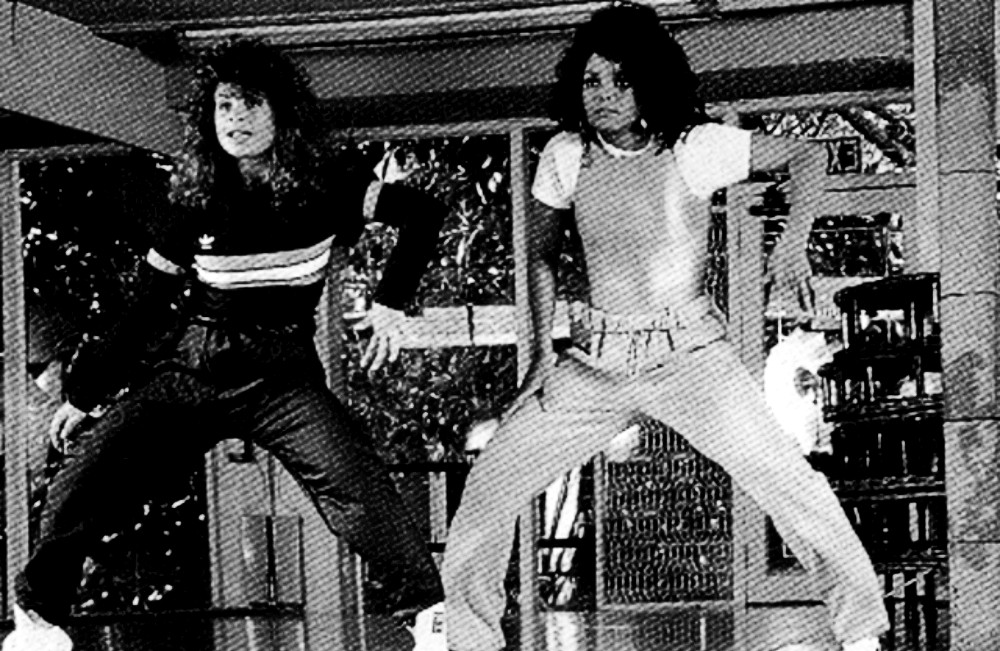
Did You Know That Paula Abdul Was a Choreographer for Janet Jackson in the Mid-1980s?

Did You Know That Paula Abdul Was a Choreographer for Janet Jackson in the Mid-1980s?

“I have so many great memories choreographing and dancing with Janet! ‪She is truly a phenomenal performer!‬” – Paula Abdul

In the early 1980s, Abdul was discovered by the Jacksons, after a few of the band members had watched her while attending a Los Angeles Lakers game. She was signed to do the choreography for the video to their single “Torture.” Abdul recalled feeling intimidated by having to tell the Jacksons how to dance, stating that she was “not quite sure how [she] got through that.”

The success of the choreography in the video led to Abdul’s career as choreographer of music videos, notably Janet Jackson’s “What Have You Done for Me Lately,” “Nasty,” “When I Think of You” and “Control” videos. It was also due to the success of the video that Abdul was chosen to be the choreographer for the Jacksons’ Victory tour.
Of her time with Janet Jackson, Abdul says “I’m very grateful, because this was really the big start to my career. When I was introduced to Janet, I was told by A&M Records that Control was going to be an important album for her, and when I started hearing demos, I was really, really excited to work with her. I felt like I had a chance here to really create something big for her. It was so inspiring.
“Jimmy Jam and Terry Lewis wrote genius music, and Janet had a really important voice in it. You don’t hear ‘Nasty’ and go, ‘Oh, this is a dance jam.’ It was a very different kind of song, kind of like how ‘Straight Up’ was for me: This could define an artist completely, and I wanted to create something that would be signature moves but also define her as being in charge.”
“This video was nerve-wracking for her, because she had never danced with just all guys. But I picked the best in the business, and everything came into place perfectly. I choreographed ‘Nasty’ — this is the craziest thing — in a half hour.
“I shared an apartment with some Laker Girls and there was no floor-length mirror, so I did it in the bathroom. There was no room in this little old apartment, and I choreographed it with a mirror that I could see from my waist up. That’s it. And everything worked out.”

See more »

read more
35 Stunning Photos of Virginia Mayo in the 1940s

35 Stunning Photos of Virginia Mayo in the 1940s

Born 1920 as Virginia Clara Jones in St. Louis, Missouri, American actress and dancer Virginia Mayo began her career in vaudeville and as a chorus girl before moving into films. She adopted the stage name “Mayo” from her vaudeville mentor, Andy Mayo. During the 1940s and 1950s, she became a prominent Hollywood star, known for both her comedic and dramatic roles.

Mayo gained critical acclaim for her performance in the 1946 film The Best Years of Our Lives, where she played the role of Marie Derry. Another of her well-known roles was in the gangster classic White Heat (1949), where she starred opposite James Cagney. She also appeared in films such as The Secret Life of Walter Mitty (1947) and The Silver Chalice (1954). She often starred alongside Danny Kaye and was known for her beauty, charm, and versatility on screen.
Mayo continued to make occasional film and television appearances into the 1990s. She died in 2005, at the age of 84. Take a look at these stunning photos to see the beauty of a young Virginia Mayo in the 1940s.

See more »

read more