
Yesteryear

Cyndi Lauper Photographed by Rob Verhorst at Pullitzer Hotel in Amsterdam, Netherlands, 1980

Cyndi Lauper Photographed by Rob Verhorst at Pullitzer Hotel in Amsterdam, Netherlands, 1980

In November 1980, before her meteoric rise to solo stardom with hits like “Girls Just Want to Have Fun,” Cyndi Lauper was in Amsterdam as part of her band, Blue Angel. It was during this period, specifically on November 19, 1980, that she was photographed by Rob Verhorst at the Pulitzer Hotel.

At this time, Blue Angel had released their eponymous debut album, which, despite critical acclaim for Lauper’s distinctive vocals, did not achieve significant commercial success. The photoshoot at the Pulitzer Hotel likely served as promotional material for the band.
While the exact details of the photoshoot itself are not widely publicized, Cyndi Lauper herself has reminisced about her time in Amsterdam in 1980. In an interview, she mentioned releasing a single there and even an incident where she twisted her ankle onstage during a show, requiring her to walk with a cane afterward. She also fondly recalled purchasing unique clothing items, like stretch leopard pants and a reversible coat, which she would incorporate into her stage attire.

See more »

read more
Alice Faye: A Golden Voice of Hollywood’s Golden Age

Alice Faye: A Golden Voice of Hollywood’s Golden Age

Alice Faye was one of the most beloved stars of Hollywood’s Golden Age—a singer and actress whose warmth, charm, and husky contralto voice made her a standout in 1930s and 1940s cinema.

Faye began her career in entertainment as a chorus girl and band singer. Her big break came when she joined Rudy Vallée’s orchestra, which led to a role in the 1934 film George White’s Scandals. Her performance caught the attention of 20th Century Fox, where she quickly became one of the studio’s top stars.
Throughout the 1930s and early 1940s, Faye became known for her musical roles, particularly in Technicolor extravaganzas. Films like Alexander’s Ragtime Band (1938), Lillian Russell (1940), and Hello, Frisco, Hello (1943) showcased not only her acting talent but her rich singing voice. She helped define the Fox musical style—sentimental, stylish, and tuneful.
Alice Faye was also a favorite of Fox studio chief Darryl F. Zanuck, who considered her the studio’s premier leading lady before the rise of Betty Grable. Despite her success, she was known for her grounded personality and dislike of Hollywood pretension. Take a look at these glamorous photos to see the beauty of a young Alice Faye in the 1930s.

See more »

read more
Jane Russell as Mamie Stover in Publicity Photos for in “The Revolt of Mamie Stover” (1956)

Jane Russell as Mamie Stover in Publicity Photos for in “The Revolt of Mamie Stover” (1956)

The Revolt of Mamie Stover is a 1956 American DeLuxe Color romantic drama film directed by Raoul Walsh and produced by Buddy Adler from a screenplay by Sydney Boehm, based on the 1951 novel of the same name by William Bradford Huie.

In the film, Jane Russell stars in the title role as Mamie Stover, a tough and ambitious woman who leaves San Francisco for Honolulu in the early 1940s in search of a better life. Hers performance as Mamie showcases her strong screen presence and signature sultry charisma. The story follows Mamie as she rises from being a nightclub hostess to a wealthy businesswoman during World War II, all while navigating romance, prejudice, and her own personal ambitions. The film explores themes of class, independence, and the evolving role of women.
The role of Mamie Stover originally was intended for Marilyn Monroe, but Marilyn was on “strike” with Fox over contact negotiations and was turning down many roles offered to her. The role eventually was offered to Jane Russell, whose confirmation was reported in November 1955.
In the novel, Mamie Stover was described as a blonde, resembling actress Lizabeth Scott. However, producer Buddy Adler believed audiences would be thrown if Russell, one of the more famous brunettes in Hollywood, went blonde so he had Jane become a redhead. Russell wore a long red wig, but dyed her short natural black hair red along with her eyebrows.
Russell’s dresses and costumes in The Revolt of Mamie Stover were designed by the renowned Hollywood costume designer William Travilla, who was also famous for his collaborations with Marilyn Monroe. Mamie Stover’s wardrobe reflects her journey from a woman forced out of San Francisco to a successful, financially independent, albeit controversial, figure in Honolulu. The costumes aimed to highlight Russell’s iconic figure and the character’s audacious personality, while still adhering to the censorship of the time.
In its list of the 100 top box-office hits of 1956, Variety Weekly (January 2, 1957 issue) ranked The Revolt of Mamie Stover at #44 for the year in box office rentals earning $2 million, most assuredly earning more in ticket sales. The June 18, 1956 issue of Time reported the film at #3 as one of “the most popular and successful movies in the U.S. last month, according to the tradesheet Variety” coming in behind Alfred Hitchcock’s The Man Who Knew Too Much and The Man in the Gray Flannel Suit.

See more »

read more
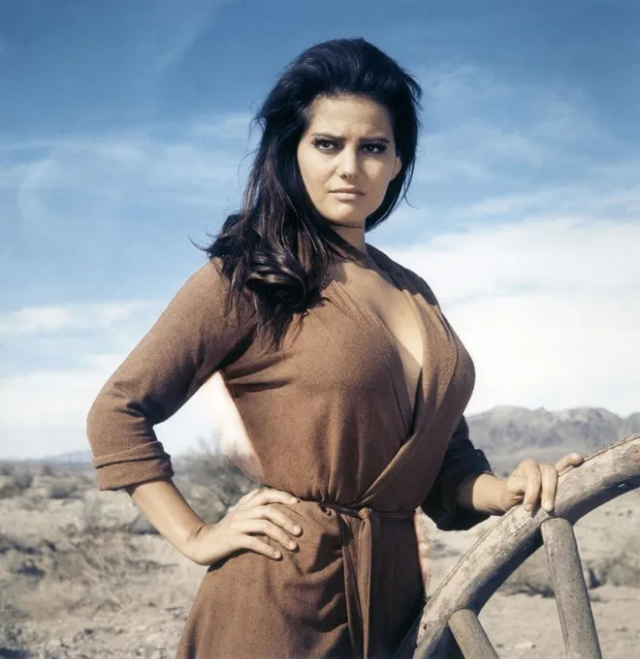
40 Fabulous Photos of Claudia Cardinale During the Filming of ‘Once Upon a Time in the West’ (1968)

40 Fabulous Photos of Claudia Cardinale During the Filming of ‘Once Upon a Time in the West’ (1968)

Once Upon a Time in the West is a 1968 epic spaghetti Western film directed by Sergio Leone, who co-wrote it with Sergio Donati, based on a story by Dario Argento, Bernardo Bertolucci and Leone. It stars Henry Fonda, playing against type as the villain, Charles Bronson as his nemesis, Jason Robards as a bandit and Claudia Cardinale as a widowed homesteader. The widescreen cinematography was by Tonino Delli Colli and the acclaimed film score was by Ennio Morricone.

In 2009, the film was selected for preservation in the US National Film Registry by the Library of Congress as being “culturally, historically, or aesthetically significant”. The film is regarded as one of the greatest Westerns of and one of the greatest films of all time.
These fabulous photos capture portraits of Claudia Cardinale during the filming of Once Upon a Time in the West in 1968.

See more »

read more
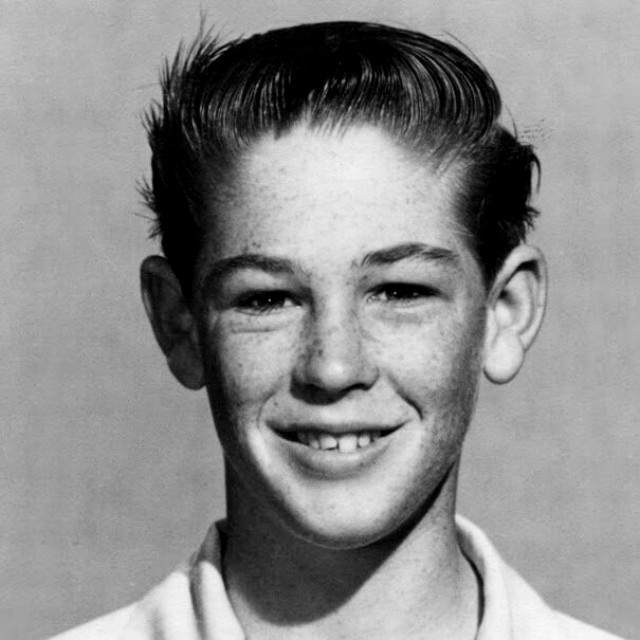
20 Vintage Photos of a Young Brian Wilson in the 1950s

20 Vintage Photos of a Young Brian Wilson in the 1950s

Brian Douglas Wilson (June 20, 1942 – June 11, 2025) was an American musician, songwriter, singer and record producer who co-founded the Beach Boys. Often called a genius for his novel approaches to pop composition and mastery of recording techniques, he is widely acknowledged as one of the most innovative and significant songwriters of the 20th century. His best-known work is distinguished for its high production values, complex harmonies and orchestrations, vocal layering, and introspective or ingenuous themes. He was also known for his versatile head voice and falsetto, which degraded after the 1970s.

Brian spent his childhood in Hawthorne, California, with his younger brothers Dennis and Carl. While their home appeared to be a typical middle-class suburban setting, it was marked by significant turmoil. Their father, Murry Wilson, was an aspiring but largely unsuccessful songwriter, and by many accounts, was physically and mentally abusive towards his sons. Their mother, Audree Wilson, reportedly struggled with alcoholism. Brian himself recalled his childhood with mixed feelings, stating he “had a good childhood—except for my dad beating me up all the time.” He attributed his partial deafness in one ear to a childhood beating.
Despite this difficult backdrop, music was a constant presence in the Wilson home. Murry and Audree both played piano, and the brothers would often sing along, developing an early ability to harmonize. This musical upbringing became a crucial escape for Brian from his painful home life. He exhibited an early aptitude for music, learning by ear and teaching himself to play piano by spending hours mastering his favorite songs. He was captivated by diverse artists, from the classical compositions of George Gershwin (whose “Rhapsody in Blue” was one of the first pieces of music to “blow his mind”) and Tchaikovsky, to the intricate harmonies of vocal groups like The Four Freshmen, and the rock and roll rhythms of Chuck Berry. Rosemary Clooney also influenced his understanding of phrasing and gentle singing.
A pivotal moment came on his 16th birthday in 1958 when Brian received a reel-to-reel tape recorder. This allowed him to experiment with overdubbing, recording his vocals and those of Carl and their mother, a technique that would become a hallmark of his later production style. He and Carl avidly listened to Johnny Otis’s R&B radio show, absorbing its sounds and inspiring Brian to change his piano-playing style and begin writing his own songs.
By the late 1950s, Brian was already performing with his brothers and cousin Mike Love at parties and small gatherings. He taught his family members harmonies, dissecting songs to understand their structure. In high school, he was already focused on a career in music, stating in an essay that his ambition was to “make a name for myself… in music.”
The groundwork for The Beach Boys was laid in these years. Brian, Carl, Dennis, Mike Love, and a high school friend, Al Jardine, began practicing together. Inspired by his brother Dennis’s passion for surfing and the burgeoning surf culture of Southern California, Brian started writing songs that romanticized the beach lifestyle. By the very end of the decade, as the 1950s transitioned into the 1960s, this group would officially form as “The Pendletones” (later renamed “The Beach Boys”), with Brian as the primary songwriter, producer, and musical visionary. His challenging childhood, coupled with his innate musical genius and diverse influences, propelled him towards a future that would revolutionize popular music.

See more »

read more
Patricia Prunonosa: A Timeless Muse of 1950s Parisian Fashion

Patricia Prunonosa: A Timeless Muse of 1950s Parisian Fashion

Patricia Prunonosa was a prominent French fashion model during the 1950s, known for her refined elegance and distinctive presence in haute couture photography. Frequently featured in the collections of designer Jacques Fath, she became a recognizable figure in post-war Paris fashion, embodying the graceful sophistication of the era.

Prunonosa was photographed by renowned artists such as Walde Huth, often styled in luxurious ensembles—velvet dresses, fur-trimmed coats, and structured silhouettes—that captured the spirit of mid-century couture. Her appearances in fashion editorials and campaigns positioned her as a symbol of classic Parisian glamour.
Prunonosa’s beauty and poise also earned her a place in major fashion magazines, including Vogue, where she modeled elegant streetwear and formal evening attire against the backdrop of Parisian architecture. With a serene, self-assured expression and graceful posture, she helped define the visual language of fashion in the 1950s.
Though less remembered today than some of her contemporaries, Patricia Prunonosa remains a striking figure in vintage fashion photography—an icon of understated luxury and a muse to some of the greatest fashion minds of her time.
Patricia Prunonosa wearing gown by Jacques Fath, photo by Willy Maywald, Paris, 1950

Patricia Prunonosa in a grey three-quarter astrakhan coat, featuring large cuffs and shawl collar, by Revillon, photo by Georges Saad at Versailles, 1952

Patricia Prunonosa in raw silk dress in anthracite and ivory by Givenchy, photo by Seeberger, 1952

Patricia Prunonosa in a black light-weight wool dress by Jacques Fath, photo by Willy Maywald, Paris, 1953

Patricia Prunonosa in anthracite satin and black cut velvet evening dress and stole by Christian Dior, photo by Georges Saad, 1953

See more »

read more
Grand Slam Bombs Awaiting Delivery, January 7, 1945

Grand Slam Bombs Awaiting Delivery, January 7, 1945

This remarkable photograph showcases the immense scale of the Grand Slam bomb, one of the most powerful weapons used during World War II. Captured on January 7, 1945, at the Elswick Works factory in Newcastle, England, the image reveals rows of freshly manufactured Grand Slam bombs, lined up and ready for deployment.

Weighing a staggering 22,000 pounds (10,000 kilograms), these bombs were designed to penetrate deep into heavily fortified structures, delivering devastating destruction. Their creation represented a major breakthrough in aerial warfare, highlighting the extraordinary engineering and industrial capabilities of the era.
Preserved by Tyne & Wear Archives & Museums, this rare photograph offers a glimpse into the immense wartime production efforts that contributed to the Allied victory. It stands as a powerful testament to both the technological advancements and the sacrifices made during one of the most critical periods in history.
read more
Amazing Photos of the 1936 Pontiac Six Motorhome

Amazing Photos of the 1936 Pontiac Six Motorhome

A rare survivor of the 1930s motorhome era, this 1936 Pontiac Six Motorhome exemplifies early innovation in mobile living. Built on the sturdy chassis of a Pontiac Six—General Motors’ reliable mid-range model—this vehicle was transformed from a conventional automobile into a custom coach-built motorhome, blending automotive engineering with the comforts of home.

At a time when recreational vehicles were still a novelty, and long before factory-made RVs became widespread, bespoke motorhomes like this one represented luxury, adventure, and craftsmanship. The wooden coachwork and metal fittings were often handcrafted by skilled artisans, and interiors featured space-saving ingenuity: fold-out furniture, built-in cabinetry, and small kitchenettes designed for life on the road.
Powered by Pontiac’s dependable inline-six engine, the vehicle combined mobility with mechanical reliability, enabling extended travel at a time when paved highways were still developing across North America.
The 1936 Pontiac Six Motorhome is more than just a vehicle—it’s a rolling time capsule from the golden age of road travel, reflecting the American spirit of exploration and the growing desire for freedom through mobility during the interwar years.

See more »

read more
20 Throwback Portraits of a Young and Beautiful Nicole Kidman in the 1980s

20 Throwback Portraits of a Young and Beautiful Nicole Kidman in the 1980s

Nicole Kidman (born June 29, 1967) is an Australian and American actress and producer. Known for her work in film and television productions across many genres, she has consistently ranked among the world’s highest-paid actresses since the late 1990s. Her accolades include an Academy Award, two Primetime Emmy Awards, a British Academy Film Award, and six Golden Globe Awards.

Kidman’s career in the 1980s was primarily in Australian film and television, where she quickly rose to prominence before making her international breakthrough at the end of the decade.
In 1983, 16-year-old Kidman made her film debut in a remake of the Australian holiday classic Bush Christmas. The same year, she had a supporting role in the TV series Five Mile Creek and appeared in the action comedy BMX Bandits, which is often cited as her first memorable step in acting.
Throughout the mid-1980s, Kidman continued to build her resume with roles in various Australian films like Windrider (1986) and television programs. She began gaining significant recognition in Australia with her role in the 1987 miniseries Vietnam, for which she won her first Australian Film Institute Award. She followed this with another Australian Film Institute Award for her performance in Emerald City (1988).
Kidman then starred alongside Sam Neill in the 1989 thriller Dead Calm as Rae Ingram, the wife of a naval officer who is menaced by a castaway at sea, played by Billy Zane. The film proved to be her breakthrough role, one of the first films for which she gained international recognition. Regarding her performance, Variety commented how “throughout the film, Kidman is excellent. She gives the character of Rae real tenacity and energy.” Meanwhile, critic Roger Ebert noted the excellent chemistry between the leads, stating, “Kidman and Zane do generate real, palpable hatred in their scenes together.”
Kidman followed that up with the Australian miniseries Bangkok Hilton before moving on to star alongside her then-boyfriend and future ex-husband, Tom Cruise, in the 1990 sports action film Days of Thunder, as a young doctor who falls in love with a NASCAR driver. It was considered her international breakout film and was among the year’s highest-grossing films.

See more »

read more