
Yesteryear

30 Amazing Photographs Capture Everyday Life in the Soviet Union in 1960

30 Amazing Photographs Capture Everyday Life in the Soviet Union in 1960

Jerry Cooke, a celebrated photojournalist known for his vivid and humanistic style, visited the Soviet Union in 1960 and captured a rare and nuanced glimpse into everyday life behind the Iron Curtain during the Cold War. His photographs from Russia in that era were published in LIFE magazine and other outlets, offering Western audiences an intimate look at Soviet life beyond the politics.

Cooke focused on the lives of ordinary people — families walking in parks, children playing, workers commuting. His lens highlighted the shared humanity between East and West, often in contrast to the West’s image of a grim, totalitarian USSR.
He was particularly fascinated by young people — students in classrooms, youth at dance clubs, kids in summer camps — reflecting the USSR’s emphasis on education and collective activities. He photographed workers in factories and farmers in collective fields, revealing the structure of Soviet labor and state-run agriculture, yet often showing pride and resilience in their faces.
Unlike the harsh, propaganda-driven images that typified Cold War visual rhetoric, Cooke’s work had a humanizing and observational tone. It neither demonized nor romanticized; instead, it bridged cultural divides through quiet moments of everyday life.

See more »

read more
This Is a Wonderful Story That Alice Cooper Told about John Lennon and Brian Wilson in the 1970s

This Is a Wonderful Story That Alice Cooper Told about John Lennon and Brian Wilson in the 1970s

Alice Cooper has famously recounted a story about introducing Brian Wilson to John Lennon, not once, but twice, at the 1974 Grammy Awards.

According to Cooper, he was sitting backstage with Bernie Taupin and John Lennon. Brian Wilson, who was reportedly struggling with significant mental health issues at the time, kept appearing in Cooper’s peripheral vision, seemingly staring at them.

“I was sitting backstage after the 1974 Grammys with Bernie Taupin (Elton John’s lyricist) and John Lennon. This was when Brian was really having some mental issues,” said Cooper. “During the course of the conversation, I kept seeing Brian out of the corner of my eye, just kind of staring at us from different angles.”
“Finally, he came up to the table, bent down and whispered in my ear ‘Hey Alice, introduce me to John Lennon.’ I couldn’t believe that these two men had never met! They were virtually neck and neck in the 1960s as the greatest bands on the planet, and I’m sure they must have crossed paths at some point. But then I thought to myself, ‘Wow, I’m going to be the one to introduce them and become a part of rock history!’
“So I merely said, ‘Brian Wilson, this is John Lennon. John Lennon, this is Brian Wilson.’ Lennon was very cordial and polite, saying things like ‘Hello Brian, I’ve always wanted to meet you. I’ve always admired your work, and Paul and I considered Pet Sounds one of the best albums ever made.’ Brian thanked him and walked away, at which point Lennon went right back to his conversation like nothing had happened.
“About ten minutes later, Brian came by our table again, leaned down and whispered something to Bernie, and all of a sudden, Bernie was saying ‘Brian Wilson, this is John Lennon. John Lennon, Brian Wilson.’”
Lennon was just as polite and cordial as the first time, repeating similar sentiments about admiring Wilson’s work. As soon as Wilson walked away again, Lennon turned to Cooper and Taupin and, in his typical Liverpudlian accent, casually remarked, “I’ve met him hundreds of times. He’s not well, you know.”
Alice went on to say that he loves Brian, and later that night went with a group of people to Brian’s house and went into his studio to add and subtract instruments and passages from Beach Boys songs.
read more
Vintage Photos of ’70s Youth Style

Vintage Photos of ’70s Youth Style

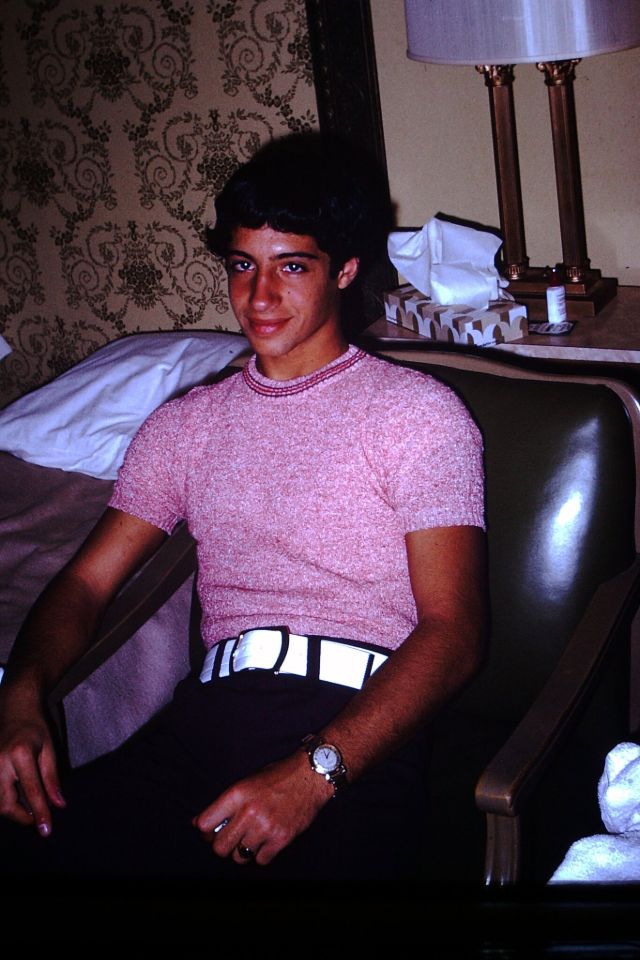
The 1970s was a decade known for its vibrant and eclectic fashion, where youth culture blossomed in colorful and bold ways. From bell-bottom jeans to psychedelic prints, the styles of the ’70s reflected a time of change and self-expression.

These vintage photos from Mark Susina offer a glimpse into the lives of young people who embraced freedom, creativity, and individuality this era.

See more »

read more
30 Stunning Portraits of a Beautiful Judy Holliday in the 1950s

30 Stunning Portraits of a Beautiful Judy Holliday in the 1950s

Judy Holliday (born Judith Tuvim, June 21, 1921 – June 7, 1965) was an American actress, comedian, and singer best known for her sharp comedic timing and portrayals of seemingly ditzy blonde characters with underlying intelligence.

Holliday began her career in a nightclub act called “The Revuers” with collaborators like Betty Comden and Adolph Green. Her breakthrough came on Broadway in 1946 when she starred as Billie Dawn in Garson Kanin’s play Born Yesterday. She reprised this role in the 1950 film adaptation, for which she famously won an Academy Award for Best Actress and a Golden Globe Award.
Despite her onscreen persona, Holliday was highly intelligent (reportedly with an IQ of 172). This intelligence proved useful when she was called to testify before the Senate Internal Security Subcommittee in 1952 during the McCarthy era. She navigated the questioning by appearing to play her “dumb blonde” character, skillfully avoiding naming names and largely escaping the blacklisting that affected many others in the industry.
Throughout the 1950s, she continued to charm audiences in films like The Marrying Kind (1952), It Should Happen to You (1954), Phffft! (1954), and The Solid Gold Cadillac (1956). She also achieved great success on Broadway, winning a Tony Award for Best Performance by a Leading Actress in a Musical for Bells Are Ringing (1956), a role she also brought to the screen in 1960.
Judy Holliday’s career was tragically cut short when she died of breast cancer on June 7, 1965, at the age of 43. She remains remembered for her unique comedic timing and for creating some of Hollywood’s most beloved and enduring characters.

See more »

read more
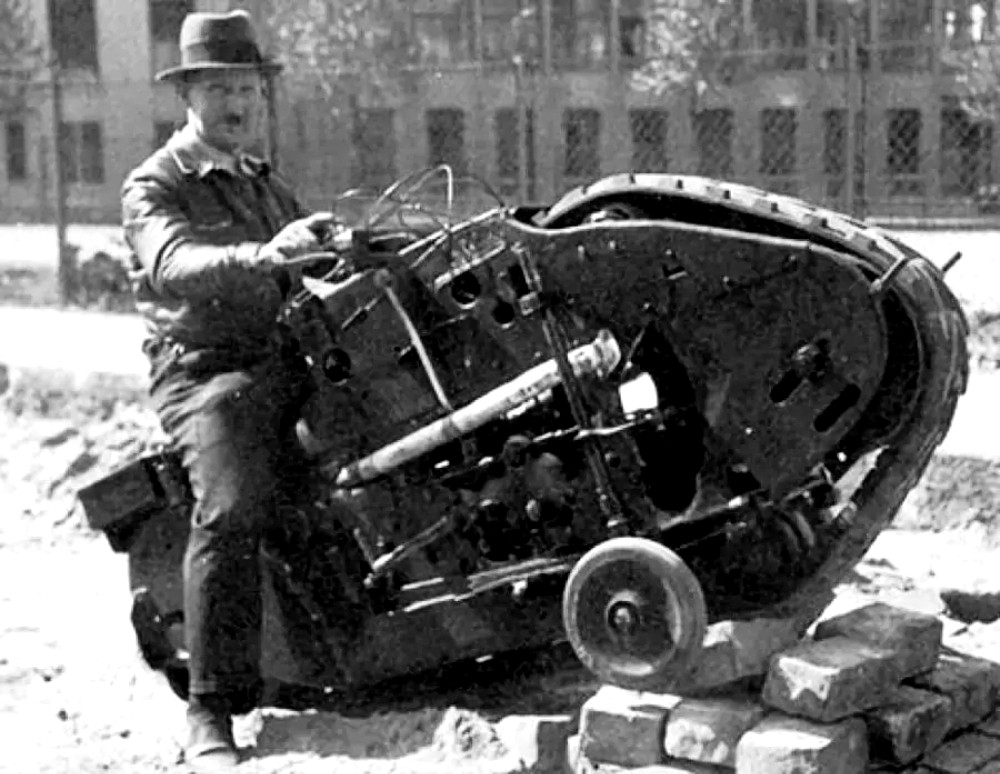
Tractor-Cycle, Treaded Motorcycle Designed by French Inventor J. Lehaitre, ca. 1938

Tractor-Cycle, Treaded Motorcycle Designed by French Inventor J. Lehaitre, ca. 1938

In 1938, inventor J. Lehaitre introduced a fascinating innovation known as the Tractor-Cycle—a motorcycle equipped with a tractor-style transmission belt instead of conventional wheels. Designed to handle a wide range of terrain, this unique vehicle could travel at speeds of up to 25 mph.

Its rugged, tank-like track system gave it impressive off-road capabilities, making it suitable for military or rugged exploration purposes. In fact, it was even designed to accommodate a machine gun, suggesting potential military applications at the time.
Though it never became mainstream, the Tractor-Cycle remains an intriguing example of early 20th-century experimentation in all-terrain vehicle design.

read more
The Fifth Beatle: 44 Amazing Photos of Stuart Sutcliffe in the Early 1960s

The Fifth Beatle: 44 Amazing Photos of Stuart Sutcliffe in the Early 1960s

Stuart Sutcliffe (June 23, 1940 – April 10, 1962) was a British painter and musician from Edinburgh, Scotland, best known as the original bass guitarist of the Beatles. Sutcliffe left the band to pursue his career as a painter, having previously attended the Liverpool College of Art.

Sutcliffe and John Lennon are credited with inventing the name “Beetles”, as they both liked Buddy Holly’s band, the Crickets. They also had a fascination with group names with double meanings (as Crickets, for example, the word referring to both an insect and a sport), so Lennon then came up with “The Beatles,” from the word beat (though Lennon’s original spelling was “Beatals”). As a member of the group when it was a five-piece band, Sutcliffe is one of several who are sometimes referred to as the “Fifth Beatle.”
When Sutcliffe performed with the Beatles in Hamburg, he met photographer Astrid Kirchherr, to whom he was later engaged. After leaving the Beatles, he enrolled in the Hamburg College of Art, studying under future pop artist Eduardo Paolozzi, who later wrote a report stating that Sutcliffe was one of his best students. Sutcliffe earned other praise for his paintings, which mostly explored a style related to abstract expressionism.

While studying in West Germany, Sutcliffe began suffering from intense headaches and experiencing acute light sensitivity. In February 1962, he collapsed in the middle of an art class after complaining of head pains. German doctors performed tests, but were unable to determine a cause. After collapsing again on April 10, 1962, Sutcliffe was taken to a hospital, but died in the ambulance on the way. The cause of death was later found to have been a brain haemorrhage in the right ventricle of his brain.
His death occurred just as the Beatles were on the cusp of international superstardom. Stuart Sutcliffe remains a significant figure in the Beatles’ history. He was later immortalized on the cover of their Sgt. Pepper’s Lonely Hearts Club Band album.

See more »

read more
40 Amazing Photochrom Prints of Norway in the 1890s

40 Amazing Photochrom Prints of Norway in the 1890s

Norway in the 1890s was a country on the brink of major transformation. Though still in a political union with Sweden (established in 1814), growing nationalist sentiment was building momentum toward full independence, which would be achieved in 1905.

The economy during this decade was shifting from rural and agricultural traditions to early industrialization. Hydropower development began laying the groundwork for future industrial growth, particularly in regions like Telemark. Fishing and maritime trade remained vital to coastal communities, while emigration to North America continued at high rates as Norwegians sought better opportunities abroad.
Culturally, the 1890s were rich with national romanticism. Artists, writers, and composers like Edvard Grieg and Knut Hamsun helped define a distinct Norwegian identity rooted in the landscape, folklore, and rural life. The expansion of railways and steamship routes also began to connect more remote parts of the country, changing how Norwegians lived, traveled, and interacted.
It was a decade of growing confidence, where tradition and modernity coexisted—and often collided—on the path to a fully independent Norway. Below is a collection of amazing Photochrom prints offering a glimpse of Norway in the 1890s.
Karl Johans Gate with the Royal Palace, Christiania, Norway, circa 1890s

Fish market, Bergen, Norway, circa 1890s

A Lapp family, Norway, circa 1890s

Andrée’s Station at Danskøya, Spitsbergen, Norway, circa 1890s

Bondhus glacier and lake, Hardanger Fjord, Handanger, Norway, circa 1890s

See more »

read more
40 Historic Posters That Captured the Spirit of the Great War

40 Historic Posters That Captured the Spirit of the Great War

During World War I (1914–1918), posters became one of the most powerful tools of communication and propaganda. At a time when radio and film were still emerging, governments relied heavily on bold, visual messaging to mobilize public support, encourage enlistment, raise funds through war bonds, conserve resources, and shape public opinion.

These posters were often vivid, emotional, and patriotic. They used strong imagery and slogans to appeal to citizens’ sense of duty, fear, pride, and morality. Artists played a key role, blending fine art with mass communication. Some posters used heroic depictions of soldiers and civilians, while others vilified the enemy or portrayed the horrors of war to stir emotional response.
Different nations adapted the format to their own cultural symbols, but the goals were often the same: unite the population, sustain morale, and win the war at home and abroad. Here is a selection of powerful posters from the First World War.
l’Insomnie du Kaiser, 1914

Cacciali Via!, 1914

Deutschland, August 1914

Az Erdekes Ujság És a Kis Erdeckes, 1915

Belgian Canal Boat Fund for the relief of the civil population behind the firing lines. Send them something, 1915

See more »

read more
30 Stunning Portraits of a Young and Beautiful Meryl Streep in the 1970s

30 Stunning Portraits of a Young and Beautiful Meryl Streep in the 1970s

Mary Louise “Meryl” Streep (born June 22, 1949) is an American actress. Known for her versatility and adept accent work, she has been described as “the best actress of her generation.” She has received numerous accolades throughout her career spanning over five decades, including three Academy Awards, two British Academy Film Awards, eight Golden Globe Awards, four Emmy Awards, and two Screen Actors Guild Awards, in addition to nominations for seven Grammy Awards and a Tony Award.

In the 1970s, Meryl Streep established herself as a versatile and talented actress, transitioning from theater to film and earning critical acclaim. She began with diverse roles, showcasing her ability to inhabit different characters, and by the end of the decade, she had earned her first Academy Award nomination for The Deer Hunter and won for Kramer vs. Kramer. This decade marked the beginning of a legendary career for Streep.
One of Streep’s first professional jobs in 1975 was at the Eugene O’Neill Theater Center’s National Playwrights Conference, during which she acted in five plays over six weeks. She moved to New York City in 1975, and was cast by Joseph Papp in a production of Trelawny of the Wells at the Vivian Beaumont Theater. She went on to appear in five more roles in her first year in New York. She starred in the musical Happy End on Broadway, and won an Obie for her performance in the off-Broadway play Alice at the Palace.
Although Streep had not aspired to become a film actor, Robert De Niro’s performance in Taxi Driver (1976) had a profound impact on her; she said to herself, “That’s the kind of actor I want to be when I grow up.” Her first feature film role came opposite Jane Fonda in the 1977 film Julia, in which she had a small role during a flashback sequence. Most of her scenes were edited out, but the brief time on screen horrified the actress, “I had a bad wig and they took the words from the scene I shot with Jane and put them in my mouth in a different scene. I thought, I’ve made a terrible mistake, no more movies. I hate this business. However, Streep stated in 2015 that Fonda had a lasting influence on her as an actress, and credited her with opening “probably more doors than I probably even know about.”
Robert De Niro, who had spotted Streep in her stage production of The Cherry Orchard, suggested that she play the role of his girlfriend in the war film The Deer Hunter (1978). Author Karina Longworth notes that Streep, “Made a case for female empowerment by playing a woman to whom empowerment was a foreign concept–a normal lady from an average American small town, for whom subservience was the only thing she knew.” Pauline Kael, who later became a strong critic of Streep, remarked that she was a “real beauty” who brought much freshness to the film with her performance. The film’s success exposed Streep to a wider audience and earned her a nomination for the Academy Award for Best Supporting Actress.
In the 1978 miniseries Holocaust, Streep played the leading role of a German woman married to a Jewish artist played by James Woods in Nazi era Germany. She found the material to be “unrelentingly noble” and professed to have taken on the role for financial gain. With an estimated audience of 109 million, Holocaust brought a wider degree of public recognition to Streep, who found herself “on the verge of national visibility.” She won the Primetime Emmy Award for Outstanding Lead Actress in a Miniseries or a Movie for her performance.
In 1978, she played a supporting role as the former girlfriend turned lesbian in Manhattan (1979) for Woody Allen. Streep later said that Allen did not provide her with a complete script, giving her only the six pages of her own scenes, and did not permit her to improvise a word of her dialogue. Vincent Canby of The New York Times described her performance as being “beautifully played.”
In the drama Kramer vs. Kramer, Streep was cast opposite Dustin Hoffman as an unhappily married woman who abandons her husband and child. Streep thought that the script portrayed the female character as “too evil” and insisted that it was not representative of real women who faced marriage breakdown and child custody battles. The makers agreed with her, and the script was revised. In preparing for the part, Streep spoke to her own mother about her life as a wife with a career, and frequented the Upper East Side neighborhood in which the film was set, watching the interactions between parents and children. The director Robert Benton allowed Streep to write her own dialogue in two key scenes, despite some objection from Hoffman, who “hated her guts” at first. Hoffman and producer Stanley R. Jaffe later spoke of Streep’s tirelessness, with Hoffman commenting: “She’s extraordinarily hard-working, to the extent that she’s obsessive. I think that she thinks about nothing else, but what she’s doing.” The film was controversial among feminists, but it was a role which film critic Stephen Farber believed displayed Streep’s “own emotional intensity,” writing that she was one of the “rare performers who can imbue the most routine moments with a hint of mystery.”
For the film, Streep won both the Golden Globe Award and the Academy Award for Best Supporting Actress, which she famously left in the ladies’ room after giving her speech. She received awards from the Los Angeles Film Critics Association, National Board of Review and National Society of Film Critics for her collective work in her three film releases of 1979. Both The Deer Hunter and Kramer vs. Kramer were major commercial successes and were consecutive winners of the Academy Award for Best Picture.

See more »

read more
Sweethearts of the Rodeo, 1917

Sweethearts of the Rodeo, 1917

In 1917, the photograph “Sweethearts of the Rodeo” captured three professional cowgirls – Clyde Lindsay, Mildred Douglas, and Ruby Dickey – at the Miles City Round-Up in Montana. Dressed in split skirts, spurs, and boots, they posed with two quirts and an extra hat, likely belonging to the photographer, Ralph R. Doubleday. Mildred Douglas, a prominent figure among them, later became a champion bronc rider, the first woman to ride a steer, and a successful trick rider and sharpshooter.

The Miles City Round-Up, where the photograph was taken, was a significant event in the early days of the rodeo.
Mildred Douglas, who would later be inducted into the Cowgirl Hall of Fame, was a pioneer in the world of rodeo. She not only rode a steer, but also performed as a trick rider and sharpshooter with the Miller Brothers 101 Ranch Show. She also starred in western films with Tom Mix and trained animals for films and circuses. In 1954, at age 59, she became a professional nurse.
read more