
Yesteryear

1940s Women’s Shorts: A New Era of Style and Practicality

1940s Women’s Shorts: A New Era of Style and Practicality

In the 1940s, women’s fashion underwent significant changes, shaped largely by the impact of World War II. As practicality became essential, women’s shorts emerged as a popular and functional garment, especially for leisure and athletic wear. While still considered informal, shorts grew in acceptance thanks to their utility and the broader movement toward more relaxed women’s clothing.

Typically, 1940s women’s shorts were high-waisted, often pleated or darted at the waist for a tailored look. The legs were modestly cut—short, but not revealing by modern standards—and fabrics like cotton, linen, and wool blends were common. They were often worn with tucked-in blouses, knit tops, or halter necklines, reflecting a sporty yet feminine aesthetic.
Hollywood stars like Betty Grable and Rita Hayworth helped popularize the look, appearing in promotional photos and beachwear shoots that glamorized the trend. Though shorts were primarily reserved for casual settings, their growing presence signaled a shift toward freedom and modernity in women’s fashion.
Take a look at this collection of vintage photos featuring women in 1940s-style shorts.

See more »

read more
Behind the Scenes Wardrobe Stills for “Gone With the Wind” (1939)

Behind the Scenes Wardrobe Stills for “Gone With the Wind” (1939)

Gone With the Wind (1939) is an epic historical romance film based on Margaret Mitchell’s 1936 novel of the same name. Set in the American South against the backdrop of the American Civil War and the Reconstruction era, the film tells the story of Scarlett O’Hara (Vivien Leigh), the strong-willed daughter of a Georgia plantation owner, following her romantic pursuit of Ashley Wilkes (Leslie Howard), who is married to his cousin, Melanie Hamilton (Olivia de Havilland), and her subsequent marriage to Rhett Butler (Clark Gable).

The film is renowned for its iconic and historically influenced costumes, designed by the legendary Walter Plunkett. He created over 5,500 costumes for the film, with Vivien Leigh’s Scarlett O’Hara alone having 36 costume changes.
It received generally positive reviews upon its release on December 15, 1939. While the casting was widely praised, the long running time received criticism. At the 12th Academy Awards, Gone with the Wind received ten Academy Awards from thirteen nominations. It set records for the total number of wins and nominations at the time.
Gone with the Wind was immensely popular when first released. It became the highest-earning film made up to that point and held the record for over a quarter of a century. When adjusted for monetary inflation, it is still the highest-grossing film in history. It was re-released periodically throughout the 20th century and became ingrained in popular culture.
Although the film has been criticized as historical negationism, glorifying slavery and the Lost Cause of the Confederacy myth, it has been credited with triggering changes in the way in which African Americans were depicted cinematically. Gone with the Wind is regarded as one of the greatest films of all time, and in 1989, became one of the twenty-five inaugural films selected for preservation in the United States National Film Registry.

See more »

read more
Valentine de Saint-Point Photographed by Alphonse Mucha, ca. 1900s

Valentine de Saint-Point Photographed by Alphonse Mucha, ca. 1900s

Valentine de Saint-Point (1875–1953), a French writer, poet, playwright, and artist associated with Futurism and Symbolism, was indeed photographed by Alphonse Mucha (1860–1939), the renowned Czech Art Nouveau painter and decorative artist. Mucha is best known for his stylized and romantic illustrations of women, particularly in posters and advertisements during the Belle Époque.

These portraits Mucha took of Saint-Point in the 1900s were not typical glamour shots but rather artistic compositions, emphasizing her intense gaze, sculptural profile, and theatrical style. They often reflect the same aesthetic Mucha used in his posters — graceful, powerful, and idealized.
Mucha photographed several prominent women of the time — including actresses, muses, and aristocrats — to serve as models or reference material for his lithographs and paintings. Valentine de Saint-Point was not only a model but a muse and collaborator in artistic and philosophical conversations.

read more
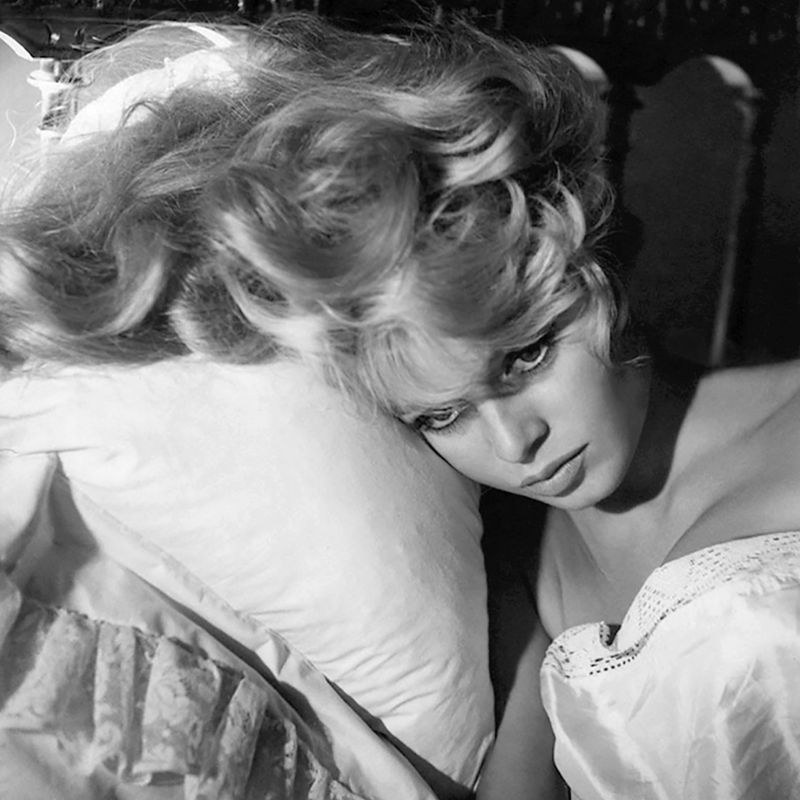
30 Fabulous Portrait Photos of Brigitte Bardot From ‘The Night Heaven Fell’ (1958)

30 Fabulous Portrait Photos of Brigitte Bardot From ‘The Night Heaven Fell’ (1958)

The Night Heaven Fell (Les bijoutiers du clair de lune, 1958) is a French-Italian romantic drama directed by Roger Vadim and starring Brigitte Bardot, Stephen Boyd, and Alida Valli. Set in rural Spain, the film follows Ursula (Bardot), a convent-raised young woman who becomes entangled in a dangerous love triangle and a local vendetta after falling for a mysterious man, Lambert, accused of violence and entangled with her aunt.

Known for its lush cinematography and sensual tone, the film explores themes of passion, betrayal, and doomed love, culminating in a tragic ending. It is a visually striking work that blends melodrama with the poetic fatalism characteristic of 1950s European cinema.
Take a look at these fabulous photos to see portraits of Brigitte Bardot during the filming The Night Heaven Fell in 1958.

See more »

read more
Wonderful Publicity Portraits of Clark Gable and Joan Crawford for “Possessed” (1931)

Wonderful Publicity Portraits of Clark Gable and Joan Crawford for “Possessed” (1931)

Possessed is a 1931 American pre-Code drama film directed by Clarence Brown, starring Joan Crawford and Clark Gable and released by Metro-Goldwyn-Mayer. It was the third of eight film collaborations between Crawford and Gable.

The film tells the story of Marian Martin (Joan Crawford), a young factory worker from a small town in Pennsylvania who is determined to escape poverty and make a better life for herself. She leaves her fiancé and heads to New York City, where she eventually becomes the mistress of Mark Whitney (Clark Gable), a wealthy and politically ambitious attorney.
Marian’s transformation from a working-class girl to a sophisticated woman of the world is a central theme. However, their unconventional relationship poses a threat to Mark’s aspirations for a gubernatorial office. To protect his political career, Marian makes a selfless decision, leading to a dramatic climax.
Leonore Coffee, who wrote the script, said she was assigned to write the film by Irving Thalberg, who instructed the writer to give Joan Crawford “a new personality” to play after years of depicting flappers. “I gave Joan Crawford a whole new personality,” said Coffee. “It was a very successful picture. Thalberg said to me once, ‘The only trouble is, she’s been playing it [the same character] ever since’.”
Possessed is noted for its frank portrayal of themes like ambition, social class, and the complex choices women faced in the pre-Code era. The film is often praised for the strong on-screen chemistry between Crawford and Gable, who were also rumored to have had an affair during its production.

See more »

read more
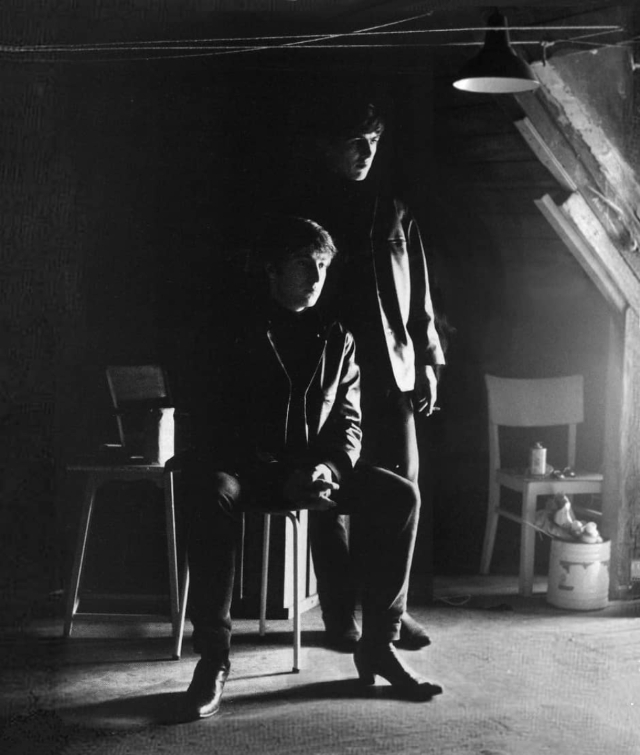
John Lennon and George Harrison Photographed by Astrid Kirchherr in Stuart Sutcliffe’s Room in Hamburg, 1962

John Lennon and George Harrison Photographed by Astrid Kirchherr in Stuart Sutcliffe’s Room in Hamburg, 1962

Just days before the photo was taken, Stuart Sutcliffe, the Beatles’ original bassist and Astrid Kirchherr’s fiancé, tragically died of a brain hemorrhage at the age of 21. The Beatles, who were returning to Hamburg for another series of performances, were met at the airport by a distraught Astrid, who broke the news of Stuart’s death.
According to Astrid, it was John’s suggestion to visit Stuart’s room in her family’s attic, where he had worked as an artist. John, deeply affected by the loss of his close friend, wanted to see the space where Stuart had created his paintings.
Astrid recounted that in that moment, seeing John so full of emotion, she felt compelled to take a picture. She grabbed an old chair and placed it in the room. John was overcome with grief, nearly bursting into tears, while George Harrison, who was only 18 at the time, appeared worried. Astrid told George to stand behind John, and she observed how quickly he understood the gravity of the situation, the stark reality of “death and being alive.” George’s eyes in the photograph are often described as being full of protection for John, who was visibly “falling to bits.”

Astrid’s composition often emphasizes stark contrast, shadows, and natural light—these photographs are no exception. They capture a raw and vulnerable moment for Lennon and Harrison, mourning the loss of their friend and fellow Beatle. They stand as a testament to the strong bond within the early Beatles and the profound impact Sutcliffe had on their lives, even after his departure from the band to pursue his art career. The images are a significant piece of Beatles history, illustrating a period of personal tragedy just before their rise to global superstardom.
Stuart Sutcliffe was the original bassist for The Beatles during their early Hamburg days and a close friend of John Lennon. After leaving the band in 1961 to pursue painting, Sutcliffe remained in Hamburg, where he studied at the Hamburg College of Art under Eduardo Paolozzi and lived with Astrid Kirchherr, his fiancée. Tragically, Sutcliffe died in April 1962 from a brain hemorrhage at just 21 years old.
After his death, Astrid Kirchherr, a talented photographer and stylist who helped shape the Beatles’ early image (including their iconic mop-top hairstyles), continued to document the band and those close to them.

See more »

read more
35 Glamorous Photos of Fashion Model Joanna McCormick in the 1950s

35 Glamorous Photos of Fashion Model Joanna McCormick in the 1950s

Joanna McCormick was a fashion model and cultural figure active during the 1950s and early 1960s, remembered today for her striking presence in mid-century photography and fashion publications. Though not a household name, she became a recognizable face in the pages of Vogue and other leading magazines of the era, working with renowned photographers such as William Helburn, Karen Radkai, and Henry Clarke.

McCormick’s style epitomized the elegance and refinement of postwar fashion. Her image was often associated with luxury, poise, and understated glamour. One of the most iconic photos featuring her is Lipstick Bullet (1955), captured by William Helburn — an image that remains a collectible piece in contemporary art and photography galleries.
Beyond her modeling career, little is publicly known about her personal life, adding an air of mystery to her legacy. Take a look at these glamorous photos to see portraits of a young fashion model Joanna McCormick in the 1950s.
Joanna McCormick in black and white tweed suit with dyed fox collar by Ben Zuckerman, turban by Sally Victor with gold and diamond clip by Jean Schlumberger, photo by Karen Radkai, Vogue, October 1956

Joanna McCormick in hand-screened print chiffon shirt and skirt and velveteen camisole by Toni Owen, print is by Vera, compact by Evans, photo by Horst P. Horst, Vogue, October 1, 1956

Joanna McCormick in wool tweed, belted suit by Monte Sano & Pruzan, hat by Emme, bag by Rosenstein, diamond and gold jewelry by Schlumberger of Tiffany, photo by Irving Penn, Vogue, August 15, 1956

Joanna McCormick in bell-tunic theater suit of ruby-red velvet, the coat worn over a slim sleeveless sheath, by Pauline Trigere, hat by Emme, Russian sable muff by Fredrica, photo by Irving Penn, Vogue, September 1, 1957

Joanna McCormick in black and white wool tweed suit, jacket is long and collared in black-dyed lynx fur by Handelsman & Raiffe, photo by Horst P. Horst at the Mercedes Benz showroom in New York City, Vogue, October 1, 1957

See more »

read more
War on the Rats in England, 1943

War on the Rats in England, 1943

During World War II, England faced a significant challenge with rat infestations, particularly in 1943. The war effort meant that food supplies were vital, and rats posed a direct threat to these resources by consuming and spoiling crops and stored goods. Additionally, rats were known carriers of diseases, making their control a public health priority amidst the stresses of wartime.

The “war on rats” was a serious campaign, with considerable effort put into eradicating these pests. By December 1943, it was reported that over half a million rats had been killed since the campaign intensified in November, with hopes of exterminating over a million by the end of the year.
Methods employed in this campaign included: food mixed with poison was strategically placed in rat runs and sewers; efforts were made to prevent rats from accessing food by rat-proofing buildings, covering drains, concreting floors, and blocking burrows; traps were used, and chemicals like cyanide powder were employed to gas rats in their outdoor habitats.
Farmers and even members of the Women’s Land Army were trained to use ferrets to chase rats from grain stacks, where they could then be shot or killed by dogs.
This sustained effort was a crucial part of the broader agricultural and public health strategies during the war, aimed at safeguarding the nation’s food supply and preventing the spread of disease. The focus on rat control continued beyond the war, informing later legislation such as the Prevention of Damage by Pests Act of 1949.
read more
Mae West Learning How to Handle a Gun After Being Held Up, Robbed, and Sent Death Threats by Gangsters, 1934

Mae West Learning How to Handle a Gun After Being Held Up, Robbed, and Sent Death Threats by Gangsters, 1934

In 1934, at the height of her fame, Mae West—the bold, wisecracking Hollywood icon—found herself the target of serious threats off-screen. She had been held up at gunpoint, robbed, and received death threats, reportedly from underworld figures and gangsters who either sought money, retribution, or to intimidate the outspoken star.

According to period reports, the threats and robbery shook West enough that she took matters into her own hands—literally. She began learning how to handle and shoot a gun for her personal protection. Photographs from that time depict West at a Los Angeles shooting range, dressed in her signature glamorous style, yet confidently holding and aiming a pistol—an image that perfectly merged her movie persona with her real-life toughness.

West, never one to shy away from scandal or confrontation, reportedly took the gun training seriously, as a way to protect herself from potential danger amid a climate of growing unease. This incident not only fed into the mythos of Mae West as a powerful, no-nonsense woman but also underlined the very real threats faced by celebrities, especially outspoken women, during Hollywood’s golden age.
read more
John Hassall’s Brilliant Posters From the Turn of the Century

John Hassall’s Brilliant Posters From the Turn of the Century

John Hassall (1868–1948) was a celebrated British illustrator and poster artist, renowned for his bold, colorful style and widespread influence during the late 19th and early 20th centuries. He was a central figure in what is often called the Golden Age of British Illustration, contributing significantly to the rise of commercial poster art.

Trained in Antwerp and Paris, Hassall brought a European flair to his work, combining strong lines, flat colors, and a sense of humor that appealed to a wide audience. Beyond posters, he illustrated children’s books, magazines, and advertisements, and his work was admired for its clarity, charm, and accessibility.
In 1901, Hassall became a founding member of the London Sketch Club, and later taught at the Byam Shaw School of Art, mentoring a new generation of illustrators. Here’s a curated selection of John Hassall’s most brilliant poster designs from the turn of the century.
Tiller Troupe, circa 1890

Little Bo-Peep, circa 1894

Aladdin, circa 1895

The Gay Grisette, by George Dance, 1895

Newmarket, 12 Poppy, The Musical Comedy, Mr. Alexander Loftus’s Musical Comedy Company, 1896

See more »

read more