
Yesteryear

Iconic Photographs of Debbie Harry Performing With Blondie at Le Stadium in Paris, 1978

Iconic Photographs of Debbie Harry Performing With Blondie at Le Stadium in Paris, 1978

Debbie Harry performed with Blondie at Le Stadium in Paris in 1978 during the band’s rise to international fame. This performance was part of Blondie’s European tour in support of their Plastic Letters album, released in early 1978. At the time, Blondie was gaining major traction in Europe—particularly in the UK and France—before fully breaking through in the U.S. with Parallel Lines later that year.

Debbie Harry, already becoming a fashion and punk icon, appeared on stage in her signature look: bleach-blonde hair, striking makeup, and edgy, glam-punk outfits. Photographs from this specific performance in Paris by photographers like Christian Rose and Jean Louis Rancure showing Harry in her iconic style, which was already establishing her as a punk and new wave icon.

See more »

read more
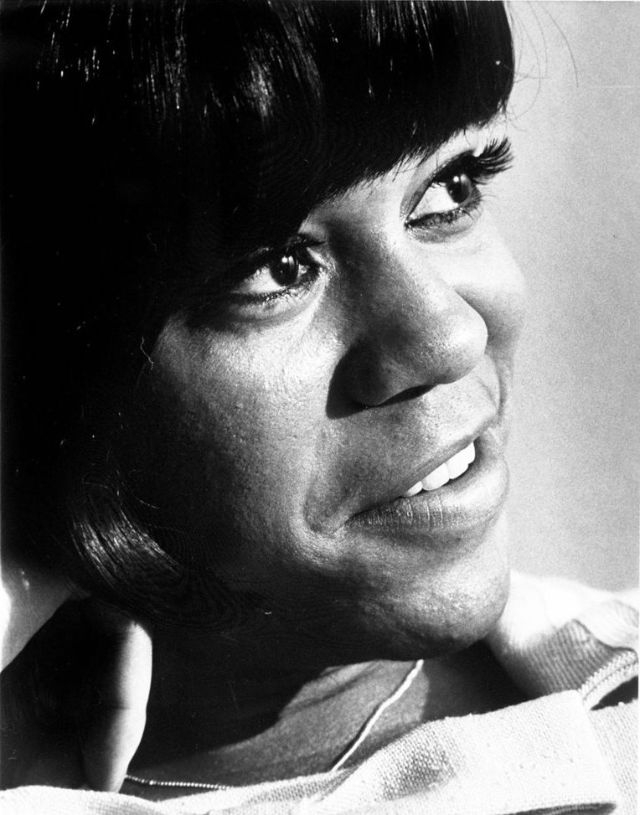
Portraits of Florence Ballard, a Founding Member of the Iconic Motown Vocal Female Group The Supremes

Portraits of Florence Ballard, a Founding Member of the Iconic Motown Vocal Female Group The Supremes

Florence Glenda Ballard (June 30, 1943 – February 22, 1976) was an American singer and a founding member of the iconic Motown vocal female group, The Supremes. Born in Detroit, Michigan, she was known for her powerful voice and was affectionately called “Flo” or “Blondie.”

Ballard’s musical journey began early, and she co-founded The Primettes, which later became The Supremes, with Mary Wilson and Diana Ross. The group signed with Motown Records in 1961 and went on to achieve immense success, with Ballard contributing to 16 Top 40 singles, including ten number-one hits.
However, Ballard’s tenure with The Supremes was marked by increasing tensions, particularly as Motown began to focus more on Diana Ross as the lead singer. This led to her departure from the group in 1967. After leaving The Supremes, Ballard attempted a solo career with ABC Records, releasing a couple of singles, but they did not achieve commercial success.
In the years following, Ballard faced significant personal struggles, including financial difficulties and health issues. She died of a coronary artery thrombosis on February 22, 1976, at the age of 32. Her death is often cited as one of rock music’s great tragedies. Despite her short life, Florence Ballard’s legacy as a vital part of The Supremes and her powerful vocal talent continue to be recognized.

See more »

read more
Peel Trident: The Tiny Car With a Space-Age Dream

Peel Trident: The Tiny Car With a Space-Age Dream

The Peel Trident is a microcar produced by the Peel Engineering Company on the Isle of Man between 1965 and 1966. As one of the smallest cars ever made, it was designed for urban convenience, boasting a futuristic, almost toy-like appearance with its clear bubble dome roof, compact body, and seating for two (or one adult and a child).

Measuring just 72 inches (183 cm) long and 39 inches (99 cm) wide, and weighing around 330 pounds (150 kg), the Trident was powered by a tiny 49cc engine that gave it a top speed of roughly 28 mph (45 km/h). It was marketed with quirky slogans like “the terrestrial flying saucer” and targeted at city dwellers needing efficient, ultra-compact transportation.
Though only about 45 units were ever produced, the Peel Trident has become an icon of 1960s automotive eccentricity. Its unique design, collectability, and status as one of the world’s smallest cars have made it a cult favorite among microcar enthusiasts and vintage vehicle collectors.

See more »

read more
40 Glamorous Portraits of a Young and Beautiful Susan Hayward in the 1940s

40 Glamorous Portraits of a Young and Beautiful Susan Hayward in the 1940s

Susan Hayward (born Edythe Marrener; June 30, 1917 – March 14, 1975) was an American actress best known for her film portrayals of women that were based on true stories.

After working as a fashion model for the Walter Thornton Model Agency, Hayward traveled to Hollywood in 1937 to audition for the role of Scarlett O’Hara. She secured a film contract and played several small supporting roles over the next few years.
In the 1940s, Hayward rose to fame as one of Hollywood’s most compelling and fiery leading ladies. Known for her red hair, striking beauty, and emotionally intense performances, she transitioned from minor roles in the late 1930s to becoming a major star during this decade.
Hayward was known for her independence and professionalism. Unlike some of her contemporaries, she avoided the studio gossip columns for most of the 1940s. She was under contract to Warner Bros. and later Universal, and then found great success with independent productions, which allowed for meatier roles.
By the late 1940s, the quality of her film roles improved, and she achieved recognition for her dramatic abilities with the first of five Academy Award for Best Actress nominations for her performance as an alcoholic in Smash-Up, the Story of a Woman (1947). Hayward’s success continued through the 1950s as she received nominations for My Foolish Heart (1949), With a Song in My Heart (1952), and I’ll Cry Tomorrow (1955), winning the Academy Award for her portrayal of death row inmate Barbara Graham in I Want to Live! (1958). For her performance in I’ll Cry Tomorrow she won the Cannes Film Festival Award for Best Actress.
Here’s a gallery of 40 stunning portraits of a young and beautiful Susan Hayward during the 1940s:

See more »

read more
Robert Randall’s Fashion Photography in the 1950s

Robert Randall’s Fashion Photography in the 1950s

Born 1918 in Miracle Mile, Los Angeles, American photographer Robert Randall began his career at MGM studios and later served as a U.S. Navy photographer in World War II, capturing combat scenes under Life magazine’s guidance. He left his mark on both fashion and editorial imagery during the mid-20th century.

After the war, Randall relocated to Paris and spent seven influential years photographing for French Vogue. His evocative fashion images—often taken in post-war backdrops—redefined high-fashion storytelling and helped elevate his models to stardom. In the early 1950s, his work graced the pages of major publications such as Glamour, Seventeen, Harper’s Bazaar, Look, and Cosmopolitan.
Randall later established a base in New York City with his own studio, before retiring to Laguna Beach in 1968. He passed away in 1984 in La Jolla, remembered as a master of capturing elegance, emotion, and emerging stardom through his lens. Here’s a look at Robert Randall’s striking photography from the 1950s.
Model in silk shantung and velvet dress by Jeanne Paquin, photo by Robert Randall, Vogue, October 15, 1951

Gigi Terwalgne in wool jersey dress by Schiaparelli, photo by Robert Randall, Vogue, October 15, 1951

Regine Debrise wearing a suit by Jean Patou, photo by Robert Randall, Paris, Vogue, 1951

Bettina Graziani wearing a tobacco-colored coat slit in back with black faille collar and facings, from the “Cicada Line” of Schiaparelli, photo by Robert Randall, Vogue, Paris, October 1952

Fiona Campbell-Walter in black bouclé shetland stole with oversized insect pin, both by Elsa Schiaparelli, photo by Robert Randall, November 1952

See more »

read more
A Haunting Photo of Roger Miller at the Site of the Plane Crash That Killed Patsy Cline, Hawkshaw Hawkins and Cowboy Copas

A Haunting Photo of Roger Miller at the Site of the Plane Crash That Killed Patsy Cline, Hawkshaw Hawkins and Cowboy Copas

A haunting photo of Roger Miller, a fellow country musician and friend of the victims, at the site of the plane crash that killed Patsy Cline, Hawkshaw Hawkins, Cowboy Copas and pilot Randy Hughes in Camden, Tennessee, the evening before on March 5, 1963. Miller is standing near the wreckage, looking down at some of Hawkins’ belongings, including a boot and a guitar case with the name “HAWKSHAW HAWKINS” on it.

Miller and a friend went searching for survivors in the early hours of the morning: “As fast as I could, I ran through the woods screaming their names—through the brush and the trees, and I came up over this little rise, oh, my God, there they were. It was ghastly. The plane had crashed nose down.”
Not long after the bodies were removed, scavengers came to take what they could of the stars’ personal belongings and pieces of the plane. Many of these items were later donated to The Country Music Hall of Fame.
Around 2 pm on Tuesday, March 5, 1963, the Piper Comanche, piloted by Randy Hughes, departed Fairfax Municipal Airport in Kansas City, Kansas. It was operating as an unscheduled cross-country passenger flight under visual flight rules (VFR) to its destination of Nashville, 411 nautical miles (761 km; 473 mi) to the southeast. Later that afternoon, the aircraft landed to refuel at Rogers Municipal Airport in Rogers, Arkansas, and departed 15 minutes later.
Hughes later made contact with Dyersburg Regional Airport in Dyersburg, Tennessee, and landed there at 5:05 pm, where he requested a weather briefing for the remainder of the flight to Nashville. He was informed by Federal Aviation Administration (FAA) employee Leroy Neal that local conditions were marginal for VFR flight and weather at the destination airport was below VFR minima. Hughes then asked if the Dyersburg runways were lit at night in case he had to return and Neal replied that they were. Hughes then informed Neal he would fly east towards the Tennessee River and navigate to Nashville from there, as he was familiar with the terrain in that area. He expressed concern about a 2,049-foot (625 m) high television transmitting tower north of Nashville, then stated that he would attempt the flight and return if the weather conditions worsened.
After refueling, the passengers and pilot reboarded the Piper Comanche. Hughes requested another weather briefing by radio, then taxied into position and took off at 6:07 pm. After takeoff, no further radio contact was made with N7000P. The reported weather at that time was a ceiling of 500 feet (150 m), visibility of 5 miles (8.0 km), temperature of 43 °F (6 °C), gusty and turbulent wind from the east at 20 miles per hour (17 kn), and cloudy. A short time later, an aviation-qualified witness, about 4 miles (6.4 km) west of Camden, heard a low-flying aircraft on a northerly course. The engine noise increased and seconds later a white light appeared from the overcast, descending in a 45° angle.
At 6:29 pm, the aircraft crashed into a wooded, swampy area 1 mile (1.6 km) north of U.S. Route 70 and 5 miles (8.0 km) west of Camden. The aircraft was destroyed on impact and all four occupants were killed. The witness described hearing a dull-sounding crash, followed by complete silence.

Investigators concluded that the primary cause of the crash was pilot error. Specifically, Randy Hughes’s decision to operate the aircraft under VFR in Instrument Meteorological Conditions (IMC) – essentially, flying by sight in weather that required instrument flying skills.
Hughes likely experienced spatial disorientation due to the low visibility, leading to a “graveyard spiral” (a disorienting descent). When the aircraft cleared the clouds, he attempted to pull up and apply full power, but it was too late to recover.
The wreckage was discovered early the following morning, March 6, 1963, after an all-night search. All four occupants were killed instantly. The tragic loss sent shockwaves through the country music community and beyond, leaving an indelible mark on the history of American music. A memorial now stands at the crash site in Camden, Tennessee, honoring the lives of these country music legends.
read more
Timeless Grace: 1940s Wedding Dresses in an Age of Restraint

Timeless Grace: 1940s Wedding Dresses in an Age of Restraint

Wartime austerity and postwar optimism both shaped the style of wedding dresses in the 1940s. During the early part of the decade, World War II influenced bridal fashion heavily—materials were rationed, and many brides wore simple, practical gowns, sometimes even borrowing dresses or repurposing formal suits or family garments. Satin and lace were scarce, so rayon and crepe became common alternatives.

Despite limitations, 1940s wedding dresses maintained a quiet elegance. Gowns often featured modest silhouettes with high necklines, long sleeves, and A-line or floor-length skirts. Details like shoulder pads, covered buttons, and subtle embroidery added structure and charm. Veils were typically long and delicate, sometimes paired with floral headpieces instead of elaborate tiaras.
By the late 1940s, with the war over, styles grew more romantic and elaborate again. Brides embraced long trains, fuller skirts, and richer fabrics as fashion moved toward the more dramatic silhouettes of the 1950s. These vintage photos offer a glimpse into the classic bridal styles of the 1940s.

See more »

read more
Marlene Dietrich in the Famously Daring Dress Designed by Jean Louis for Her Las Vegas Show at the Sahara Hotel in 1953

Marlene Dietrich in the Famously Daring Dress Designed by Jean Louis for Her Las Vegas Show at the Sahara Hotel in 1953

Always the queen of reinvention, in 1953 Marlene Dietrich accepted a very lucrative offer to appear in her own cabaret act at the Sahara Hotel in Las Vegas. She was a tremendous success and a new career was born; though she would occasionally make films after this, most of her performing energies were thereafter devoted to her concerts.  She continued to tour internationally until, plagued with ill-health and an addiction to alcohol and painkillers, she finally retired from the stage in 1975.
The great visual highlight of her concerts, from the Vegas days forward, was always her first act gown. Over the years there was a wonderful parade of these remarkable “nude” gowns designed by Jean Louis.  Built over a precisely engineered undergarment, and constructed of the thinnest, flesh-colored silk souffle and usually covered in strategically placed beading, they provided both the illusion of a flawless, ageless figure, and an ephemeral but glitteringly sensual glamour.
“More difficult and almost as famous was dress with special undergarment I design for Marlene Dietrich to wear in her 1953 Las Vegas act,” said designer Jean Louis. “Now Marlene was in her late 40s, but when she walk on the stage there is a riot. Marlene was living in New York, and she fly to Hollywood every weekend to fit. ‘Put this bead lower,’ she says. ‘Put this bead higher.’ So we mark it with a tiny pin. Next week she says, ‘Oh, it’s too high, drop it a bit.’ And so on, for six months. I say, ‘We’re not going to have any dress, we’re going to have a hole.’ It was her first appearance in Vegas and she wanted it to be perfect. But when we are finished, ah! Her body look like she is 16 years old. Dress was made of soufflé, a thin chiffon you can see through. The undergarment—the secret to the dress—was of the same material, and it was designed to reveal the bust and with darts, to push the bust up. There was a zip down her back and a band between her legs. Skintight. The neck band was so snug that her skin folded over, so she covered the fold with a diamond necklace.”
“After she opened in Las Vegas the press says in big headlines: MARLENE DIETRICH IN A SEE-THROUGH DRESS. They did not know there was anything underneath because you can see her breasts and her legs. Oh, she knew what she was doing!”

See more »

read more
Early Daguerreotypes of Women and Girls From Between the 1840s and 1860s

Early Daguerreotypes of Women and Girls From Between the 1840s and 1860s

Daguerreotypes, popular from the 1840s to the early 1860s, offer a fascinating glimpse into the lives of women and girls during the early Victorian era. As the first commercially successful photographic process, they democratized portraiture, making it accessible to the middle classes, whereas previously only the wealthy could afford painted likenesses.

Portraits often showcase the evolving styles of the mid-19th century. In the 1840s, dresses often featured draped bodices, closely fitted sleeves, and V-shaped necklines, sometimes with ruffles. By the 1850s, bishop sleeves (gathered at the wrist) became popular. Bonnets, shawls, and intricate hairstyles (like “sausage curls” for girls) were also common.
Each daguerreotype is a one-of-a-kind image created directly on a silver-plated copper sheet. Unlike later photographic processes, there was no negative from which multiple copies could be made. Despite early limitations, daguerreotypes are renowned for their incredible resolution and minute detail, capturing textures, fabrics, and facial features with remarkable clarity.
Especially in the early 1840s, exposure times could range from several seconds to several minutes, depending on lighting conditions. This often meant subjects had to remain very still, leading to the serious, posed expressions often seen in these portraits. To add a touch of realism, many daguerreotypes were hand-colored, particularly on lips, cheeks, eyes, and jewelry. This was often a task performed by women.

See more »

read more
Gorgeous Photos of Alida Valli in the 1940s

Gorgeous Photos of Alida Valli in the 1940s

Italian actress Alida Valli spanned her career over six decades and bridged both European and Hollywood cinema. She began acting in the 1930s and quickly became one of Italy’s most beloved film stars during the Fascist era, often simply billed as “Valli.”

Her early success in Italian films led to a contract with David O. Selznick, which brought her to Hollywood. There, Valli starred in notable productions like Alfred Hitchcock’s The Paradine Case (1947) and Carol Reed’s The Third Man (1949), where she played the enigmatic Anna opposite Orson Welles and Joseph Cotten—a role that became one of her most enduring.
In the 1950s, Valli returned to Europe and reinvented herself in Italian auteur cinema. She worked with directors such as Luchino Visconti (Senso, 1954), Michelangelo Antonioni, and later, Bernardo Bertolucci, demonstrating remarkable versatility and depth. In her later years, she also appeared in cult classics like Dario Argento’s Suspiria (1977).
Elegant, mysterious, and fiercely independent, Valli left an indelible mark on international cinema. She remains a symbol of timeless European sophistication and artistic excellence. Take a look at these gorgeous photos to see the beauty of a young Alida Valli in the 1940s.

See more »

read more