
Yesteryear

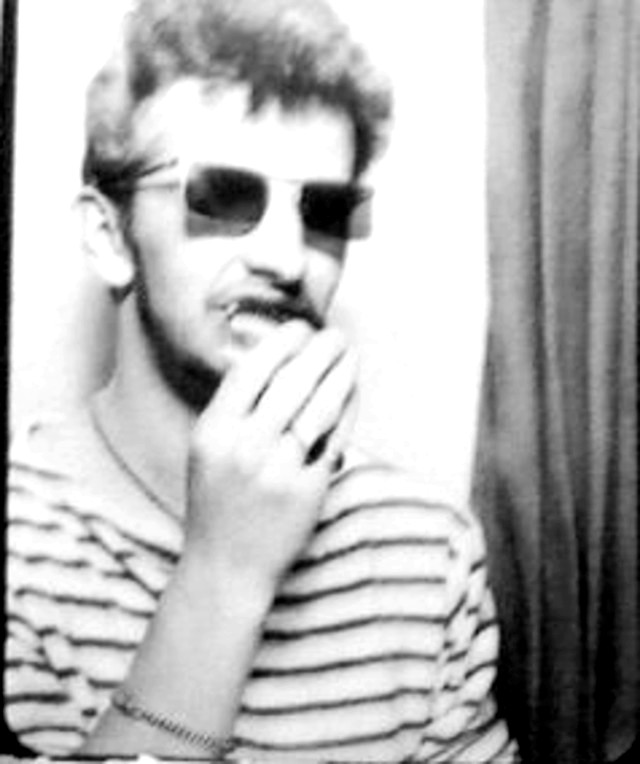
A Very Young Ringo Starr in the Photo Booths in the Early 1960s

A Very Young Ringo Starr in the Photo Booths in the Early 1960s

In the early 1960s, before Beatlemania swept the world, Ringo Starr was often captured in fun and candid moments — one iconic example being photo booth pictures. These images typically show him goofing around, pulling faces, or simply posing with his signature mop-top haircut and youthful charm.

Ringo (born Richard Starkey) officially joined The Beatles in August 1962, replacing Pete Best. Around this time, the group was still performing in clubs like The Cavern in Liverpool and in Hamburg, Germany. His first official performance as a Beatle was on August 18, 1962, at a Horticultural Society dance.
Ringo’s steady, reliable, and unique drumming style became a crucial element of The Beatles’ distinctive sound. He was seen as an equal part of the Fab Four, contributing to the band’s emotional stability and good humor. While not a primary songwriter, he often sang lead vocals on at least one song per album, such as “Boys” (1963) and “Honey Don’t” (1964).
The early 1960s saw The Beatles achieve massive success, first in the UK and then internationally, leading to Beatlemania. Ringo was an integral part of this phenomenon, performing in iconic concerts like the one at Shea Stadium in 1965 and appearing in The Beatles’ films like A Hard Day’s Night (1964) and Help! (1965), which also showcased his acting talents. In 1965, he and the other Beatles were made Members of the Order of the British Empire (MBE).

See more »

read more
35 Amazing Photos of the Old Country Houses of the Old Glasgow Gentry in 1878

35 Amazing Photos of the Old Country Houses of the Old Glasgow Gentry in 1878

Step back in time to the year 1878, when the outskirts of Glasgow were still dotted with the grand country estates of the city’s wealthy merchant class — the Old Glasgow Gentry. These stately homes, set amid sweeping lawns, walled gardens, and ancient trees, stood as symbols of prosperity, taste, and architectural ambition in the 18th and 19th centuries.

These amazing photos, captured by Scottish photographer Thomas Annan (1829–1887), offer a rare visual archive of these once-celebrated houses — many now vanished, repurposed, or hidden beneath modern developments.

Tollcross, Glasgow, Scotland, 1878

Aikenhead, Glasgow, Scotland, 1878

Auldhouse, Glasgow, Scotland, 1878

Bardowie, Glasgow, Scotland, 1878

Barlanark, Glasgow, Scotland, 1878

See more »

read more
A Young Steven Tyler Photographed by Ron Pownall, ca. 1970s

A Young Steven Tyler Photographed by Ron Pownall, ca. 1970s

Ron Pownall is a photographer known for his work with Aerosmith, particularly Steven Tyler. He captured many iconic photos of the band during the 1970s, including Steven Tyler performing and in various candid moments. Here’s a very young Steven Tyler captured by Pownall in the 1970s:

Pownall’s career commenced in 1968 when he was hired by the Chicago Tribune to photograph the Democratic National Convention protests. This experience ignited his passion for capturing live music performances, leading him to photograph iconic artists such as Jimi Hendrix, Janis Joplin, and Cream.
In 1970, Pownall relocated to Boston, immersing himself in the city’s vibrant music scene. He established enduring relationships with bands like Aerosmith, Boston, and the J. Geils Band, documenting their rise to fame. His work extended to photographing legends like Elton John, Queen, and The Rolling Stones, contributing to publications such as Rolling Stone, Creem, and Circus
Pownall’s photography is characterized by its ability to capture the raw energy and emotion of live performances. His images are not merely snapshots but narratives that convey the spirit of the era. For instance, his photograph of Steven Tyler leaping off the drum riser during a 1978 Aerosmith concert in St. Paul encapsulates the fervor of rock music.
Today, Ron Pownall’s work is celebrated in galleries and collections, including Rock Paper Photo and the San Francisco Art Exchange. His legacy endures as a testament to the power of photography in chronicling cultural history.
read more
Elegant 1950s Fashion Designs by Paul Parnes

Elegant 1950s Fashion Designs by Paul Parnes

Paul Parnes was a notable American fashion designer active during the mid-20th century, particularly recognized for his elegant and accessible ready-to-wear collections. Emerging from a family rooted in the garment industry—his father, Louis Parnes, established a clothing business in Manhattan in the late 19th century—Paul continued and elevated the family tradition in fashion design.

In the 1920s and 1930s, Paul Parnes began making a name for himself by designing stylish, well-tailored women’s suits and dresses that balanced sophistication with practicality. He initially worked under other labels and partnerships before establishing his own brand. By the 1950s, the Paul Parnes label had become known for its refined and wearable garments, often sold in upscale department stores and featured in fashion magazines like Vogue and Harper’s Bazaar.
Though not as widely remembered today as some of his contemporaries, Paul Parnes contributed to the development of American ready-to-wear fashion, offering garments that embodied grace, structure, and understated luxury.
Cherry Nelms in short evening dress in navy blue silk satin spattered with lily pads of Venise lace and blue paillettes by Paul Parnes, photo by Kay Bell, Harper’s Bazaar, October 1950

Dorian Leigh in figure-hugging suit with side-button detail by Paul Parnes, Vogue, September 1950

Evelyn Tripp in white linen suit with belt buckle closings and brown and white check detachable collar and cuffs by Paul Parnes, white piqué hat by Betmar, photo by Horst P. Horst, Vogue, April 1, 1950

Jean Patchett in Hockanum worsted suit, piped in black and belted by Paul Parnes, worn with white silk crêpe scarf by Sally Gee, photo by Frances McLaughlin, Vogue, February 1, 1950

Dovima in imported Irish linen sheath worn under short-sleeved polka-dot jacket by Paul Parnes, photo by Wenczel, Vogue, May 1, 1951

See more »

read more
Before First Lady of the United States, 30 Portraits of Young Nancy Davis as a Hollywood Actress in the 1940s and 1950s

Before First Lady of the United States, 30 Portraits of Young Nancy Davis as a Hollywood Actress in the 1940s and 1950s

Nancy Davis Reagan (born Anne Frances Robbins; July 6, 1921 – March 6, 2016) was an American film actress who was the first lady of the United States from 1981 to 1989, as the second wife of President Ronald Reagan.

In 1940, a young Davis had appeared as a National Foundation for Infantile Paralysis volunteer in a memorable short subject film shown in movie theaters to raise donations for the crusade against polio. The Crippler featured a sinister figure spreading over playgrounds and farms, laughing over its victims, until finally dispelled by the volunteer. It was very effective in raising contributions.
Following her graduation from college, Davis held jobs in Chicago as a sales clerk in Marshall Field’s department store and as a nurse’s aide. With the help of her mother’s colleagues in theatre, including ZaSu Pitts, Walter Huston, and Spencer Tracy, she pursued a professional career as an actress. She first gained a part in Pitts’ 1945 road tour of Ramshackle Inn, moving to New York City. She landed the role of Si-Tchun, a lady-in-waiting, in the 1946 Broadway musical about the Orient, Lute Song, starring Mary Martin and a pre-fame Yul Brynner. The show’s producer told her, “You look like you could be Chinese.”
After passing a screen test, she moved to California and signed a seven-year contract with Metro-Goldwyn-Mayer Studios Inc. (MGM) in 1949; she later remarked, “Joining Metro was like walking into a dream world.” Her combination of attractive appearance—centered on her large eyes—and somewhat distant and understated manner made her hard at first for MGM to cast and publicize. Davis appeared in eleven feature films, usually typecast as a “loyal housewife,” “responsible young mother,” or “the steady woman.” Jane Powell, Debbie Reynolds, Leslie Caron, and Janet Leigh were among the actresses with whom she competed for roles at MGM.
Davis’ film career began with small supporting roles in two films that were released in 1949, The Doctor and the Girl with Glenn Ford and East Side, West Side starring Barbara Stanwyck. She played a child psychiatrist in the film noir Shadow on the Wall (1950) with Ann Sothern and Zachary Scott. She co-starred in 1950’s The Next Voice You Hear…, playing a pregnant housewife who hears the voice of God from her radio. In 1951, Davis appeared in Night into Morning, her favorite screen role, a study of bereavement starring Ray Milland.
MGM released Davis from her contract in 1952; she sought a broader range of parts, but also married Reagan, keeping her professional name as Davis, and had her first child that year. She soon starred in the science fiction film Donovan’s Brain (1953). In her next-to-last movie, Hellcats of the Navy (1957), she played nurse Lieutenant Helen Blair, and appeared in a film for the only time with her husband.
After her final film, Crash Landing (1958), Davis appeared for a brief time as a guest star in television dramas, such as the Zane Grey Theatre episode “The Long Shadow” (1961), where she played opposite Ronald Reagan, as well as Wagon Train and The Tall Man, until she retired as an actress in 1962.
During her career, Davis served for nearly ten years on the board of directors of the Screen Actors Guild. Decades later, Albert Brooks attempted to coax her out of acting retirement by offering her the title role opposite himself in his 1996 film Mother. She declined in order to care for her husband, and Debbie Reynolds played the part.

See more »

read more
30 Glamorous Photos of a Young and Sexy Janet Leigh in the 1950s

30 Glamorous Photos of a Young and Sexy Janet Leigh in the 1950s

Jeanette Helen Morrison (July 6, 1927 – October 3, 2004), known professionally as Janet Leigh, was an American actress. Raised in Stockton, California, by working-class parents, Leigh was discovered at 18 by actress Norma Shearer, who helped her secure a contract with Metro-Goldwyn-Mayer.

Leigh’s beauty and elegance in the 1950s made her one of the most beloved and photogenic actresses of Hollywood’s golden era. With her porcelain skin, expressive eyes, radiant smile, and graceful demeanor, she embodied a blend of wholesome charm and sophisticated glamour that appealed to both audiences and directors.

She had the quintessential 1950s movie star appearance—polished, poised, and styled to perfection. Whether in elaborate gowns or casual attire, she radiated a refined femininity that made her a favorite for fashion shoots and film roles alike.
Leigh played everything from sweet ingenues to strong-willed heroines. Her performances in films like Scaramouche (1952), The Naked Spur (1953), My Sister Eileen (1955), and Touch of Evil (1958) demonstrated both her acting talent and visual charisma.
During the 1950s, Leigh often appeared in studio promotional photos wearing elegant evening gowns or swimsuits, with poses that highlighted her figure—especially her famously admired legs—without ever losing a sense of class.

See more »

read more
Rare Childhood Photos of Sylvester Stallone in the 1940s and 1950s

Rare Childhood Photos of Sylvester Stallone in the 1940s and 1950s

Sylvester Gardenzio “Sly” Stallone (born July 6, 1946) is an American actor and filmmaker. In a film career spanning more than fifty years, Stallone has received numerous accolades, including a Golden Globe Award and a Critics’ Choice Award, as well as nominations for three Academy Awards and two BAFTA Awards. Stallone is one of only two actors in history (alongside Harrison Ford) to have starred in a box-office No. 1 film across six consecutive decades. Films in which he has appeared in have grossed over $7.5 billion worldwide.

Many biographies of Stallone indicate that his birth name is “Michael Sylvester Gardenzio Stallone” and his mother explained in an interview that she originally named him “Tyrone” because she admired the actor Tyrone Power, but Stallone’s father changed it to “Sylvester.” His nickname as a child was “Binky” but he chose to go by the nickname of Mike/Michael after schoolmates began calling him “Stinky.” His middle name “Gardenzio” is an alteration of the Italian given name “Gaudenzio” and he usually shortened it to “Enzio.”
Stallone’s childhood was marked by hardship and adversity. Born with a facial nerve injury that caused a droopy eyelid and speech impediment, he faced bullying and academic struggles. His parents’ tumultuous relationship and eventual divorce, along with his father’s physical and verbal abuse, further complicated his early years. He spent time in foster care and moved frequently between his parents, attending multiple schools, including one for troubled youth.
His rough childhood and underdog status would become central themes in his most famous role as Rocky Balboa. Stallone turned personal pain into motivation, channeling it into creative pursuits and building a tough, resilient image that resonated with audiences.

See more »

read more
40 Fabulous Photos of Ludmilla Tchérina in the 1940s and ’50s

40 Fabulous Photos of Ludmilla Tchérina in the 1940s and ’50s

Born 1924 as Monique Tchemerzine in Paris, French prima ballerina, actress, painter, and sculptor Ludmilla Tchérina rose to fame in the world of classical ballet at a young age. She became the youngest prima ballerina with the Paris Opera Ballet and later danced with prestigious companies such as the Ballet des Champs-Élysées and the Grand Ballet du Marquis de Cuevas. Her expressive style, striking stage presence, and technical brilliance earned her acclaim across Europe.

In addition to her ballet career, Tchérina was also an accomplished actress. She appeared in several notable films, most famously in Michael Powell and Emeric Pressburger’s The Red Shoes (1948), The Tales of Hoffmann (1951), and Oh… Rosalinda!! (1955). These films helped bring ballet to a broader audience and solidified her international fame.
Later in life, Tchérina devoted herself to visual art, gaining recognition as a painter and sculptor. Her work often explored themes of beauty, movement, and spirituality, deeply influenced by her background in dance.

Tchérina died in 2004, in Paris at the age of 79.

Take a look at these fabulous photos to see portraits of Ludmilla Tchérina in the 1940s and 1950s.

See more »

read more
Amazing Photos of the 1915 Rolls-Royce 40/50 HP Silver Ghost Limousine

Amazing Photos of the 1915 Rolls-Royce 40/50 HP Silver Ghost Limousine

The 1915 Rolls-Royce 40/50 HP Silver Ghost Limousine is a hallmark of early 20th-century automotive engineering and luxury. Originally introduced in 1906, the 40/50 HP model quickly earned the nickname “Silver Ghost” due to its quiet, smooth performance and distinctive silver finish. By 1915, it had become widely recognized as one of the finest cars in the world.

Powered by a 7.4-liter inline-six engine, the Silver Ghost delivered exceptional reliability, refinement, and endurance — qualities that were rare at the time. The “40/50 HP” designation referred to its taxable horsepower, a system used in the UK, though the actual output was higher. It featured a robust chassis and a smooth transmission, allowing for a remarkably quiet ride, even on rough early 20th-century roads.
The limousine body style offered in 1915 emphasized opulence and comfort. Built by custom coachbuilders, each car featured handcrafted interiors with fine wood, leather upholstery, and attention to the smallest detail. These vehicles were often chauffeur-driven and owned by royalty, industrialists, and aristocrats.
Despite World War I, limited production continued, and some chassis were even adapted for military use as staff cars or ambulances due to their reliability. Today, the 1915 Rolls-Royce Silver Ghost remains an icon — a symbol of a bygone era of handcrafted excellence and a benchmark in the legacy of luxury automobiles.

See more »

read more
50 Amazing Photos of Audrey Hepburn and Fred Astaire During the Filming of “Funny Face” (1957)

50 Amazing Photos of Audrey Hepburn and Fred Astaire During the Filming of “Funny Face” (1957)

Audrey Hepburn and Fred Astaire shared the screen in Funny Face (1957), a beloved musical romantic comedy directed by Stanley Donen. On set, the two icons brought together their distinct talents—Hepburn’s graceful charm and Astaire’s legendary dancing skills.

In Funny Face, Astaire plays fashion photographer Dick Avery (loosely inspired by Richard Avedon), while Hepburn stars as Jo Stockton, a shy bookstore clerk turned high-fashion model. Much of the filming took place in Paris, showcasing stunning locations like the Eiffel Tower, the Louvre, and the Champs-Élysées, which added to the film’s whimsical and stylish appeal.
Behind the scenes, Audrey and Fred had a warm and respectful rapport. Hepburn reportedly adored working with Astaire, whom she admired greatly, and Astaire praised her natural elegance and commitment. Despite a significant age gap, their chemistry on screen was graceful and compelling—especially in dance sequences like “He Loves and She Loves” and “Clap Yo’ Hands.” According to Hepburn, she insisted on Astaire as a precondition for her participation.
Photos from the set often capture Hepburn in her iconic Givenchy costumes, laughing or rehearsing alongside Astaire, both radiating a classic elegance that perfectly embodied the golden era of Hollywood musicals.

See more »

read more