

Yesteryear

40 Amazing Studio Portraits of a Young Tom Hanks in the 1980s

40 Amazing Studio Portraits of a Young Tom Hanks in the 1980s

Tom Hanks (born July 9, 1956) is an American actor and filmmaker. Known for both his comedic and dramatic roles, he is one of the most popular and recognizable film stars worldwide, and is regarded as an American cultural icon. His numerous awards include two Academy Awards, seven Emmy Awards, and four Golden Globe Awards; he has also been nominated for five BAFTA Awards and a Tony Award.

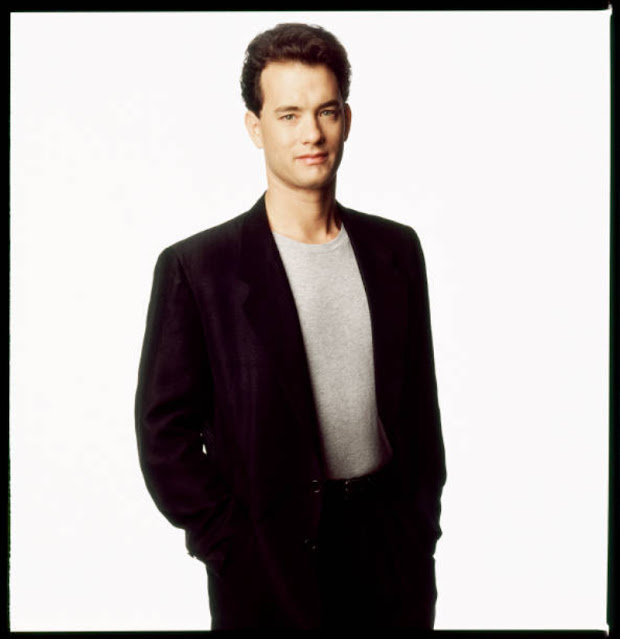
Hanks started his career in the late 1970s, but the 1980s marked a significant period of growth. He gained attention for his role in the television series Bosom Buddies where he played one half of a pair of men who dress as women to live in an all-female apartment building.
Hanks made a guest appearance on a 1982 episode of Happy Days where he met writers Lowell Ganz and Babaloo Mandel who were writing the film Splash (1984), to be directed by former Happy Days star Ron Howard. Ganz and Mandel suggested Howard consider Hanks for the film. At first, Howard considered Hanks for the role of the main character’s wisecracking brother, a role that eventually went to John Candy. Instead, Hanks landed the lead role in Splash, which went on to become a surprise box office hit, grossing more than US$69 million. He had a sizable hit with the sex comedy Bachelor Party, also in 1984. In 1983–84, Hanks made three guest appearances on Family Ties as Elyse Keaton’s alcoholic brother Ned Donnelly.
With Nothing in Common (1986), Hanks began to extend himself from comedic roles to dramatic. In an interview with Rolling Stone, Hanks commented on his experience: “It changed my desires about working in movies. Part of it was the nature of the material, what we were trying to say. But besides that, it focused on people’s relationships. The story was about a guy and his father, unlike, say, The Money Pit, where the story is really about a guy and his house.” In 1987, he had signed an agreement with The Walt Disney Studios where he had starred to a talent pool in an acting/producing pact. After a few more flops and a moderate success with the comedy Dragnet (1987), Hanks’ stature in the film industry rose.
The broad success of the fantasy comedy Big (1988) established Hanks as a major Hollywood talent, both as a box office draw and within the industry as an actor. For his performance in the film, Hanks earned his first nomination for the Academy Award for Best Actor. Big was followed later that year by Punchline, in which he and Sally Field co-starred as struggling comedians. Hanks then suffered a run of box-office underperformers: The ‘Burbs (1989), Joe Versus the Volcano (1990) and The Bonfire of the Vanities (1990). In the last, he portrayed a greedy Wall Street figure who gets enmeshed in a hit-and-run accident. Turner & Hooch (1989) was Hanks’ only financially successful film of the period.

See more »

read more
“We Are the Girls That Kill the Rats” – Girls of the Women’s Land Army Were Employed as Rat Catchers During WWII

“We Are the Girls That Kill the Rats” – Girls of the Women’s Land Army Were Employed as Rat Catchers During WWII

Pests such as rats posed a serious threat to supplies of food and animal fodder on British farms. During wartime, there were thought to be over 50 million rats in Britain. To help counter this threat, teams of land girls were trained to work in anti-vermin squads. Two land girls are reputed to have killed 12,000 rats in just one year. Land girls in anti-vermin squads also were also trained to kill foxes, rabbits and moles.

This was just one of many vital and often physically demanding tasks undertaken by the Land girls, who stepped in to fill the agricultural labor gaps left by men serving in the armed forces. Their work ranged from plowing and harvesting to dairy farming and working in the Women’s Timber Corps (“Lumber Jills”).

See more »

read more
Glamorous Photos of Nelly Nyad From the 1950s

Glamorous Photos of Nelly Nyad From the 1950s

Nelly Nyad was a fashion model active in the early 1950s, best known for her striking elegance and collaboration with renowned photographer Milton H. Greene. Though not as widely known today as some of her contemporaries, Nyad became a standout presence in high-fashion editorials during the postwar era, embodying the refined glamour of early 1950s couture.

Nyad was featured in a celebrated series of photographs taken by Greene in 1952 for Life Magazine, with locations ranging from Madrid to Mallorca. In these images, Nyad modeled exquisite gowns and accessories by leading fashion houses such as Jeanne Lanvin, Jeanne Pottier, and Spanish designer Rodriguez, often set against dramatic backdrops like historic architecture and art museums. The series captured both her poise and Greene’s signature visual style — soft lighting, rich textures, and timeless composition.
Take a look at these glamorous photos to see portraits of Nelly Nyad as a model from the 1950s.
Nellie Nyad in black faille cocktail dress with deep décolleté by Paquin,adorned with two ruby and diamond clips from Boucheron, photo by Philippe Pottier, 1950

Nellie Nyad wearing a bright red satin cocktail dress by Jeanne Lanvin, the wrapped skirt is held by diamond flower clip by Mellerio dits Meller, photo by Philippe Pottier, 1950

Nelly Nyad in pink faille and embroidered gray tulle evening sheath by Balenciaga, photo by Philippe Pottier, 1950

Nelly Nyad in white satin evening gown draped diagonally across the hips, bodice features a wing collar, by Jeanne Lanvin, photo by Philippe Pottier, 1950

“The Embrace” Nelly Nyad, photo by Milton Greene, 1952

See more »

read more
Judy Garland and Her Fifth Husband, Mickey Deans, Arriving at London’s Heathrow Airport on May 21, 1969

Judy Garland and Her Fifth Husband, Mickey Deans, Arriving at London’s Heathrow Airport on May 21, 1969

On May 21, 1969 Judy Garland, accompanied by her husband Mickey Deans, was at London’s Heathrow airport boarding a plane to the United States. Judy would stay in the States for a little less than a month before returning to her home in England in mid-June. She would die one month and one day after these photographs on June 22nd, 1969 at 47 years old, making them one of the last public photographs of the legendary star.

read more
Amazing Posters by Henri-Gabriel Ibels in the Late 19th Century

Amazing Posters by Henri-Gabriel Ibels in the Late 19th Century

Henri-Gabriel Ibels (1867–1936) was a French painter, illustrator, and printmaker associated with the Post-Impressionist and Symbolist movements, and closely linked to the avant-garde art scene of late 19th-century Paris. He is perhaps best known for his involvement with the Nabis, a group of young artists inspired by Paul Gauguin who sought to infuse modern art with symbolic meaning and decorative style.

Ibels studied at the Académie Julian, where he met key figures like Pierre Bonnard, Édouard Vuillard, and Maurice Denis. Unlike some of his Nabis peers, Ibels leaned toward social realism and satire, often depicting scenes of everyday life, cabarets, the circus, and the working class. His work blended bold outlines, flat areas of color, and an expressive style influenced by both Japanese prints and the French caricature tradition.
Though less widely known today than some of his contemporaries, Henri-Gabriel Ibels played a significant role in the development of modern graphic art and helped bridge the worlds of fine art, illustration, and theater design during a vibrant and transitional period in French visual culture. Below is a collection of amazing posters illustrated by Henri-Gabriel Ibels from the 1890s.
Program for Le Grappin & L’Affranchie, 1892

Horloge, J. Mévisto, 1892

La Mort Des Gueux, 1892

Circus, 1893

Hamlet, circa 1893

See more »

read more
Photographs of Eric Clapton Hanging Out With Jimi Hendrix in London in the 1960s

Photographs of Eric Clapton Hanging Out With Jimi Hendrix in London in the 1960s

Eric Clapton had earned a reputation as “God” in the mid-1960s for his virtuosic guitar work in R&B-inspired British bands like the Yardbirds and John Mayall’s Bluesbreakers. Then an unknown American named Jimi Hendrix hit London in 1966 and changed the game entirely.

Hendrix’s unparalleled playing and explosive style forged a new genre and redefined what it meant to be a guitarist — and sent the British boys back to the woodshed. Clapton’s status as London’s top axe-man had been challenged, but their rivalry was mostly a friendly one. Clapton was in awe of Hendrix’s talent and the pair bonded over music and mutual admiration.

The famous story of their first meeting involves Hendrix sitting in with Cream at a gig. Hendrix’s performance, particularly his incendiary rendition of “Killing Floor,” reportedly “blew away” Clapton, leading him to walk off stage in astonishment and exclaim something to the effect of, “You never told me he was that f***ing good!”

“It was funny, in those days anybody could get up with anybody if you were convincing enough that you could play,” said Eric Clapton. “He got up and blew everyone’s mind. I just thought ‘Ahh, someone that plays the stuff I love in the flesh, on stage with me.’ I was actually privileged to be (on stage with him)… it’s something that no one is ever going to beat; that incident, that night, it’s historic in my mind but only a few people are alive that would remember it.”
Despite this initial shock, which some interpret as a challenge to Clapton’s perceived supremacy, they quickly became friends. Clapton himself has spoken about how Hendrix’s playing impacted him, making him feel that “the game was up for all of us.” This wasn’t a bitter rivalry but rather a profound recognition of Hendrix’s revolutionary talent.
They would often hang out in London, jamming in clubs and having deep conversations beyond music. Clapton deeply admired Hendrix’s innovative approach and musical imagination. “It was amazing,” said Clapton, “and it was musically great, too, not just pyrotechnics.”
Tragically, their friendship was cut short by Hendrix’s untimely death in 1970. Clapton was reportedly devastated by the news and had even purchased a rare left-handed Fender Stratocaster as a gift for Hendrix shortly before his passing.

See more »

read more
30 Beautiful Photos of Jean Seberg in the Late 1950s and ’60s

30 Beautiful Photos of Jean Seberg in the Late 1950s and ’60s

Jean Seberg was an American actress and style icon best known for her work in both Hollywood and French New Wave cinema. She gained international fame for her role as Patricia in Jean-Luc Godard’s Breathless (À bout de souffle, 1960), where her pixie haircut, effortless chic, and cool demeanor made her a defining face of 1960s cinema.

Born 1938 in Iowa, Seberg was launched into stardom at age 18 when Otto Preminger cast her as Joan of Arc in Saint Joan (1957). Though her early Hollywood career was uneven, she found greater success in Europe, where she became a muse for avant-garde directors and a symbol of modern femininity.
Off-screen, Seberg was politically active and supported civil rights causes, which drew the attention of the FBI. She was subjected to intense surveillance and psychological pressure as part of COINTELPRO, which contributed to her mental health struggles.
Her life ended tragically in 1979 in Paris, in what was officially ruled a suicide. Despite her short life, Jean Seberg remains an enduring icon of cinema and fashion, remembered for her intelligence, vulnerability, and timeless style. Take a look at these beautiful photos to see portraits of Jean Seberg in the late 1950s and 1960s.

See more »

read more
The Treadmill Crane, a Human Powered Hoisting and Lowering Device

The Treadmill Crane, a Human Powered Hoisting and Lowering Device

The treadwheel crane (Latin: magna rota), also known as a walking wheel crane, is one of the most iconic lifting devices from ancient and medieval times. It operated using human power, where a person would walk inside a giant wheel (similar to a hamster wheel) to generate rotational force, lifting heavy loads via a system of pulleys and ropes.

The origin of the treadwheel crane dates back to Ancient Roman times (around the 1st century AD), where it was used in the construction of large structures like temples and aqueducts. Its widespread use re-emerged in medieval Europe, especially between the 12th and 19th centuries.
These cranes were commonly used in harbors, church construction sites, and castles. In major ports like Gdańsk (Poland), Strasbourg (France), and Bruges (Belgium), the treadwheel crane played a key role in loading and unloading ships. Some cranes were even built permanently atop stone towers or large wooden structures.
One or two people would walk inside the wheel, much like climbing stairs. Their movement turned a drum that wound up a rope to lift heavy cargo. Depending on the wheel’s size and human effort, the crane could lift tons of weight.
With the rise of steam engines in the 19th century, treadwheel cranes became obsolete, replaced by more efficient and powerful machinery. However, several of these historic cranes still survive today as monuments and engineering heritage sites.
read more
30 Vintage Photos Capture Young Women Rocking Dynamic 1950s Fashion

30 Vintage Photos Capture Young Women Rocking Dynamic 1950s Fashion

The 1950s was a decade of vibrant change, not only in culture and technology, but also in the way young women expressed themselves through fashion. Moving away from the somber tones of the war years, postwar fashion burst with energy — full skirts, nipped waists, bold patterns, and bright colors came to define the era.

But more than just pretty silhouettes, 1950s fashion for young women was dynamic — it reflected a newfound sense of confidence, individuality, and freedom. From circle skirts that swayed with every step to capri pants that signaled a break from tradition, women were beginning to dress for movement, for expression, and for life beyond the rigid social norms of earlier generations.
These vintage photos capture young women not just wearing 1950s fashion — but rocking it. Whether striking a pose on the streets, dancing at a jukebox joint, or smiling under the sun in gingham and cat-eye sunglasses, they exude style and spirit. Their looks were not only trendy — they were alive with personality.

See more »

read more
26 Amazing Photos of Shelley Duvall Holding a Cigarette

26 Amazing Photos of Shelley Duvall Holding a Cigarette

Shelley Duvall (July 7, 1949 – July 11, 2024) was known to be a smoker, having started on the set of Thieves Like Us (1974). She continued to smoke throughout her career and even became known for her on-screen smoking, particularly during her role in The Shining (1980). There are numerous photos and even mentions of her smoking habits from that period.

Like many actors of that era, smoking was both a personal habit and often part of on-screen roles, reflecting the norms of the time. According to Shelley Duvall Archive, she’s tried to quit many times, but it must be said that a cigarette dangling between her long fingernails arguably became her motif on screen and even off. A pack of Parliaments were Shelley’s favorite brand in her later years.

See more »

read more