
Yesteryear

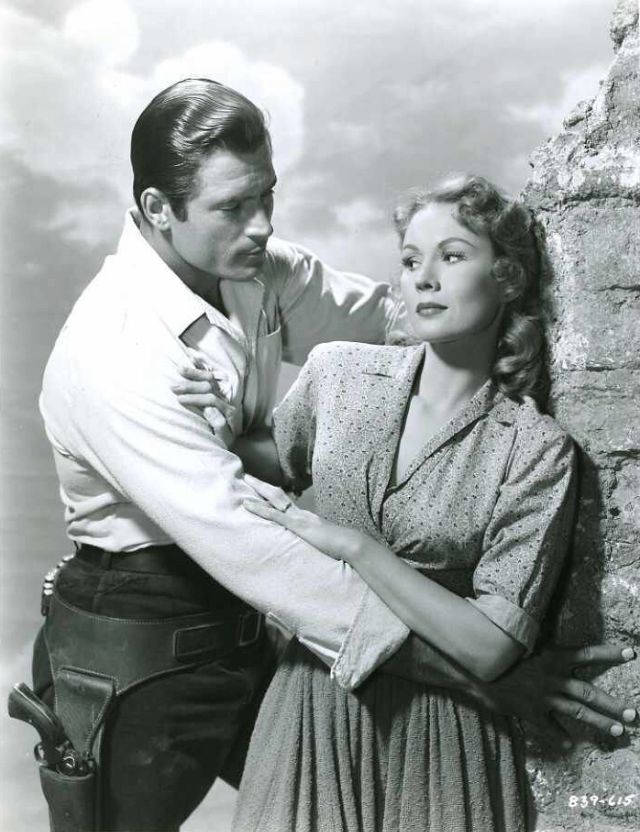
Romantic Photos of Clint Walker and Virginia Mayo From “Fort Dobbs” (1958)

Romantic Photos of Clint Walker and Virginia Mayo From “Fort Dobbs” (1958)

Fort Dobbs is a 1958 American Western film directed by Gordon Douglas and starring Clint Walker and Virginia Mayo. Set during the French and Indian War, the film follows Sergeant Clint Keyes (played by Walker), a tough and resourceful soldier tasked with protecting settlers on the frontier from hostile Native American tribes allied with the French.

The story centers on Keyes escorting a group of settlers, including a strong-willed woman named Cynthia Dobbs (Virginia Mayo), to safety as they seek refuge at Fort Dobbs. The film combines action, suspense, and drama as they face ambushes, wilderness dangers, and conflicts along the way.
Known for its rugged outdoor cinematography and classic Western themes, Fort Dobbs reflects the genre’s 1950s popularity while highlighting frontier survival and courage. Take a look at these romantic photos capturing Clint Walker and Virginia Mayo together during the filming of Fort Dobbs in 1958.

See more »

read more
26 Fun and Candid Polaroid Snaps From the Making of “Twin Peaks”

26 Fun and Candid Polaroid Snaps From the Making of “Twin Peaks”

These behind the scenes Polaroids from the show Twin Peaks were used for continuity and also for fun, capturing candid moments on set. These Polaroids, taken by the on-set dresser, Mike Malone, served as a visual record for set details, like the placement of props, to maintain consistency between scenes. Additionally, the Polaroid camera was used to take informal, behind the scenes photos with humorous captions.

“Back in the day, the only way to keep track of continuity for set, for example: a certain blanket was lying over a couch, or a certain pillow was in a certain position, you take a Polaroid of it, and you mark that for this scene, this is there, then you have a record.  But in our youthful hijinks, we would use the Polaroid [camera] to take funny pictures behind the scenes and put funny captions on the Polaroids.  There are a lot of Polaroids out there that don’t have anything to do with continuity, let’s put it that way!”

See more »

read more
30 Photos of English New Wave Band Bow Wow Wow in the 1980s

30 Photos of English New Wave Band Bow Wow Wow in the 1980s

Bow Wow Wow are an English new wave band, created by manager Malcolm McLaren in 1980. McLaren recruited members of Adam and the Ants to form the band with then 13-year-old Annabella Lwin on lead vocals.

The band’s music was characterized by a danceable new wave sound that drew on a Burundi beat provided by Dave Barbarossa on drums, as well as the subversive, suggestive, and sometimes exuberant lyrics sung and chanted by their teenage lead vocalist.
Their debut single, “C·30 C·60 C·90 Go!,” released in July 1980, was groundbreaking as the world’s first-ever cassette single. In November 1980, they released a cassette-only mini-album, Your Cassette Pet, which included tracks like “Sexy Eiffel Towers” that sparked early controversy due to suggestive moaning from the then-14-year-old Lwin.
Their first full-length album, See Jungle! See Jungle! Go Join Your Gang Yeah, City All Over! Go Ape Crazy!, was released in October 1981 after they signed with RCA. Their 1983 album, When the Going Gets Tough, The Tough Get Going, opened with the track “Aphrodisiac,” which, despite Lwin being only 16 at the time of its release, featured lyrics about drug-fueled sexual encounters.
The original lineup of Bow Wow Wow disbanded in 1983. Lwin pursued a solo career, while the male members (Ashman, Gorman, and Barbarossa) went on to form the band Chiefs of Relief.
Bow Wow Wow’s legacy lies in their unique sound, their pioneering use of the cassette single, and the indelible mark they left on new wave music, even amidst the constant scrutiny and controversy surrounding their image and management.

See more »

read more
Crowd at Coney Island During the July Heatwave in 1940

Crowd at Coney Island During the July Heatwave in 1940

Weegee’s photograph, “Crowd at Coney Island,” taken on July 21, 1940, captures a bustling scene of people enjoying a hot summer day at the beach. The photograph, published in the newspaper PM, depicts a massive crowd under a temperature of 89 degrees, with the caption “They came early, stayed late.”

People came to Coney Island for the salt water. Many of them spend the day and night and spend no more than 25 cents. They came with their bathing suits under their clothes, or they negotiated a furtive quick change under the boardwalk. Perhaps they brought a few sandwiches. Or maybe they will buy a few frankfurters… The beach policemen testify that there are youths who spend the whole summer on the beach and never pay a nickel’s rent.
Weegee, whose real name was Arthur Fellig, was a master of capturing candid moments. He was known for using a variety of techniques, including infrared film to shoot at night without being noticed, to document the underbelly and everyday life of New York.
“At Coney I had two kosher frankfurters and two beers at a Jewish delicatessen…” said Weegee. “Later on for a chaser I had five more beers, a malted milk, two root beers, three Coca Colas and two glasses of buttermilk. And five cigars, costing 19 cents.”
read more
Amazing Photos of the 1934 Auburn Twelve Salon Speedster

Amazing Photos of the 1934 Auburn Twelve Salon Speedster

The 1934 Auburn Twelve Salon Speedster stands as one of the most iconic and striking examples of pre-war American automotive design. Produced by the Auburn Automobile Company, this car epitomized the daring spirit and luxurious innovation of the Art Deco era. With its sleek, boat-tail rear end and sweeping fenders, the Speedster was as much a work of art as it was a machine.

At its heart was a powerful 160-horsepower, 6.4-liter (391-cubic inch) V12 engine—hence the “Twelve” in its name—engineered by Lycoming, a company also owned by Auburn’s parent corporation. The engine was mated to a three-speed manual transmission with a unique dual-ratio rear axle system, effectively offering six forward speeds and exceptional flexibility. This allowed the Speedster to cruise effortlessly at high speeds, and in fact, Auburn guaranteed that every model was capable of exceeding 100 mph, a staggering claim for the time.
The “Salon” designation marked it as an elite model, featuring the finest materials, hand-finished details, and Auburn’s most advanced technology. Signature design elements included chrome-plated exhaust pipes arching from the engine bay, a sharply raked windshield, and artful interior flourishes like machine-turned dash panels and premium leather trim.
Despite its brilliance, the Speedster was born into hard times. The Great Depression had taken a massive toll on luxury car sales, and Auburn—under the direction of the flamboyant E.L. Cord—struggled to stay afloat. Although the Twelve Salon Speedster garnered attention for its performance and aesthetics, it could not reverse the company’s fortunes. Auburn ceased production in 1937, just a few years after this masterpiece debuted.

See more »

read more
Joy Harmon (19 Years Old) Being Crowned the “NYC Donut Queen” in 1957 by USO

Joy Harmon (19 Years Old) Being Crowned the “NYC Donut Queen” in 1957 by USO

Joy Harmon, who was just 19 years old at the time, was crowned the “NYC Donut Queen” at the 1957 USO. She’s better known as the blonde in the car wash scene in the 1967 movie Cool Hand Luke.

She was credited simply as “The Girl,” but anyone who ever saw Cool Hand Luke knows her as “Lucille.” Harmon was the 27-year-old actress who tantalized a chain-gang of sweaty convicts in the Paul Newman classic in 1967. In just over 3 minutes of screen time, she left her mark on the film, the 196os, and pop culture at large: the car wash scene in Cool Hand Luke consistently ranks among the most iconic in cinema.
“I was just washing a car to my best ability and having fun with it, with the sponge and everything,” said Harmon. “My concept of the [scene] was not like what came out. I was not aware that there were two meanings to things that I was doing, and I’m still not really that much aware of what they all were.”
Joy Harmon—who had debuted on Broadway in 1958’s Make a Million and then partnered with Groucho Marx on his early 1960s TV show—said she scored the role after Newman marveled at the blueness of her eyes during the audition process. But once she arrived in Stockton, California, to film the scene, Harmon began to have second thoughts. The producers suggested the shoot would be better if Harmon smoked marijuana beforehand in order to act more uninhibited for the camera. “I don’t do that; I never have done that,” Harmon said in the interview in 2017. “I was so upset, and I called my dad and he said, ‘You just come on home. Don’t do the movie.’ I told Mr. Rosenberg I was going home and then they came to the room, and he brought me flowers and chocolate. He said, ‘Don’t worry about it. We’re not doing marijuana; you don’t need it.’ And it worked out fine.”
Most of the credit for the sequence goes to Harmon, who displays the perfect combination of sexual power and mischievousness. But director Stuart Rosenberg clearly was trying to milk the scene for titillating effect—so much so that he had kept wives and girlfriend away from the set for weeks and then surprised the men with Harmon’s appearance so as to capture their genuine reactions. When she emerges from the dilapidated country house, turns on the portable radio and the hose, and goes to work washing the car, Rosenberg pointed the cameras at the men, watching her from a distance. They didn’t require instruction on how to act. “The only one that I talked to was Stuart Rosenberg and the photographer,” Harmon added. “He just worked it like—‘Now, get the sponge, and squeeze it, and wash the car’ and so forth. I just followed [his instruction]. The shots were all like kind of broken up, you know, how he wanted me to do it. It was easy. It was so easy.”
Harmon realized that she’d made an impression after the film came out. In 1968, she married film editor Jeff Gourson, and their Las Vegas honeymoon was comped and their hotel introduced her at shows as “The Girl From Cool Hand Luke.” But she didn’t chase fame, and she eventually left acting to raise her three children. “I was never one who said, ‘Oh, I’ve got to be a big star,’” Harmon said. “I just took whatever came to me. It got to be the point where I would just get calls—I didn’t have to go in and read for it—go in for wardrobe and do scenes in all those TV shows that were out at that time. It was simple and easy and fun.”

See more »

read more
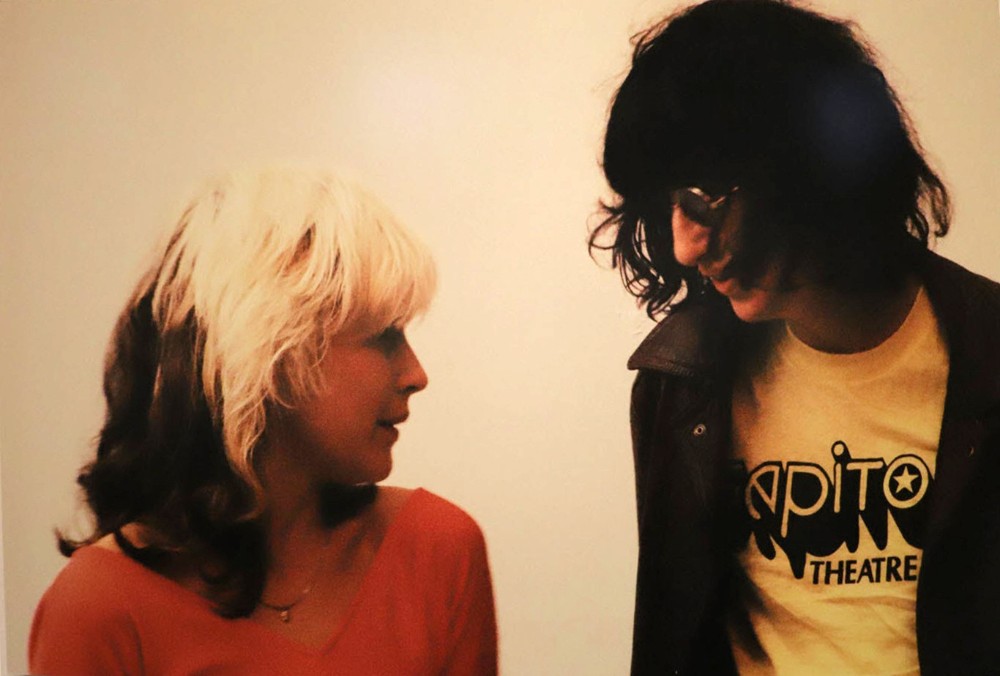
25 Photographs of Joey Ramone and Debbie Harry Together in the 1970s and 1980s

25 Photographs of Joey Ramone and Debbie Harry Together in the 1970s and 1980s

Joey Ramone, the iconic frontman of the Ramones, and Debbie Harry, the celebrated lead singer of Blondie, were two of the most prominent figures in the New York City punk and new wave scene of the 1970s. They were close friends and colleagues who emerged from the same vibrant musical landscape centered around clubs like CBGB.

Their relationship was primarily one of friendship and mutual respect within the burgeoning punk scene. They often played at the same venues and were part of the same community of artists. There are several well-known photographs of them together, including one taken by Blondie’s Chris Stein in 1977 that was used for a photo montage in Punk magazine titled “Mutant Monster Beach Party.”
Both artists were highly influential in shaping the sound and image of punk and new wave. Joey Ramone’s distinctive vocal style and the Ramones’ fast, raw, and melodic punk rock were hugely impactful. Debbie Harry, with her powerful vocals, striking stage presence, and Blondie’s innovative blend of punk, pop, disco, and reggae, also left an indelible mark on music. Their respective bands helped define an era and influenced countless musicians who followed.

See more »

read more
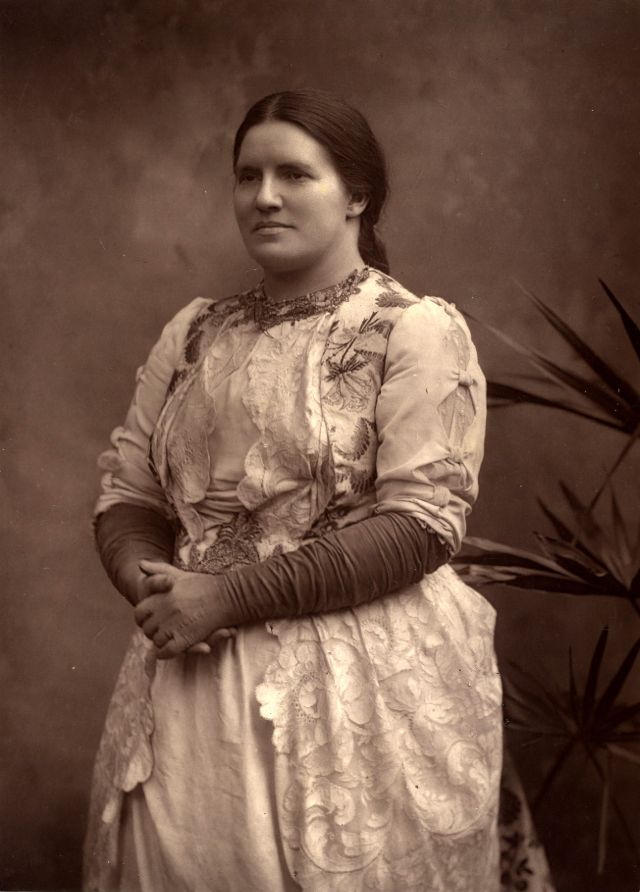
Herbert Rose Barraud’s Stunning Portraits From ‘Men and Women of the Day’ (1888-89)

Herbert Rose Barraud’s Stunning Portraits From ‘Men and Women of the Day’ (1888-89)

Herbert Rose Barraud (1845–1896) was a prominent British portrait photographer who had studios in London and Liverpool. He produced cabinet photos of many famous Victorian statesmen, artists, and members of the aristocracy, many of which were published in his two-volume work, Men and Women of the Day (1888-89).

Most of Barraud’s images were woodburytypes, then a newly developed process which lent itself admirably to portraiture, being able to render middle tones accurately. His studios were at 96 Gloucester Place, Portman Square in 1883; at 263 Oxford Street (“A few doors west of ‘The Circus’”) between 1883 and 1891; at 73 Piccadilly from 1893 to 1896; and at 126 Piccadilly in 1897. Another studio was located at 92 Bold Street, Liverpool.
Below is a selection of stunning portraits from Men and Women of the Day (1888-89) by Herbert Rose Barraud.
Ellen Wallis, 1888

Antoinette Sterling, 1888

Ellen Terry, 1888

Helen Mathers, 1888

Lady Randolph Churchill, 1888

See more »

read more
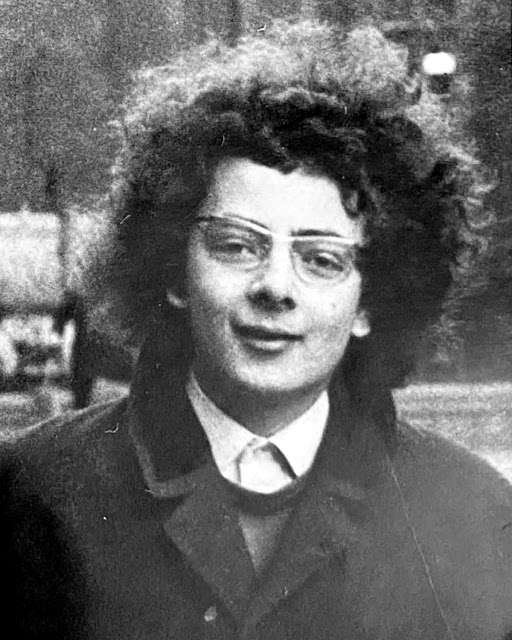
Portrait of 17-Year-Old Rowan Atkinson, Electrical Engineering at Newcastle University, 1972

Portrait of 17-Year-Old Rowan Atkinson, Electrical Engineering at Newcastle University, 1972

Long before he became the face of global comedy, this quiet young man was deeply immersed in circuits, formulas, and the world of electrical engineering.

Captured here in 1972, a young Rowan Atkinson was pursuing his undergraduate studies at Newcastle University. Bright-eyed and sharply dressed, no one could’ve guessed that this soft-spoken student would one day become “Mr. Bean” — a character without words who made the whole world laugh.
17-year-old Rowan Atkinson, electrical engineering student at Newcastle University, 1972.

Rowan was in his first year of university here, having just graduated from the public school St. Bees, where he’d had quite the reputation as a highly intelligent student (especially in science and maths), but also an unruly and rebellious troublemaker. One fellow student remembered him as “the one who is always kept behind after lessons and gets his revenge by writing scurrilous verse in Latin about the master who kept him in.” 
But he could also often be found tinkering with equipment on campus, as he had a great passion for fixing things, and he became a valued member of the school choir and even served as choir secretary. Most notably, though, he had a great talent for the stage, and his performances in school plays left a lasting impression on teachers and peers alike, even prompting his headmaster to tell him, “I have never recommended to anyone that they should take up a career in the entertainment industry, but it would seem silly for you, Atkinson, not at least to try.”
But Rowan, who adored all things electrical and mechanical, put aside his gift for performance for awhile. He followed in the footsteps of his two older brothers and went to Newcastle University, pursuing his passion for engineering. He recalled that he kept to himself and “worked very hard” there, and he was nearly at the top of his class upon earning his undergraduate degree at only 20 years old.
20-year-old Rowan Atkinson, electrical engineering student, pictured tinkering away in his last year at Newcastle University, 1975.

He would next go on to Oxford to do research, and it was there he would discover that he wanted to seriously embrace and pursue a career in comedy and performance. Lucky for all of us!
The info and quotes are from the Rowan Atkinson biography by Bruce Dessau, and Rowan’s Desert Island Discs episode from 1988. (via rowanatkinsonlibrary)
read more
Life in Atlantic City During the Late 1910s and ’20s Through Fascinating Photos

Life in Atlantic City During the Late 1910s and ’20s Through Fascinating Photos

In the late 1910s and 1920s, Atlantic City was alive with energy, drawing crowds from nearby cities who came seeking sun, entertainment, and escape. The Boardwalk was the city’s centerpiece — lined with candy shops, photo studios, and music pavilions — where people dressed in their finest strolled beside the sea.

Men wore straw boaters and linen suits; women embraced the latest flapper styles and dared to show more skin in modern bathing suits. Families posed for seaside portraits, children rode carousels, and couples danced to jazz on the Steel Pier. It was a moment of freedom and fun, as Americans embraced new fashions, looser social norms, and the simple joy of a summer at the shore.
Take a look at these fascinating photos to see what life was like in Atlantic City during the late 1910s and 1920s.

See more »

read more