
Yesteryear

40 Vintage Photos That Defined 1930s Women’s Fashion

40 Vintage Photos That Defined 1930s Women’s Fashion

1930s women’s fashion moved from the boyish flapper look to a more feminine, sophisticated, and elegant silhouette, heavily influenced by Hollywood glamor.

Key features included elongated, slender lines and the innovative bias cut for fluid draping. Shoulders became wider, often with subtle padding, and hemlines lengthened to mid-calf or floor-length for evening. Details like ruffles and bows added charm.
While practical daywear like cotton dresses was common, wide-legged trousers also emerged for leisure. Accessories like hats, gloves, and soft, waved hairstyles were essential. The decade blended practicality with aspirational Hollywood style.
Take a look at these vintage photos to see how women expressed beauty and style in the 1930s.

See more »

read more
Rare Daguerreotypes of Victorian Women Breastfeeding Their Babies

Rare Daguerreotypes of Victorian Women Breastfeeding Their Babies

Daguerreotypes of Victorian women breastfeeding are extremely rare, both due to the photographic norms of the 19th century and the societal attitudes of the time.

Victorian society emphasized modesty, particularly for women. Breastfeeding, though natural, was generally considered a private act, not something to be publicly displayed or photographed. Women were often portrayed in a formal, idealized way — sitting stiffly, dressed in their finest clothing. A breastfeeding pose would have been seen as too intimate or domestic for a formal daguerreotype.
While motherhood was a common theme in photography, breastfeeding itself was not typically shown in daguerreotypes, as such moments were considered too private for public display. These rare photos displayed here show the opposite.
While there may not be extensive surviving examples of daguerreotypes showing breastfeeding specifically, motherhood and the nurturing of children were central themes in Victorian art and photography. Photos of mothers with their children were common, as they reflected the period’s ideals about the sanctity and purity of the maternal role.

See more »

read more
30 Amazing Photos of Harrison Ford as Indiana Jones on the Set of “Raiders of the Lost Ark” (1981)

30 Amazing Photos of Harrison Ford as Indiana Jones on the Set of “Raiders of the Lost Ark” (1981)

Raiders of the Lost Ark is a 1981 American action-adventure film directed by Steven Spielberg and written by Lawrence Kasdan, based on a story by George Lucas and Philip Kaufman. Set in 1936, the film stars Harrison Ford as Indiana Jones, a globetrotting archaeologist vying with Nazi German forces to recover the long-lost Ark of the Covenant which is said to make an army invincible. Teaming up with his tough former romantic interest Marion Ravenwood (Karen Allen), Jones races to stop rival archaeologist René Belloq (Paul Freeman) from guiding the Nazis to the Ark and its power.

The film was born from a conversation between Lucas (who had the idea for an adventure hero reminiscent of old movie serials) and Spielberg (who wanted to direct a James Bond-style film). To keep the ambitious film on schedule and within its $20 million budget (considered modest for such a production at the time), Spielberg meticulously storyboarded almost every scene, even dialogue sequences, relying on multiple artists. This allowed for quick and efficient shooting.
Raiders of the Lost Ark is renowned not just for its thrilling on-screen adventure, but also for the equally adventurous and challenging behind the scenes stories that shaped its production. Ford’s commitment to the role and the practical effects used contributed significantly to its enduring appeal. He was famously keen to perform as many of his own stunts as possible, which added immense realism to the action sequences.
The iconic scene where Indy is dragged beneath a moving truck was largely performed by Ford himself, resulting in bruised ribs. The truck was specially modified to allow clearance, and the road center was even dug out for safety. Ford also performed the famous boulder chase scene multiple times for different camera angles. Steven Spielberg later admitted it was foolish to let Ford do it, given the fiberglass, plaster, and wood boulder was heavy and dangerous.
During the intense fight scene around the propeller of the German “Flying Wing” plane, one of the plane’s wheels rolled onto Ford’s knee, tearing his ACL. Despite the injury and a widespread dysentery outbreak affecting the crew, Ford famously “wrapped it up and put ice on it and carried on” due to a shortage of available stunt performers.
One of the most famous improvised moments in film history happened when Indy simply shoots the elaborate swordsman in Cairo. The original script called for a lengthy whip fight. However, Harrison Ford, like much of the cast and crew, was suffering from dysentery during filming in Tunisia. Feeling unwell and wanting to expedite the shot, Ford suggested, “Why don’t I just shoot the son of a bitch?” Spielberg loved the idea, and cinematic gold was made.
Raiders of the Lost Ark was met with widespread critical acclaim upon its release. Critics lauded its thrilling action sequences, witty dialogue, charismatic performances (especially Harrison Ford’s), and the seamless blend of adventure, humor, and suspense. It was praised for harkening back to the classic adventure serials of the 1930s and 1940s while elevating the genre with modern filmmaking techniques. Roger Ebert famously called it “a film that works as a reminder of what the movies are for.”
The film received nine Academy Award nominations, including Best Picture, Best Director, and Best Original Score. It won four Oscars: Best Art Direction, Best Film Editing, Best Sound, and Best Visual Effects, along with a Special Achievement Academy Award for Sound Effects Editing.
Raiders of the Lost Ark was a massive commercial success. With a budget of approximately $18-20 million, it grossed over $212 million domestically, becoming the highest-grossing film of 1981. Its worldwide box office total reached over $380 million, making it one of the most profitable films of its time and firmly establishing the Indiana Jones franchise as a global phenomenon. It has continued to be popular through re-releases and home video, solidifying its place as a timeless classic.

See more »

read more
Vintage Photos Capture Street Scenes of Tokyo in 1973

Vintage Photos Capture Street Scenes of Tokyo in 1973

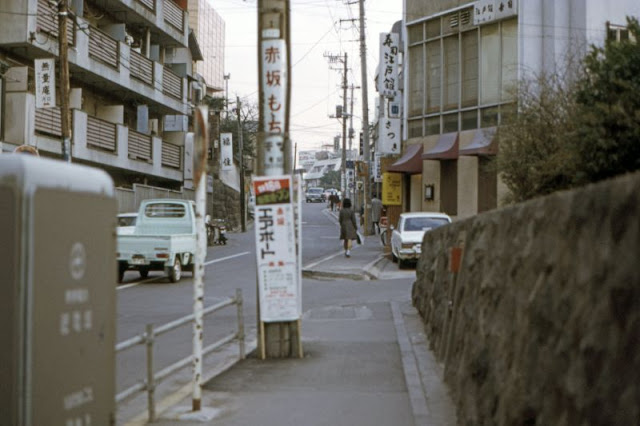
Tokyo in the 1970s was a city of rapid growth and change. The economic boom of the post-war era was still felt, though it slowed after the 1973 oil crisis.

Infrastructure expanded with more highways and the iconic Shinjuku skyscrapers began to rise. While the core city saw some residents move to suburbs, the metropolitan area continued to grow. Street scenes were a mix of tradition and booming modernity. Busy intersections were filled with a mix of cars, buses, and crowds of pedestrians.

People sported both traditional Japanese clothing and emerging Western fashions, like miniskirts and hotpants, reflecting a blend of old and new. Neon signs began to illuminate entertainment districts, while the daily commute on efficient, but crowded, trains was a common sight.
Despite the rapid development, pockets of calmer, everyday life existed, contrasting with the visible signs of industrial growth and an increasingly fast-paced urban environment. These vintage photos were found by David Pirmann that capture street scenes of Tokyo in 1973.
Akasaka, Tokyo, 1973

Bicycle and car and lumber, Tokyo, 1973

Gate, Imperial Palace, Tokyo, 1973

Guard house, Imperial Palace, Tokyo, 1973

Market and baby in stroller, Tokyo, 1973

See more »

read more
This Life-Size Sculpture of Prince Albert’s Right Hand Was Made in December 1861, Just After the Prince’s Death

This Life-Size Sculpture of Prince Albert’s Right Hand Was Made in December 1861, Just After the Prince’s Death

This life-size sculpture of Prince Albert’s right hand was made from a cast taken on the December 14, 1861 just after the Prince’s death.

After Prince Albert’s sudden death in 1861, Queen Victoria was plunged into lifelong mourning—but few know just how deeply her grief ran. High on the list of her secret burial instructions was one unusual request: to be buried with a plaster cast of Albert’s hand.
Made shortly after his death, the cast became her most treasured possession. She slept with it beside her every night for 40 years. But that wasn’t all. In the years following Albert’s death, Victoria kept his rooms in full use—his clothes laid out daily, his shaving water prepared each morning, as if he were still alive. Her devotion was so profound that it reshaped mourning customs across the Western world. Even in death, Victoria wanted to keep Albert’s presence near her, forever.
Portrait of Prince Albert and Queen Victoria, 1854.
The specific life-size sculpted right hand in white marble, belonging to Prince Albert, with his wedding ring on the small finger was sculpted by William Theed in 1861.
William Theed had been previously commissioned by the Royal couple to sculpt not only realistic busts of Victoria, Albert and the Royal court but he was also commissioned to sculpt a cast of Princess Alice’s hand in 1857. Alongside Theed, both Abraham Kent and Mary Thornycroft also produced sculptures of the Royal Children’s limbs, perhaps in a bid to capture their infancy permanently.
read more
Ivan Aivazovsky: The Master of the Seas

Ivan Aivazovsky: The Master of the Seas

Ivan Konstantinovich Aivazovsky (1817–1900) was a renowned Russian Romantic painter, almost exclusively known for his breathtaking seascapes. Born in Feodosia, Crimea, to an Armenian family, Aivazovsky showed an early artistic talent that led him to study at the Imperial Academy of Arts in St. Petersburg.

His career was prolific, spanning over 60 years, during which he produced an astonishing estimated 6,000 paintings. Aivazovsky’s work is celebrated for its incredible realism, dramatic lighting, and an unparalleled ability to capture the ever-changing moods of the ocean. From serene sunsets over calm waters to terrifying storms with crashing waves, his canvases vividly transport viewers to the high seas.
Some of his most famous works include The Ninth Wave (1850), a monumental depiction of a ship battling a colossal wave after a storm, and Rainbow (1873), known for its masterful play of light and color. He was also a keen traveler, finding inspiration for his marine paintings in the Mediterranean, the Atlantic, and various European coastal regions.
Aivazovsky’s unique talent earned him widespread recognition during his lifetime, both in Russia and internationally. He was appointed the main painter of the Russian Navy and his works were acquired by emperors, kings, and private collectors. Today, his paintings are highly sought after and continue to mesmerize art enthusiasts worldwide, solidifying his legacy as one of the greatest marine painters in history.
Sea Coast at Night. Near the Beacon, 1837

The Kronstadt Roadstead, 1840

Peter I at Krasnaya Gorka Lighting a Fire on the Shore to Signal to His Sinking Ships, 1846

The Battle of Revel, 1846

The Battle of Vyborg Bay in 1790, 1846

See more »

read more
44 Glamorous Studio Portraits of Cheryl Ladd Taken by Harry Langdon in the 1970s and 1980s

44 Glamorous Studio Portraits of Cheryl Ladd Taken by Harry Langdon in the 1970s and 1980s

Harry Langdon was a prominent Hollywood photographer known for his classic portraiture, and he frequently photographed celebrities during the 1970s and 1980s. Cheryl Ladd, particularly during her time on Charlie’s Angels and in the years following, was a frequent subject of studio portraits.
Often featuring soft lighting, artful posing, and a focus on her natural beauty and effervescent personality. While some portraits were more formal and glamorous, others captured her in more casual or playful settings, reflecting the evolving fashion and mood of the decades.
Given Ladd’s popularity, many of these portraits became widely recognizable and were used for publicity, magazine features, and promotional materials.

See more »

read more
30 Photos of a Young Christine McVie in the Late 1960s

30 Photos of a Young Christine McVie in the Late 1960s

Christine McVie (born Christine Anne Perfect, July 12, 1943 – November 30, 2022) was an English singer, songwriter, and keyboardist best known as a member of Fleetwood Mac. Renowned for her warm, bluesy voice and soulful songwriting, she was one of the most influential women in rock music.
In the late 1960s, McVie was a prominent figure in the British blues scene. She joined the blues band Chicken Shack in 1967 as their keyboardist and backing vocalist. She also wrote their first single, “It’s Okay with Me Baby.”
With Chicken Shack, she gained recognition for her blues piano playing and authentic “bluesy” voice, even singing lead on their hit cover of “I’d Rather Go Blind” in 1969. Her talent was recognized with Melody Maker awards for UK’s best female vocalist in both 1969 and 1970.
During this period, Chicken Shack and Fleetwood Mac, both signed to the Blue Horizon label, often met while touring. McVie also began doing session work for Fleetwood Mac, contributing piano to their second album, Mr. Wonderful (1968), and their next album, Then Play On (1969).
She married Fleetwood Mac bassist John McVie in 1968 and left Chicken Shack in 1969, initially intending to retire from music. However, she was encouraged to continue her career and released a solo album, Christine Perfect, in 1970. She then officially joined Fleetwood Mac in 1970.

See more »

read more
Vintage Polaroids of Jessica Lange Taken by Antonio Lopez, 1975

Vintage Polaroids of Jessica Lange Taken by Antonio Lopez, 1975

In 1975, legendary fashion illustrator and photographer Antonio Lopez captured a series of intimate Polaroid portraits of a young Jessica Lange, just on the cusp of her Hollywood breakthrough. These rare images offer a glimpse into a quieter, more candid side of Lange — far from red carpets and film sets.

Shot in Lopez’s signature style, the photos blend fashion, spontaneity, and natural beauty. They reflect both the creative energy of 1970s New York and the effortless charisma of Lange, who would soon become one of the defining actresses of her generation.
Take a look at these Polaroids and step into a moment where art, youth, and future stardom quietly intersected.

See more »

read more
Robert De Niro and Michael Jackson on the Set of “Smooth Criminal”

Robert De Niro and Michael Jackson on the Set of “Smooth Criminal”

In 1987, while Michael Jackson was filming the Smooth Criminal short film, his friend Robert De Niro arrived on set, driven simply by admiration and curiosity.

Between takes, De Niro watched Michael rehearse his steps, perfecting every detail with almost maniacal precision. He wasn’t there to shoot, nor for the spotlight. Just to witness with his own eyes a genius in action.

This behind the scenes encounter is a little-known moment that brought together two of the most influential figures in music and cinema at the peak of their careers.
read more