

Yesteryear

Elegant Fashion Illustrations by Fernando Bosc From the 1940s and ’50s

Elegant Fashion Illustrations by Fernando Bosc From the 1940s and ’50s

Fernando Bosc was a French fashion illustrator active during the 1940s and early 1950s, best known for his elegant promotional art featured in couture magazines and advertising. He produced illustrations for major French fashion houses such as Lucien Lelong, Christian Dior, Jacques Heim, Balenciaga, Paquin, Marcelle Chaumont, and others.

Bosc’s illustrations are characterized by refined line work, timeless compositions, and a subtle yet sophisticated palette, capturing the glamour of haute couture. His imagery celebrated evening gowns, hats, and accessories in fashion campaigns—rendered with precision and an artistic flourish typical of mid‑century French elegance.
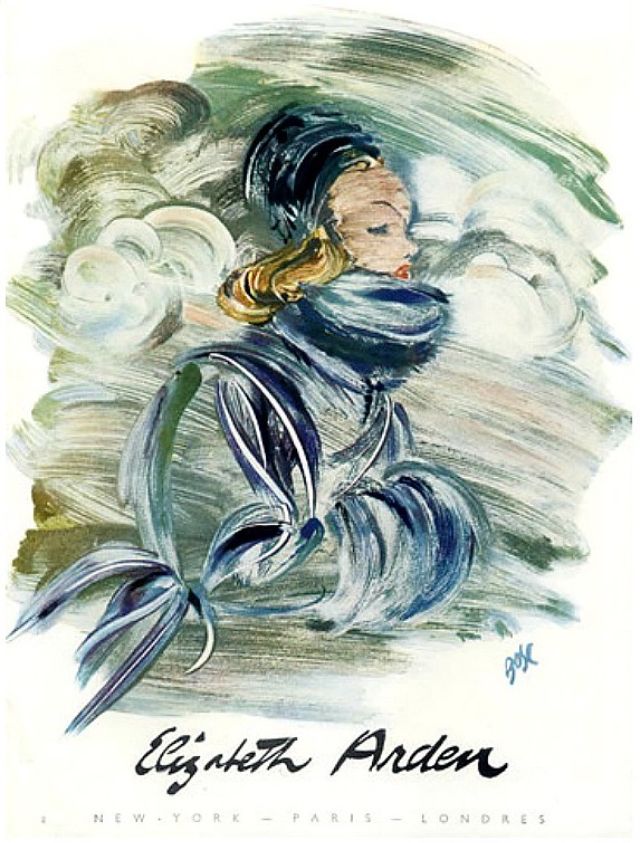
Bosc’s work often appeared in publications like L’Art et la Mode and Plaisir de France, including a notable 1945 illustration for Elizabeth Arden perfume and a vibrant 1947 cover for the fashion magazine L’Art et la Mode. These vintage works by Fernando Bosc offer a glimpse into the elegance of mid-century fashion illustration.
Elizabeth Arden advertisement illustrated by Fernando Bosc, 1945

Bianchini’s imported Lorganza dress by Pauline Trigère, illustrated by Fernando Bosc, Vogue, October 1, 1947

Elizabeth Arden advertisement by Fernando Bosc, 1947

Black draped gown by Jean Dessès, pink tulle embroidered with pearls and strasse by Pierre Balmain, illustrated by Fernando Bosc, 1948

Design is in fine navy and white wool with white embroidered polka-dots by Martial and Armand, illustrated by Fernando Bosc, 1948

See more »

read more
Photos of Ozzy Osbourne, Eric Clapton and Grace Jones Attend the International Rock Awards, 1989

Photos of Ozzy Osbourne, Eric Clapton and Grace Jones Attend the International Rock Awards, 1989

Ozzy Osbourne, Eric Clapton and Grace Jones were present at the International Rock Awards in New York City in 1989. The event took place on May 31, 1989, at the 69th Battalion State Armory (68 Lexington Avenue) in New York City.

Notably, Ozzy Osbourne and Grace Jones presented the MVP Guitarist Award to Eric Clapton at the ceremony. Osbourne later recounted an anecdote about this meeting, initially believing Clapton hated him due to a pose he was asked to strike for a photo, only to realize years later that Clapton had also recently been through rehab and was likely feeling similarly anxious.
The International Rock Awards was a music award ceremony in the United States that aimed to honor top musicians in the rock music genre. The inaugural event took place on May 31, 1989, in New York City. The awards were broadcast on ABC for three years, from 1989 to 1991. The 1989 event was specifically called “The Coca-Cola International Rock Awards,” indicating a sponsorship by The Coca-Cola Company. While it was seen as an attempt to build up to the Grammy Awards, it ultimately failed to attract sufficient viewers to remain successful.

See more »

read more
Beautiful Pics of Young Slash With His Parents

Beautiful Pics of Young Slash With His Parents

Guns N’ Roses guitarist Saul Hudson aka Slash was born in Hampstead on July 23,1965 to parents Ola and Anthony Hudson. When Saul was a child the family moved from London to Stoke on Trent before heading off to sunny Los Angeles in America. His mother Ola was a professional costume designer for various musicians, during her time she styled John Lennon, David Bowie, The Pointer Sisters, Ringo Starr and Diana Ross.

Saul’s dad Anthony was also involved in the music business. The English born artist worked for Geffen records in the 1970s, during his time there he created LP covers for Neil Young and illustrated the 1974 Joni Mitchell album Court and Spark.
When Slash spoke about his mixed background he said, “As a musician, I’ve always been amused that I’m both British and black; particularly because so many American musicians seem to aspire to be British while so many British musicians, in the sixties in particular, went to such great pains to be black.”

read more
40 Vintage Photos of the Leeson Estate Outing for Kids Around 1939–40

40 Vintage Photos of the Leeson Estate Outing for Kids Around 1939–40

A large outing for the kids of Leeson Estate, Twickenham, probably around 1939-40, was a local community event likely organized for children living in or around the Leeson Estate.

Taking place just before or during the early years of World War II, the outing offered a rare moment of joy and normalcy amid a time of growing uncertainty. Children dressed in their best clothes were taken on a day trip—the location is Butlins in Littlehampton, on the Sussex coast—where they played games, shared food, and posed for group photos. Events like this reflected the strong sense of community and care for children’s well-being during challenging times.

See more »

read more
35 Vintage Studio Portraits of People With Their Dogs From the Late 1800s

35 Vintage Studio Portraits of People With Their Dogs From the Late 1800s

In the late 19th century, people across social classes often posed with their dogs in photographs and portraits, reflecting the growing sentimental value placed on pets. Dogs were not only working animals—used for guarding, hunting, or herding—but increasingly seen as companions and family members.

In these studio portraits, well-dressed individuals, children, and even entire families were frequently pictured with their dogs, symbolizing loyalty, affection, and social standing. This era marked a shift toward the modern concept of the pet, as Victorians embraced a more emotional and domestic bond with their animals.

See more »

read more
The Story of Bob Dylan and Andy Warhol’s “Double Elvis” Silkscreen

The Story of Bob Dylan and Andy Warhol’s “Double Elvis” Silkscreen

Andy Warhol’s Double Elvis silkscreen is a significant piece of Pop Art, known not only for its artistic merit and commentary on celebrity culture but also for its fascinating connection to musician Bob Dylan.

Warhol created a series of Elvis paintings in 1963 for an exhibition at the Ferus Gallery in Los Angeles. These works, including Double Elvis, were based on a publicity still of Elvis Presley from his 1960 film Flaming Star, where he is depicted as a gunslinger. Warhol used the silkscreen process, often applying the images onto silver backgrounds, which evoked the “silver screen” of Hollywood and added a sense of glamour. The Double Elvis specifically features two overlapping images of Elvis, creating a flickering or strobe effect, as if he’s in motion or a filmstrip.
In 1965, Bob Dylan visited Andy Warhol’s famous studio, the Factory, in New York City. The exact circumstances of the exchange are a bit shrouded in legend, with various accounts differing on whether Warhol gifted the Double Elvis to Dylan or if Dylan simply took it as “payment” for participating in one of Warhol’s silent “screen tests.” Regardless of how he acquired it, Dylan left the Factory with the large Double Elvis painting strapped to the roof of his station wagon.
Andy Warhol and Bob Dylan in front of the Double Elvis which would later end up on the roof of Dylan’s station wagon.

Bob Dylan with Andy Warhol at the Factory, 1965.

Bob Dylan at the Factory – 1965

Barbara Rubin and Bob Dylan with another Silver Elvis.

“It doesn’t fit!” Bob Dylan, Barbara Rubin, and Victor Maymudes trying to stuff the Double Elvis into the back of their station wagon.

The piece was unable to fit it in the back of his station wagon, so Dylan secured it on top of the car.

Unable to fit it in the trunk, Dylan placed the artwork on the car roof, holding one side while his passenger held the other as they drove off.

Rumors circulated back to Warhol that Dylan had no particular fondness for the artwork. Stories, some perhaps apocryphal, claimed Dylan used it as a dartboard, hung it upside down, or even had a hose rigged to it.
“I liked Dylan, the way he created a brilliant new style,” said Andy Warhol. “I even gave him one of my silver Elvis paintings in the days when he was first around. Later on, though, I got paranoid when I heard rumors that he had used the Elvis as a dart board up in the country. When I’d ask, ‘Why did he do that?’ I’d invariably get hearsay answers like ‘I hear he feels you destroyed Edie [Sedgwick],’ or ‘Listen to Like a Rolling Stone — I think you’re the ‘diplomat on the chrome horse, man.’ I didn’t know exactly what they meant by that — I never listened much to the words of songs — but I got the tenor of what people were saying — that Dylan didn’t like me, that he blamed me for Edie’s drugs.”

See more »

read more
Amazing Studio Portraits of a Young Willem Dafoe in 1987

Amazing Studio Portraits of a Young Willem Dafoe in 1987

William James “Willem” Dafoe (born July 22, 1955) is an American actor. Known for his prolific career portraying diverse roles in both mainstream and arthouse films, he is the recipient of various accolades including a Volpi Cup Award for Best Actor, with nominations for four Academy Awards, a British Academy Film Award, and four Golden Globe Awards. He received an Honorary Golden Bear in 2018.

Dafoe had recently gained major recognition for his performance as Sergeant Elias in Platoon (1986), directed by Oliver Stone. His character, a morally grounded soldier, contrasted sharply with Tom Berenger’s brutal Barnes, and Dafoe’s performance earned him an Academy Award nomination for Best Supporting Actor in early 1987.
Thanks to Platoon’s critical and commercial success, Dafoe was seen as a serious, unconventional actor with a willingness to take on gritty or challenging roles.
Around this time, Dafoe also worked on films like: Off Limits (1988) – filmed in 1987, a Vietnam-set mystery thriller where he starred alongside Gregory Hines; he was also preparing for his controversial role as Jesus Christ in The Last Temptation of Christ (which would eventually release in 1988, directed by Martin Scorsese and filmed around 1987).
In 1987, Willem Dafoe had a lean, angular appearance with prominent cheekbones and expressive, intense eyes—features that made him a striking figure in both indie and mainstream cinema. His style was often understated and artistic, in line with his roots in experimental theater. Here are 16 amazing portraits of a young Willem Dafoe taken by photographer Bob Riha in his studio in Los Angeles, California in 1987:

See more »

read more
35 Stunning Portraits of Fashion Model Bettina Lauer in the 1960s

35 Stunning Portraits of Fashion Model Bettina Lauer in the 1960s

Bettina Lauer was a prominent German fashion model active during the 1960s and early 1970s. She appeared in leading fashion publications such as Vogue, Stern, and Constanze Mode, and worked with internationally renowned photographers including Rico Puhlmann, Helmut Newton, William Klein, and Werner Umstätter.

Known for her refined and elegant appearance, Lauer became a regular figure in editorial spreads, fashion campaigns, and Paris couture presentations. She modeled designs by top European designers such as Yves Saint Laurent, Pierre Cardin, Guy Laroche, and Grès. Her photo shoots often featured structured silhouettes, tailored coats, and evening wear — emphasizing her ability to embody both classic sophistication and modern high fashion.
Throughout her career, Lauer maintained a strong presence in European fashion circles, particularly in Germany and France. Her images reflect the stylistic trends of the era: bold lines, sculptural forms, and a quiet intensity that matched the editorial tone of the mid-20th century. Take a look at these stunning photos to see portraits of Bettina Lauer in the 1960s.
Bettina Lauer in dress by Lauer-Boehlendorff, photo by Rico Puhlmann for Constanze Mode, Berlin, Spring/Summer 1963

Bettina Lauer in evening dress by Yves Saint Laurent, published in Stern, March 3, 1963

Bettina Lauer in beige wool suit over coffee colored jersey turtleneck, by Pierre Balmain, photo by Philippe Pottier, 1964

Bettina Lauer in black sequinned cocktail suit by Guy Laroche, photo by Philippe Pottier, 1964

Bettina Lauer in hat and suit from Yves Saint Laurent, photo by Jean Louis Guégan, 1964

See more »

read more
Annabella Lwin and Boy George of Bow Wow Wow at Manchester University, March 1981

Annabella Lwin and Boy George of Bow Wow Wow at Manchester University, March 1981

In 1980, Boy George had a brief stint with Bow Wow Wow, joining as a second lead singer alongside Annabella Lwin at the suggestion of the bands manager, Malcolm McLaren. Dubbed “Lieutenant Lush,” George’s time with the band was cut short due to internal conflicts.

George left the group and started his own band with bassist Mikey Craig. They were joined by Jon Moss and then guitarist Roy Hay. Originally they were named Sex Gang Children, but settled on the name Culture Club. Their debut album, Kissing to Be Clever, drew rhythmic influences from Bow Wow Wow. The band achieved even greater global success with their second album, Colour by Numbers.

(Photos by Kevin Cummins)
read more
Carl Wilhelmson’s Beautiful Paintings From the Early 20th Century

Carl Wilhelmson’s Beautiful Paintings From the Early 20th Century

Carl Wilhelmson was a Swedish painter, illustrator, and art teacher, born 1866, in Fiskebäckskil, Sweden. He is best known for his depictions of coastal life and people in Bohuslän, often capturing the quiet dignity of fishermen and women in everyday scenes. His style combined elements of realism and symbolism, with a strong sense of color and composition.

Wilhelmson studied in Gothenburg and later in Paris, where he was influenced by modern French art. Upon returning to Sweden, he became a respected teacher at Valand School of Fine Arts and later founded his own art school in Stockholm. His work played a significant role in shaping early 20th-century Swedish art. He died in 1928.
Here is a collection of beautiful paintings by Carl Wilhelmson from the early 20th century.
Village Scene

Ana and Gertrud

Ana in Her Sickbed

Boy Fishing

Cottage Interior with Fisherman Repairing Nets

See more »

read more