

Yesteryear

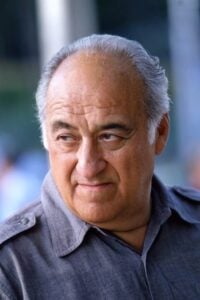
‘Sopranos’ Actor Jerry Adler Dies At 96

‘Sopranos’ Actor Jerry Adler Dies At 96

Jerry Adler, the veteran actor who brought warmth and wit to television dramas, has died at the age of 96. Best remembered for his role as Hesh Rabkin on The Sopranos, Adler also earned admiration for his portrayal of Howard Lyman on The Good Wife. His passing was confirmed by family representatives, who shared that […]

The post ‘Sopranos’ Actor Jerry Adler Dies At 96 appeared first on DoYouRemember? – The Home of Nostalgia. Author, Ruth A

read more
‘Get Smart’ Actor David Ketchum Quietly Died At 97 Earlier This Month

‘Get Smart’ Actor David Ketchum Quietly Died At 97 Earlier This Month

Actor and writer David Ketchum, best known for his role as the undercover Agent 13 on the classic sitcom Get Smart, has passed away at the age of 97. His family confirmed that he died on August 10, leaving behind a legacy that stretched across television comedy and writing for some of the most beloved […]

The post ‘Get Smart’ Actor David Ketchum Quietly Died At 97 Earlier This Month appeared first on DoYouRemember? – The Home of Nostalgia. Author, Ruth A

read more
Give It a Rest!

Give It a Rest!

One of a pair, this interesting piece is made of clear glass, with two bulbous ends intricately cut into delicate patterns and striations that prevent the object from rolling around the dining room table. The middle section is notched all the way around, belying its purpose.

And what is this object?
It’s a knife rest! Knife rests have graced dining room tables as far back as the 17th century and were commonplace through the early 20th century. Like the name suggests, diners would place their knives onto the knife rest to prevent soiling the tablecloth. At a time when table etiquette was paramount, placing a knife on a plate – or worse yet, the table itself – would have been a major faux pas. And so, the fashionable dinner tables of the middle and upper classes included knife rests to their table settings.
While earlier styles of the 1600s were fashioned from wood or even fragile porcelain, the Victorians preferred rests made from metals, glass, crystal, and horn. Both European and American models could have elaborate figures of people or animals, sometimes molded from metal or painted onto ceramic. Style, of course, depended on the taste and wealth of the host/hostess.
As the focus shifted from formal dining etiquette to a more casual style during the 2nd quarter of the 20th century, knife rests began to fade from fashion. One would be hard pressed to find a knife rest next to their plate at a dinner party today. The need for maintaining clean tablecloths has diminished thanks to advancements in washing efficiency and a more relaxed view on messes.

(This original article was published on Tiny Tuesdays at the Fall River Historical Society)
read more
The Elegant 1937 Fiat 1500 Cabriolet in Photos

The Elegant 1937 Fiat 1500 Cabriolet in Photos

The 1937 Fiat 1500 Cabriolet is a true testament to automotive innovation and style from the pre-war era. Introduced in 1935, the Fiat 1500 was a groundbreaking model for the company, earning a reputation for its blend of elegant aesthetics and advanced engineering. At a time when many cars still had a boxy, upright appearance, the Fiat 1500 stood out with its gracefully streamlined body, a shape famously designed with the aid of a wind tunnel to improve aerodynamics.

The Cabriolet version, in particular, was a work of art. While Fiat manufactured the standard sedans, the more exclusive cabriolet bodies were often crafted by renowned independent coachbuilders like Viotti and Ghia. This practice meant that each example could have unique design elements, from the precise curve of the fenders to the slope of the distinctive radiator grille. These custom touches contributed to the car’s rarity and its enduring appeal as a piece of classic Italian design.
Beyond its stylish exterior, the Fiat 1500 was also technologically advanced for its time. It was powered by a 1.5-liter, inline six-cylinder engine that produced a solid 45 horsepower. This engine, paired with a four-speed manual transmission, allowed the car to reach a respectable top speed of around 70 mph (113 km/h). More importantly, the 1500 was one of the first Fiat models to feature an independent front suspension, which provided a more comfortable and stable ride compared to its contemporaries.
Today, the 1937 Fiat 1500 Cabriolet is celebrated by automotive enthusiasts and collectors worldwide. Its combination of a wind-tunnel-optimized body, custom coachwork, and sophisticated engineering marks it as a significant vehicle in automotive history. It’s not just a car, it’s a beautiful example of how design and technology came together to define a new era of motoring. Here is a collection of beautiful photos showcasing the timeless elegance of the 1937 Fiat 1500 Cabriolet.

See more »

read more
18 Publicity Photos of Arnold Schwarzenegger and Alyssa Milano on the Set of “Commando” (1985)

18 Publicity Photos of Arnold Schwarzenegger and Alyssa Milano on the Set of “Commando” (1985)

Commando is a 1985 American action film directed by Mark L. Lester and produced by Joel Silver. It stars Arnold Schwarzenegger in the lead role, alongside Rae Dawn Chong, Alyssa Milano, Vernon Wells, Bill Duke and Dan Hedaya.

In the film, Schwarzenegger starred as Colonel John Matrix, a retired Special Forces operative living a quiet life in the mountains with his daughter Jenny, played by a then 12-year-old Milano. The film’s emotional core hinges on their relationship: Jenny is kidnapped by mercenaries trying to force Matrix into carrying out an assassination. Instead, Matrix launches a one-man war to rescue her, unleashing the kind of explosive, over-the-top action that made Commando a cult classic.
Milano had just started her career when she took the role. She was simultaneously starring on the hit sitcom Who’s the Boss? (1984–1992), which helped make her one of the decade’s most recognizable child actors. In Commando, she balanced vulnerability and spirit—her character outsmarts her captors a few times, which added suspense and gave her more agency than many child roles in action films of the era.
For Schwarzenegger, Commando was part of his rapid rise after The Terminator (1984). The film cemented his reputation as the quintessential 1980s action hero: muscular, witty, and unstoppable.
Behind the scenes, he reportedly had a warm and protective rapport with Milano, treating her like a real daughter on set. Milano later reflected fondly on the experience, saying she felt safe working with him even in such an intense and violent movie.
Commando was released in the United States on October 4, 1985, where it received praise for the action sequences and humor. The film became a commercial success at the box office and was nominated for a Saturn Award for Best Special Effects, but lost to Back to the Future.

See more »

read more
In the 1990s, Jatech Created a Disappearing Door System That Retracted Beneath the Car’s Body

In the 1990s, Jatech Created a Disappearing Door System That Retracted Beneath the Car’s Body

Jatech was a California-based design and technology firm that, in the early 1990s, developed a “disappearing car door” or “rotary drop door” system. This innovative design was intended to solve the problem of traditional car doors, which require a lot of space to swing open and can be awkward in tight parking spots.

Unlike conventional doors that swing outward or other alternative designs like gullwing or scissor doors that swing upward, Jatech’s door was a motorized system that slid downward into a sealed compartment beneath the car’s body. The door was mounted on a track system and would lower into a reinforced undercarriage. When a button was pressed, the door’s window would retract, and the entire door would descend into the car’s sills, leaving a completely open side for easy entry and exit.
Jatech claimed that its design had several advantages. It eliminated the need for swing-out space, making it ideal for cramped urban environments and tight parking spots. The company insisted the system improved a car’s structural integrity and crashworthiness. Jatech argued the doors would allow for easier escape in emergencies, as they wouldn’t be blocked by other vehicles or objects.
The company received some early interest from major automakers like Ford and General Motors. The most famous prototype was a modified Lincoln Mark VIII, but the system was also demonstrated on a Ford Explorer and a Chevrolet Corvette. The Lincoln Mark VIII prototype, in particular, gained attention and became the subject of a viral video years later.
Despite its intriguing design and apparent advantages, the Jatech disappearing door never made it to mass production. The system required a complete redesign of the car’s understructure to create the compartment for the door, which would have driven up production costs significantly. The motorized system, exposed to road grime, debris, and weather, raised concerns about long-term reliability and maintenance.
While Jatech claimed enhanced safety, critics were skeptical, particularly about what would happen in a minor fender-bender or if the mechanism failed, potentially trapping occupants inside. A manual override was reportedly part of the design, but the heavy doors would have been difficult to move without the motor’s assistance.
The doors were completely featureless on the inside, as the space was needed for the mechanism. This meant no storage pockets, speakers, or other standard door panel features.

By the 2010s, Jatech had ceased operations, leaving behind only a handful of prototypes and a legendary viral video that continues to fascinate car enthusiasts. The company’s name has, in a way, lived up to its invention’s fate, having largely disappeared from the public eye.
read more
Fabulous Portraits of Giulietta Masina in ‘La Strada’ (1954)

Fabulous Portraits of Giulietta Masina in ‘La Strada’ (1954)

La Strada is a 1954 Italian film directed by Federico Fellini, often regarded as one of his masterpieces and a landmark in world cinema. The title translates to “The Road”, reflecting the film’s poetic journey through human suffering, love, and redemption.

The story follows Gelsomina (played by Giulietta Masina), a simple and innocent young woman who is sold by her impoverished mother to Zampanò (Anthony Quinn), a brutish traveling strongman. As they wander from town to town, Gelsomina endures hardship but also reveals her purity and resilience. Along the way, she encounters Il Matto (Richard Basehart), a gentle and free-spirited tightrope walker who changes her perspective on life.
With its blend of neorealism, symbolism, and lyrical storytelling, La Strada explores themes of loneliness, cruelty, innocence, and the search for meaning. The haunting score by Nino Rota has become iconic, perfectly echoing the melancholy and tenderness of the film.
La Strada won the Academy Award for Best Foreign Language Film in 1957 and established Fellini as an internationally acclaimed director. Giulietta Masina’s performance as Gelsomina remains one of the most beloved in Italian cinema, making the film a timeless classic.
These remarkable photos highlight the emotion and artistry of La Strada (1954), with Giulietta Masina’s iconic performance at its heart.

See more »

read more
Iconic Photos of Concorde With the Twin Towers in the Background, the Two Different Wonders That We’ll Never See Again

Iconic Photos of Concorde With the Twin Towers in the Background, the Two Different Wonders That We’ll Never See Again

When Concorde entered passenger service in 1976, New York was the most important transatlantic market—but U.S. approval was complicated. Noise regulations and protests against sonic booms delayed scheduled service to John F. Kennedy International Airport until November 22, 1977, when British Airways and Air France were finally allowed to operate regular Concorde flights into New York.
During publicity runs, the aircraft was often photographed against the Manhattan skyline, with the Twin Towers of the World Trade Center serving as a dramatic backdrop. These images became iconic—sleek supersonic technology soaring above the symbol of global finance.
One particularly famous moment occurred on October 19, 1977, when a Concorde (Air France) made a ceremonial flight over New York City after test landings at JFK. It passed low enough over lower Manhattan for photographers to capture the jet crossing above the World Trade Center towers—images that were later used in promotional materials.
For the next two decades, Concorde was a frequent sight on the New York–London and New York–Paris routes, with the Twin Towers often visible during arrivals and departures from JFK. The pairing of Concorde and the World Trade Center became a symbol of late 20th-century ambition: engineering marvels of speed and height sharing the same skyline.
The 9/11 attacks had a devastating effect on the aviation industry worldwide, leading to a sharp decline in air travel and public confidence in flying. Concorde’s primary market was high-end business and leisure travel between London/Paris and New York. A significant number of Concorde’s most frequent customers, including many who worked at the World Trade Center, were killed in the attacks.
The subsequent global downturn in travel, combined with the already high costs of operating the aircraft and the aftermath of the 2000 crash, ultimately sealed Concorde’s fate. It was a contributing factor in British Airways’ and Air France’s decision to retire the fleet in 2003.

See more »

read more
When Sylvester Stallone Met Michael Schumacher in 1998

When Sylvester Stallone Met Michael Schumacher in 1998

In 1998, Sylvester Stallone met Michael Schumacher at several Formula One events. Stallone was in the early stages of a film project about F1, which eventually became the 2001 movie Driven. He was reportedly doing research for the film, visiting F1 races and meeting with drivers and team personnel.

Their most well-documented meeting took place at the Monaco Grand Prix on May 24, 1998. Photos from the event show Stallone in the Ferrari garage, speaking with Schumacher and even sitting in Schumacher’s Ferrari F300 car. Another meeting between the two was documented at the Italian Grand Prix in Monza on September 11, 1998.
During their encounters, Stallone and Schumacher were photographed laughing and engaging in a playful “boxing” pose. The meetings generated significant media attention due to Stallone’s star power and Schumacher’s status as a top F1 driver.

See more »

read more
How Richard Gere’s Suits in “American Gigolo” (1980) Put Armani On the Global Fashion Map

How Richard Gere’s Suits in “American Gigolo” (1980) Put Armani On the Global Fashion Map

Richard Gere’s fashion in the 1980 film American Gigolo was groundbreaking, largely because it introduced Giorgio Armani’s signature “deconstructed” menswear to a global audience and helped launch his career. His character, Julian Kaye, a high-priced male escort, used clothing as both a profession and an identity, treating his wardrobe with an almost fetishistic reverence.
The fashion in the film broke from the boxy, structured suits and flamboyant disco styles of the 1970s. Armani’s designs were a radical departure, defined by their relaxed silhouette and use of soft, luxurious fabrics.
John Travolta was originally attached to the lead role, with his casting announced by the Los Angeles Times in January 1978. He was provided a wardrobe by Giorgio Armani and appeared in a photo spread for the trade publication Variety announcing his participation. The following year, Travolta dropped out of the production to deal with his mother’s death and father’s illness.
In Travolta’s absence, Barry Diller of Paramount Pictures offered the part of Julian Kay to Christopher Reeve, but Reeve turned down the million-dollar offer. Chevy Chase was also offered the role but declined. Schrader offered the part to his first choice, Richard Gere, who accepted. Gere was cast two weeks before shooting began. In 2012, Gere said he was drawn to the role partly because of its gay subtext, commenting, “I read it and I thought, ‘This is a character I don’t know very well. I don’t own a suit. He speaks languages; I don’t speak any languages. There’s kind of a gay thing that’s flirting through it and I didn’t know the gay community at all.’ I wanted to immerse myself in all of that and I had literally two weeks. So I just dove in.”
Given his racy role in American Gigolo, Gere had to look good, and while his nude scene got people talking, so did his stylish suits. The suits are immediately recognizable for their relaxed yet refined tailoring and muted color palettes, and they’re practically their own character in the film. As Schrader quipped, “As an actor, Richard was more interested in the character than the clothes, but to me the clothes and the character were the same. I mean, this is a guy who does a line of coke in order to get dressed!”
Gere and Armani were forever linked in the public eye, as American Gigolo made them both stars. They remained friends after the film. There’s even a long-running rumor that because of the impact American Gigolo had on the brand, Gere had the privilege of walking into any Armani store and getting whatever he wanted for free.
Armani credited Gere with making him famous, saying, “It was what I would call a crucial moment. Nobody could have imagined the success that film would have, which in fact marked the imagination of the ’80s, and it became an important vehicle for my fashion. He helped me to make myself known in the United States, where many requests for my clothes started to arrive.”
In a 2000 Vanity Fair interview, Gere spoke admiringly of Armani’s aesthetic, praising how the suits were “Quite stylized, big shoulders and thin waists, thin lapels. It was like looking at an old carpet where the natural colors blend and even bleed as opposed to some of these new carpets made of plastic fibers where the colors are monolithic,” and emphatically saying, “I don’t know any other designer.” The actor has continued to wear Armani suits throughout his career, and his American Gigolo looks have stayed on the vision boards of designers and menswear enthusiasts for decades.

See more »

read more