
Yesteryear

30 Glamorous Black and White Photos Show Jacqueline Bisset’s Style in the 1960s and 1970s

30 Glamorous Black and White Photos Show Jacqueline Bisset’s Style in the 1960s and 1970s

Jacqueline Bisset, a British actress born on September 13, 1944, rose to fame in the 1960s and 1970s, becoming one of the most glamorous and respected figures in Hollywood. Her acting career was marked by her ability to effortlessly portray strong, independent women, often with a blend of grace and vulnerability that made her stand out in a variety of genres. Her elegance and striking beauty were frequently noted by critics, and she became a beloved figure in cinema during the golden age of Hollywood.

Bisset’s style in the 1960s and 1970s was a beautiful blend of the era’s trends and her own classic, understated elegance. She was a natural beauty who often favored simple, chic looks that highlighted her features rather than overpowering them. Her fashion evolved from the mod-influenced looks of the 1960s to the more bohemian and relaxed styles of the 1970s.
When Bisset began her career in the mid-1960s, she embodied the British “It Girl” look with a refined twist. She embraced the mini-skirt and mini-dress, a signature of the mod era, but often chose them in classic A-line or simple shift silhouettes. Her style was never overly fussy. She favored simple, clean-lined garments that emphasized her natural figure without being overly revealing.
While she was known for her long, flowing hair in many of her films, she also sported a shorter, chic bob in the late 1960s, a look that perfectly captured the spirit of the time.
As the 1970s dawned, Bisset’s style shifted towards a more relaxed and free-spirited aesthetic, while still maintaining a polished feel. She famously popularized the “wet T-shirt” look in the film The Deep (1977), and her casual style often included simple, soft t-shirts. She had a knack for making even the most basic items look effortlessly chic.
In some of her more casual, off-screen moments, she embraced bohemian trends with flowing dresses, scarves, and natural fabrics. Bisset also wore well-tailored suits and elegant dresses for more formal events, showcasing her versatility. Her look was always natural. She often wore her long hair down in a loose, effortless style and her makeup was minimal, focusing on a fresh, glowing complexion.
Overall, Bisset’s style was defined by its timeless quality. She wasn’t a trend follower, but rather a woman who wore clothes with confidence and grace, making her a style icon for decades to come.

See more »

read more
James Stephanoff: Master of Historical Watercolors in 19th-Century Britain

James Stephanoff: Master of Historical Watercolors in 19th-Century Britain

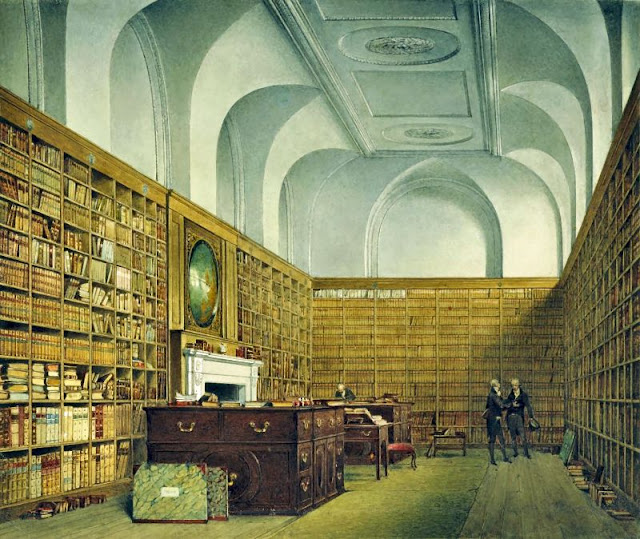
James Stephanoff (c. 1786–1874) was a British painter and draughtsman best known for his finely detailed watercolors of historical and ceremonial scenes. Born in London to a family of artists, he developed a particular talent for depicting interiors, royal occasions, and antiquarian subjects. His work often drew inspiration from classical antiquity and museum collections, combining accuracy with an elegant sense of design.

Elected an Associate of the Old Watercolor Society in 1819, Stephanoff went on to earn the title of Historical Painter in Watercolors to King William IV in 1830. Over the years, he produced numerous views of royal residences and public institutions, including richly observed interiors of Osborne House and Dulwich Picture Gallery.
Stephanoff retired to Bristol in 1851 and remained there until his death in 1874. Today, his works are valued for their meticulous detail and their ability to capture the spirit of 19th-century British history and culture. Here is a look at James Stephanoff’s elegant watercolors, capturing royal interiors and ceremonial splendor in 19th-century Britain.
The Banquet of Henry VIII in York Place (Whitehall Palace)

An Armourer’s Shop

An Indian Triumphal Procession

Buckingham House – East Library

Buckingham House – Octagon Library

See more »

read more
30 Gorgeous Portraits of Angie Dickinson From the 1960s

30 Gorgeous Portraits of Angie Dickinson From the 1960s

Angie Dickinson (born born Angeline Brown; September 30, 1931) is an American actress whose career has spanned film and television for more than five decades. Known for her beauty, charisma, and versatility, she became one of Hollywood’s most recognizable leading ladies from the 1950s through the 1980s.

Dickinson first gained attention with roles in westerns and crime dramas, but her breakout performance came in Howard Hawks’s Rio Bravo (1959), opposite John Wayne and Dean Martin. Throughout the 1960s, she appeared in a string of successful films, including Ocean’s 11 (1960) with the Rat Pack, The Killers (1964), and Point Blank (1967).
In the 1970s, Dickinson became a television icon as the star of the groundbreaking police drama Police Woman (1974–1978). Playing Sergeant Suzanne “Pepper” Anderson, she was one of the first women to lead a TV crime series, a role that earned her a Golden Globe Award and paved the way for future female leads in law enforcement dramas. Her career continued into later decades with appearances in films such as Brian De Palma’s Dressed to Kill (1980) and television roles that showcased her enduring screen presence.
Today, Angie Dickinson is remembered not only for her glamorous image but also for her trailblazing contributions to film and television, especially in shaping strong female characters on screen. Take a look at these gorgeous photos to see the beauty of a young Angie Dickinson in the 1960s.

See more »

read more
Victorian Readers: A Glimpse Into 19th-Century Reading Culture

Victorian Readers: A Glimpse Into 19th-Century Reading Culture

In the 19th century, reading became one of the most widespread and defining pastimes of the Victorian era. The rapid growth of literacy, driven by educational reforms and the spread of affordable printed materials, meant that books, magazines, and newspapers reached a wider audience than ever before.

For many Victorians, reading was not just a form of entertainment but also a way of engaging with moral, social, and intellectual life. Popular novels by authors such as Charles Dickens, the Brontë sisters, and George Eliot were eagerly consumed by both middle-class and working-class readers. Serial publications allowed stories to unfold week by week, making literature accessible and creating shared cultural experiences.
At the same time, reading was often a social activity—families gathered around to hear novels read aloud, and literary societies flourished. Women in particular found both escape and inspiration in the expanding world of fiction, while men often turned to newspapers and journals to keep up with politics, science, and current events.
Take a look at these beautiful photos revealing how reading became an essential part of daily life in the Victorian era.

See more »

read more
30 Fabulous Portraits of Fashion Model Dorothy Griffith in the Late 1950s

30 Fabulous Portraits of Fashion Model Dorothy Griffith in the Late 1950s

Dorothy Griffith was a model and actress active during the late 1950s, remembered for her elegance and refined presence in fashion photography. Originally from North Carolina, she later moved to Europe, where she worked in Paris and Berlin.

Griffith posed for leading photographers such as F.C. Gundlach and Philippe Pottier, appearing in high-fashion shoots that highlighted the style and sophistication of the era. Her portraits often feature her in chic ensembles—silk dresses, velvet hats, and dramatic turbans—capturing the glamour of mid-century fashion.
After her modeling and acting years, Griffith transitioned into a career as a publicist in Paris, continuing to move within the world of style and culture. Take a look at these fabulous photos to see portraits of Dorothy Griffith as a fashion model in the late 1950s.
Dorothy Griffith wearing a little top hat made of black otter with gros-grain ribbon and mask-shaped voilette by Rose Valois, photo by Philippe Pottier, 1956

Dorothy Griffith in white organdy dress threaded through with black velvet ribbons by Christian Dior, photo by Joseph Grove, 1956

Dorothy Griffith wearing a purple velvet toque that is artfully crumpled by Legroux, jewelry by Scémama, mink by Mendel-Maggy Rouff, photo by Philippe Pottier, 1956

Dorothy Griffith in beautiful SAGA white mink coat by Jacques Rober, jewelry by Marcassite, photo by Philippe Pottier, 1957

Dorothy Griffith in black dotted tulle with satin trim dress by Jean Patou, photo by Sabine Weiss, 1957

See more »

read more
Off Duty FDNY Firefighter Tim Duffy Rode His Harley Davidson Through Traffic and Chaos on 9/11 to Reach Ground Zero

Off Duty FDNY Firefighter Tim Duffy Rode His Harley Davidson Through Traffic and Chaos on 9/11 to Reach Ground Zero

On September 11, 2001, FDNY Firefighter Tim Duffy, though off duty, raced into the heart of the chaos on his 2000 Harley-Davidson Super Glide Sport — grabbing his gear from the firehouse and riding through a dust-choked Manhattan street to reach Ground Zero. The image, taken moments after the first tower fell, freezes a surreal moment as he cuts through debris and paper in a haze of destruction.
Shortly after arriving and while helping others to safety, Duffy was buried under rubble when the North Tower collapsed. Remarkably, he survived the collapse and continued his rescue efforts despite the choking dust and chaos.
Duffy’s Harley-Davidson also survived the day. He still rides it to this day and has used it for fundraising and charitable work, including for a charity he founded called “1 Soldier, 1 Dog, 1 Team,” which pairs shelter dogs with veterans and first responders suffering from PTSD.
The story and the image of Tim Duffy on his motorcycle have been featured in various media, including at a 9/11 ceremony at the Harley-Davidson Museum, where it was highlighted as a perfect illustration of the heroic attitude of first responders.
read more
Silvana Mangano: A Captivating Star of Italian Cinema’s Golden Age

Silvana Mangano: A Captivating Star of Italian Cinema’s Golden Age

Silvana Mangano, one of the most captivating actresses of Italian cinema, became an enduring symbol of beauty and talent during the mid-20th century. Born 1930 in Rome, she made her screen debut in the 1949 film Il Peccato di Lola. Her striking looks and commanding presence quickly set her apart, earning her a significant place in Italian and international cinema.

Mangano’s collaboration with famed directors like Luchino Visconti and Federico Fellini established her as a central figure in Italy’s Golden Age of Cinema. Her notable roles in films such as Riso Amaro (1949), where she played a strong, complex character, helped define her career. In The Nile (1951) and Senso (1954), directed by Visconti, she captivated audiences with her ability to portray both emotional depth and sensuality. Her collaboration with other legendary actors, including Marcello Mastroianni and Vittorio Gassman, further cemented her reputation as one of the most talented actresses of her time.
Throughout her career, Mangano often played strong, independent women who captured the hearts of viewers, making her an icon of Italian neorealism and post-war cinema. Her elegance and distinctive style, both on and off-screen, made her a favorite of filmmakers and fashionistas alike.
Her legacy endures not only through her exceptional film work but also through her influence on the cultural landscape of Italian cinema, where she remains a timeless symbol of Italian glamour and sophistication. Take a look at these vintage photos to see the beauty of a young Silvana Mangano.

See more »

read more
La Esfera: Spain’s Prestigious Illustrated Magazine in the Early 20th Century

La Esfera: Spain’s Prestigious Illustrated Magazine in the Early 20th Century

La Esfera was a highly influential and prestigious Spanish weekly magazine, published from 1914 to 1931. Considered one of the most important publications of its era, it was a “magazine of information and art” that set a new standard for quality and content in Spanish journalism.

The magazine covered a wide array of topics, including politics, literature, science, and society, but it was particularly distinguished by its stunning visual presentation. Each issue featured a wealth of high-quality photographs, drawings, and illustrations, making it a valuable visual record of its time. It attracted contributions from some of the most prominent writers and artists of the period, cementing its reputation as a leading cultural and intellectual force.
Today, La Esfera is regarded as a crucial historical document, providing a unique glimpse into the social, political, and artistic life of Spain during a period of significant change, spanning from the First World War to the eve of the Second Spanish Republic.
Here is a collection of beautiful covers from La Esfera, showcasing the elegance and cultural sophistication of early 20th-century Spain.
Cover of La Esfera, 1914

Cover of La Esfera, 1914

Cover of La Esfera, April 1914

Cover of La Esfera, January 3, 1914

Cover of La Esfera, February 13, 1915

See more »

read more
Studio Portraits of a “Fresh-Faced” Hugh Grant Taken by John Stoddart in 1993

Studio Portraits of a “Fresh-Faced” Hugh Grant Taken by John Stoddart in 1993

John Stoddart, a well-known portrait photographer, has taken several portraits of celebrities—including Hugh Grant—often in his Chelsea studio around the early 1990s. These black and white portraits show a young-looking Grant and were taken by the renowned photographer for Popperfoto in 1993.

The 1990s were the decade that defined Hugh Grant as a global film star, establishing his quintessential persona as the charming, often bumbling, British romantic lead. His career in this period was marked by a series of critically acclaimed and commercially successful films.
Grant’s style in the 1990s was a key part of his on-screen and off-screen persona, embodying a very specific type of British “effortless elegance.” His look became a blueprint for the “charming, slightly rumpled” romantic lead.
In films like Four Weddings and a Funeral (1994) and Notting Hill (1999), Grant’s characters often wore a kind of “smart casual” uniform. This included a perfectly fitted, but often unstructured, blazer or sports jacket, paired with a soft-knit sweater or an open-collared shirt. This look was polished without being stuffy, perfectly matching his character’s charming, slightly bumbling nature.
Whether it was a suit for a wedding or formalwear for a premiere, his characters and his real-life self often sported classic British tailoring. This included crisp white shirts, well-cut trousers, and the occasional double-breasted jacket.
Perhaps as iconic as his clothing was his hair. The loosely swept-back, slightly floppy hairstyle became his signature and was widely emulated.
Hugh Grant’s 1990s style, both in film and in his personal appearances, was defined by a a sophisticated yet understated aesthetic that perfectly encapsulated the “romantic hero” he became known for.

See more »

read more
JCPenney Stores Drop Bombshell Closing News After 32 Years

JCPenney Stores Drop Bombshell Closing News After 32 Years

After more than three decades of serving the local community, the JCPenney store closing at Westminster Mall has left longtime shoppers stunned. The beloved location, which first opened its doors in 1993, will shut down permanently this November, marking the end of an era for many who grew up visiting the mall. According to The […]

The post JCPenney Stores Drop Bombshell Closing News After 32 Years appeared first on DoYouRemember? – The Home of Nostalgia. Author, Ruth A

read more