
Yesteryear

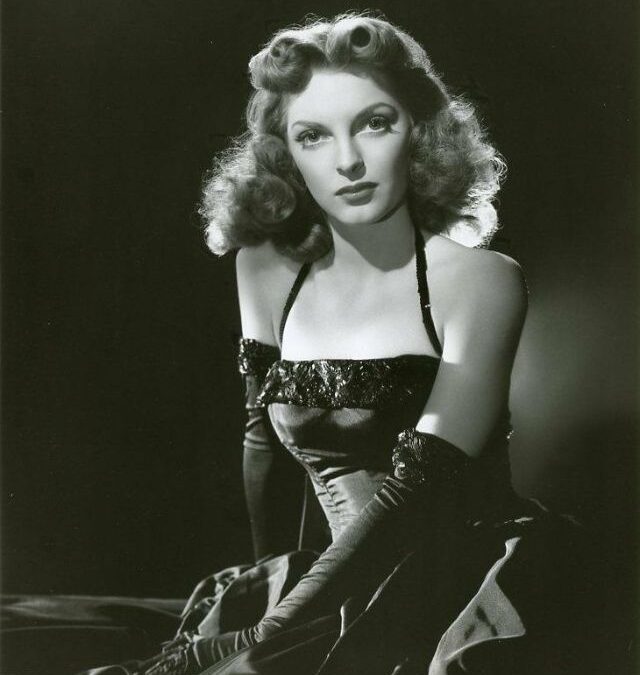
Julie London: The Intimate Voice of Cool

Julie London: The Intimate Voice of Cool

Julie London (1926–2000) was an American singer and actress renowned for her sultry, intimate contralto voice and a distinct, understated vocal style that became synonymous with 1950s cool.

Often described as a torch singer, London recorded over thirty albums of pop and jazz standards between 1955 and 1969. Her most famous recording is the melancholy ballad “Cry Me a River” (1955), which launched her singing career and remains her signature tune, inducted into the Grammy Hall of Fame. The track perfectly showcases her quiet, breathy delivery, often featuring a sparse arrangement with just guitar and bass. Critics noted her voice was “low-keyed” and “seductive,” with an almost three-dimensional presence that made listeners feel like she was singing in the room with them.
Outside of music, London was a successful actress, later achieving long-running television fame as Nurse Dixie McCall in the popular 1970s TV series, Emergency! Julie London remains timeless, her voice a whisper from another era, filled with longing, grace, and the quiet fire of classic jazz.

See more »

read more
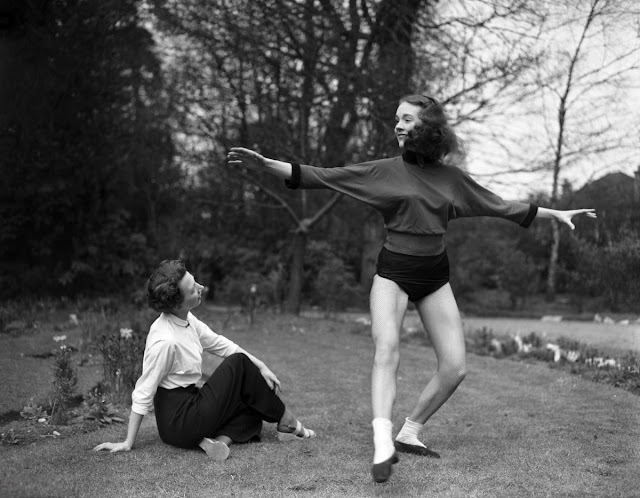
Julie Andrews Taking a Ballet Lesson With Her Aunt Joan Wells, 1954

Julie Andrews Taking a Ballet Lesson With Her Aunt Joan Wells, 1954

Julie Andrews was born into a theatrical family in Surrey in 1935, and from a young age, her natural gift for music and performance was encouraged. Her mother’s sister, Joan Wells, played an important part in her childhood. Joan was a ballet dancer and teacher, and she introduced little Julie to the discipline and grace of dance.
Julie began taking ballet lessons with her Aunt Joan when she was very young, even before she was fully aware of her extraordinary singing voice. These lessons weren’t just casual playtime—they were proper, structured classes in which Julie learned posture, poise, and discipline. Joan saw that Julie had remarkable natural coordination and urged her to continue.

Though ballet never became Julie’s professional path, the training she received from her aunt became essential later on. The balance, carriage, and breath control she developed in those early ballet lessons carried into her stage presence, vocal stamina, and movement on stage. In interviews, Julie Andrews has often recalled those lessons with affection, saying that her Aunt Joan’s influence gave her a foundation that would serve her throughout her career.
By the time Julie was discovered for her extraordinary four-octave soprano, she already carried herself with the confidence and precision of a performer far beyond her years—qualities rooted in the ballet training Joan Wells had given her.
Julie Andrews’ elegant bearing and discipline as a performer didn’t come only from her voice—it began in her childhood with her Aunt Joan Wells teaching her ballet.
read more
1950s Film Posters by Ernesto García Cabral

1950s Film Posters by Ernesto García Cabral

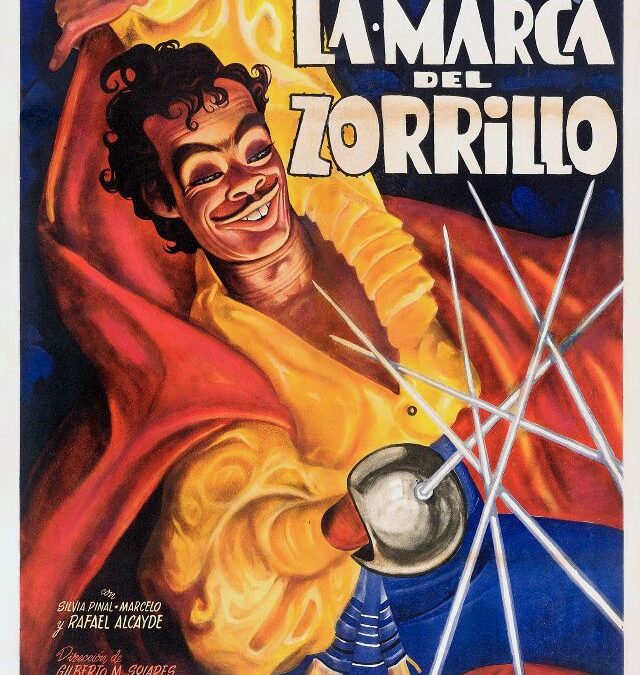
In the 1950s, as cinema blossomed into a vibrant global art form, Mexican illustrator Ernesto García Cabral brought a dazzling visual language to the silver screen. Known as “El Chango”, Cabral infused his film posters with bold color, expressive linework, and a sense of movement that captured the drama and allure of mid-century cinema. His style bridged fine art and popular culture, transforming ordinary movie advertisements into collectible works of design.

From romantic melodramas and noir thrillers to musical spectacles, Cabral’s posters reflected both the glamour and emotional intensity of their era. Each composition feels alive — a burst of energy frozen in ink and pigment — reminding us of a time when hand-drawn artistry defined the face of film.
Through his vibrant, dynamic compositions, Cabral captured not just the films’ essence but also the bold, exciting pulse of mid-century Mexican cinema, solidifying his legacy as the master artist of the golden age movie poster.
Tin-Tan en “La Marca del Zorrillo”, film poster, 1950

Tin-Tan en “El revoltoso”, film poster, 1951

Tin-Tan in “Las Locuras de Tintan”, film poster, 1951

“Las 3 alegres comadres”, film poster, 1952

“Los 3 alegres compadres”, film poster, 1952

See more »

read more
22 Vintage Mugshots of Victorian Child Offenders Jailed for Stealing Items for Christmas Day

22 Vintage Mugshots of Victorian Child Offenders Jailed for Stealing Items for Christmas Day

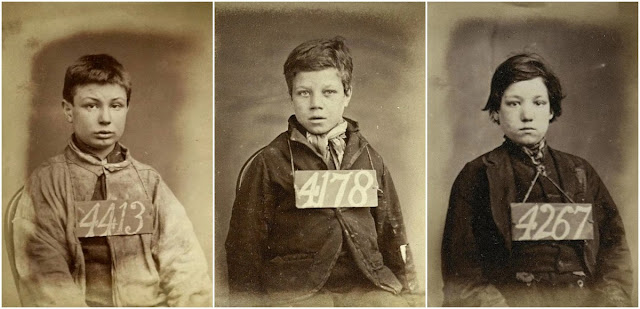
These vintage photographs of Victorian child offenders, which originate from Wandsworth Prison, London, were taken from December 1872 to January 1873 when the concept of photography was still relatively new. Most of these child criminals were arrested or brutally punished for stealing small items that would barely warrant a police caution today.

In the 19th century, children were often imprisoned for minor offenses and no distinction was made between criminals of any age, which meant young children were often sent to adult prisons like Oxford Castle Prison. There are even records of a child aged twelve being hanged for petty theft and murder in 1829.
The Victorians were very worried about crime and following the development of the camera, police realized they could use the new technology to capture images of repeat offenders. Just as Anti-Social Behaviour Orders (Asbos) work today, officers released the photos to warn the public when the criminal was to be released from prison. It was not until the 1908 Children’s Act that changes were made to the way child offenders were punished.
Juvenile courts were introduced and children could no longer be placed in adult prisons or executed for capital crimes – however minors could still be whipped.
Thomas Thompson, 14, was given 21 days hard labor at Wandsworth Prison for stealing one shilling in January 1873.

Thomas Savage, 11, was given 4 days hard labor and 10 strokes of a birch cane at Wandsworth Prison for stealing some iron, in December 1872.

George Davis, 14, was whipped and given three days hard labor at Wandsworth Prison for stealing a pile of books in January 1873.

Thomas Goodstone, 14, was given 14 days hard labor at Wandsworth Prison for stealing 7lbs of pork over the Christmas period in 1872.

George Davis, 14, was whipped and given three days hard labor at Wandsworth Prison for stealing a pile of books in January 1873.

See more »

read more
Erik Braagaard: Milliner to the Elite

Erik Braagaard: Milliner to the Elite

Erik Braagaard (1912–2004) was a prominent Danish milliner and hat designer known for dressing some of the world’s most affluent women. He began his career in Paris before eventually emigrating and establishing a successful hat salon in New York City around 1940.

Braagaard became highly regarded in the fashionable district around Fifth Avenue, opening salons on West 57th Street and later East 53rd Street. His unique, high-fashion creations were often featured in the society and style pages of the time. The Metropolitan Museum of Art holds several of his hats, highlighting his place in fashion history. His clientele included numerous members of high society and royal families, showcasing his transition from a Danish designer to a sought-after name in the exclusive world of American couture.
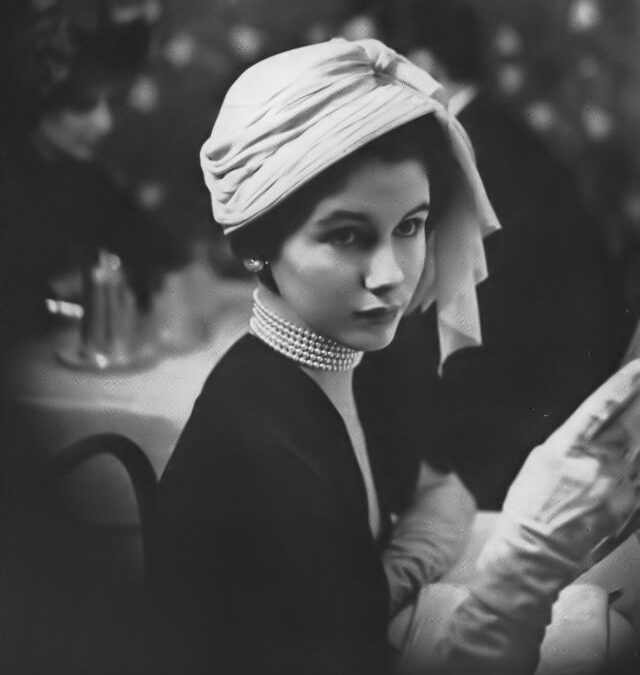
Braagaard continued his work, sometimes collaborating with designers like Adolfo Sardinia, until his death in New York in 2004. These vintage photos capture portraits of classic beauties wearing hats designed by Erik Braagaard.
Model wearing a charming bonnet of pink felt swathed in pink chiffon by Erik, photo by Frances McLaughlin, Vogue, March 1948

Barbara Mullen in shapely jacket, fitted and belted and curved for wide skirts in Russian broadtail by Ritter, a winging side-set white felt cloche by Erik, photo by Richard Rutledge, Vogue, March 1948

Betty Bridgers wearing a hat of pink, blonde and green tulle by Braagaard, jewelry by Tiffany, photo by Louise Dahl-Wolfe, Harper’s Bazaar, June 1948

Pat O’Reilly in charming gray-and-white spotted sundress with matching bolero by Frederic Starke, broderie Anglaise cloche by Erik, photo by Jay at the Villa Borghese, Harper’s Bazaar UK, May 1949

Pat O’Reilly in classic plaid cotton shirtwaister by Dorville and piqué boater by Erik, photo by Jay at St. Peter in Rome, Harper’s Bazaar UK, May 1949

See more »

read more
Before Commercial Airplanes Were Pressurized, Passengers Required Oxygen Masks at High Altitudes

Before Commercial Airplanes Were Pressurized, Passengers Required Oxygen Masks at High Altitudes

Before pressurized cabins changed aviation forever, flying high was a serious and risky business. In the 1930s, commercial aircraft reaching altitudes of 10,000–12,000 feet (about 3,000–3,600 meters) didn’t have the technology to maintain breathable air pressure inside the cabin. So how did passengers survive the thin air? They wore bulky oxygen masks for the entire flight, and yes, it looked as dramatic as it sounds.

In the 1930s and early 1940s, cabins were not sealed or pressurized, so flying above 10,000–12,000 feet meant passengers and crew were exposed to dangerously thin air and low oxygen levels (hypoxia). Photos at the time show passengers wearing prominent, often bulky, face masks made of rubber or fabric. They resembled early military aviation masks more than the small, modern emergency masks. These were connected via a tube to an onboard, manual oxygen supply system. Oxygen usually flowed continuously, which could be inefficient and contribute to frost accumulation in cold cabins.
A major innovation in the late 1930s was the Boothby-Lovelace-Bulbulian (BLB) mask, developed at the Mayo Clinic in 1938. This was a more effective oronasal (covering both nose and mouth) mask design that reduced oxygen waste and was quickly adopted by the military and airlines. It was more comfortable and reliable than earlier “pipe-stem” devices or ill-fitting masks.
Oxygen mask technology improved significantly during World War II, with advancements like the A-14 mask (an enhancement of the BLB mask) that incorporated automatic diluter-demand systems for more efficient oxygen use, primarily for military pilots.
The early 1940s marked a pivotal transition with the introduction of the first commercial airliners featuring pressurized cabins, such as the Boeing 307 Stratoliner in 1940. This technological leap allowed aircraft to maintain a comfortable, near-sea-level cabin environment at high altitudes, making routine oxygen mask use obsolete for passengers.
The need for passengers to routinely wear oxygen masks disappeared as pressurized airliners became more common. Oxygen masks transitioned from standard equipment to the emergency backup systems we know today, used only in the event of a sudden loss of cabin pressure.

See more »

read more
Candid Snaps of Elvis Presley and Girlfriend Linda Thompson in Cars in the 1970s

Candid Snaps of Elvis Presley and Girlfriend Linda Thompson in Cars in the 1970s

Linda Thompson was Elvis Presley’s girlfriend for four and a half years, from July 1972 to December 1976. They met at a private movie screening Elvis hosted in Memphis shortly after his separation from Priscilla Presley.

Linda, who was Miss Tennessee Universe in 1972, quickly moved into Graceland with him. Their relationship was intense, with Linda often taking on a caretaker role due to Elvis’s increasing struggles with prescription drug abuse.
Despite their deep connection, their relationship ended in late 1976, partly due to his escalating drug use and infidelities, as Linda sought a more stable and “normal” life. They remained on good terms until his death in August 1977. Linda Thompson has since shared details of their time together in interviews and her memoir, A Little Thing Called Life.

These candid snaps of the couple in cars taken by fans and paparazzi during their dating days in the 1970s, as shared by Thompson on her Instagram: “I decided to throw together some photos of Elvis and me together in cars… Sometimes going in or out of Graceland… Sometimes going to or from concerts. It was our dance… So long ago, but such rarified memories last a lifetime.”

See more »

read more
50 Amazing Photos Capture Everyday Life in Japan During the Early 1900s

50 Amazing Photos Capture Everyday Life in Japan During the Early 1900s

At the dawn of the 20th century, Japan stood at a crossroads between tradition and modernity. The country, emerging from the transformative Meiji era (1868–1912), was rapidly industrializing while still holding fast to its centuries-old customs. Steam trains ran alongside rickshaws, Western architecture appeared beside wooden machiya houses, and men in bowler hats walked past women in silk kimonos — a striking fusion of two worlds.

The early 1900s were a period of ambition and reinvention. Japan sought to establish itself as a global power, embracing modern science, education, and technology, while artists and craftsmen continued to preserve the grace of traditional aesthetics. Photographs from this era capture that delicate balance — the quiet beauty of tea houses and temples coexisting with the steel of new railways and the hum of modern cities.
These amazing photos offer a rare glimpse into everyday life in Japan in 1904.

See more »

read more
In November 1976, John Lennon Visited Singapore on a Private Trip, Staying Five Days Under a Pseudonym “John Girskin”

In November 1976, John Lennon Visited Singapore on a Private Trip, Staying Five Days Under a Pseudonym “John Girskin”

In November 1976, John Lennon arrived in Singapore without fanfare. To avoid fans and the press, he checked into the Hyatt Hotel on Scotts Road under the pseudonym “John Girskin.” He stayed alone for five days and reportedly gave strict instructions to the hotel not to disclose his stay.
During his five-day stay, he was mostly holed up at the hotel, where he wrote postcards to friends and family. He also ventured out for some shopping. According to one account, he was “just trying to do average things, like an average person.” He later mentioned in a Rolling Stone interview that his travels during that period took him to Singapore, South Africa, Hong Kong, and Bermuda.
John Lennon at a bar in Bugis, Singapore in 1976.
Despite his efforts to remain anonymous, Lennon was recognized by a fan while shopping at the old Metro Golden Mile department store (which no longer exists today). The fan was a Singapore Airlines flight stewardess named Jzenea Foo. She approached the tall man she thought looked familiar and asked if he was John Lennon. When he confirmed, she was able to quickly ask a friend who was with her to take a picture.
“I was shopping with a friend when I saw a tall man at one of the counters,” Jzenea recalled. “I thought he looked extremely familiar, so I went up to him and asked him if he was John Lennon. When he said ‘yes’ I was so excited. I almost lost my voice, but very quickly I asked my friend, who was carrying a camera, to take a picture of us. He was very nice about it and obliged by going to a corner for a photo.”
“Later when he was going down by the escalator, my friend and I were behind him. He turned around and asked, ‘Are you following me?’ I think he was afraid of being seen by the public,” said Jzenea.
Jzenea Foo pictured with John Lennon, 1976.
The encounter was later reported in the now-defunct Singapore newspaper New Nation on December 11, 1976, under the headline, “The day S’pore Girl ‘caught’ Lennon shopping at the Metro…”
It was also noted that Lennon had kept his hair short enough, which was fortunate, as Singapore at the time had a well-known “Operation Snip Snip” government campaign against men with long hair. Other musicians, such as Kitaro and Led Zeppelin, were reportedly denied entry unless they cut their hair.
read more
NYC Window Displays in the 1980s: Art, Fashion, and the City’s Electric Glamour

NYC Window Displays in the 1980s: Art, Fashion, and the City’s Electric Glamour

During the 1980s, New York City’s window displays became dazzling theaters of fashion, fantasy, and consumer desire. Department stores like Bergdorf Goodman, Bloomingdale’s, and Saks Fifth Avenue transformed their street-facing windows into vibrant, ever-changing art installations — each one a reflection of the decade’s bold creativity and extravagance.

Neon lights, mirrored surfaces, and dramatic styling captured the essence of the era — a time when retail was spectacle and display artists were storytellers. The mannequins wore power suits, sequins, and statement accessories, set against backdrops of surreal cityscapes or geometric pop designs. Even small boutiques in SoHo joined the visual competition, using their windows to express individuality and edge.
These vintage photos of 1980s NYC window displays, taken by Diane Worland, preserve the glamour and audacity of a time when the city’s storefronts were more than just places to shop — they were reflections of art, ambition, and the irresistible energy of New York itself.

See more »

read more