
Yesteryear

42 Publicity Photos of Bruce Lee as Kato on the Set of “The Green Hornet”

42 Publicity Photos of Bruce Lee as Kato on the Set of “The Green Hornet”

Bruce Lee’s portrayal of Kato in the 1966-1967 television series The Green Hornet was a pivotal moment in his career and for martial arts in American media. The film was Lee’s first major adult role in the United States and introduced his unique martial arts style to a mainstream American audience. While the show starred Van Williams as the Green Hornet (Britt Reid), Lee’s energetic and groundbreaking performance as Kato, the Green Hornet’s valet, masked driver, and crime-fighting partner, often stole the spotlight. The show was so popular in Hong Kong that it was known as The Kato Show.

Lee refused to follow the standard American fisticuff fight choreography. He insisted on using his authentic martial arts skills, which was a key factor in the character’s popularity and the show’s distinction. He effectively brought high-tech martial arts to American television. His speed was so legendary that the show’s film crew had trouble capturing his movements at a normal frame rate. Bruce Lee was reportedly asked to slow down his punches for the cameras because, at regular speed, his movements appeared as a blur.
On one occasion, during a planned crossover episode with the Batman TV series, Lee refused to participate in a fight scene that depicted Asian-style martial arts being defeated. He walked off the set in protest, as the original script had the Green Hornet and Kato being beaten by Batman and Robin. He reportedly insisted that his character would not be defeated.
His time as Kato is credited with helping to popularize martial arts in the United States in the 1960s, paving the way for his later feature films like Enter the Dragon. The success and attention he gained from The Green Hornet ultimately led to his starring roles in Hong Kong feature films, which cemented his status as a global pop culture icon.

See more »

read more
Nan Grey: A Graceful Star of 1930s Hollywood

Nan Grey: A Graceful Star of 1930s Hollywood

Born Esmée Nanette Grey in Houston, Texas, American actress Nan Grey (1918–1993) rose to prominence during Hollywood’s Golden Age in the 1930s.

Often cast in supporting roles as a sympathetic young woman, Grey gained recognition for her work in horror and comedy films. She is perhaps best known for her roles in the Universal Pictures classics Dracula’s Daughter (1936) and the musical comedy Three Smart Girls (1936), the latter of which starred Deanna Durbin and led to a successful sequel.
After a brief but active career, Grey retired from acting in the early 1940s following her marriage to singer Frankie Laine, choosing to focus on her family. Though her filmography is relatively short, Nan Grey remains a memorable figure of pre-war cinema.

See more »

read more
The Story Behind Robert Croft’s Iconic Photograph of John F. Kennedy in Dealey Plaza, Before the First Shot Struck Kennedy

The Story Behind Robert Croft’s Iconic Photograph of John F. Kennedy in Dealey Plaza, Before the First Shot Struck Kennedy

Assassination eyewitness Robert Croft took this up-close picture of John F. Kennedy and Jackie Kennedy after the limousine had made its fatal turn onto
Elm Street. Jackie, probably to the photographer’s immense delight, appears to be looking directly at Mr. Croft when he clicked his camera’s shutter.

Jacqueline Kennedy looks at Robert Croft as he snaps a photo of her, her husband President John F. Kennedy, Texas Gov. John Connally, his wife Nellie Connally and two Secret Service agents in the presidential limousine just before shots rang out in Dealey Square on Nov. 22, 1963.

The photo was snapped by Croft at the equivalent of approximately Frame #161 of Abraham Zapruder’s home movie, which was almost exactly the same time that Lee Harvey Oswald fired the first of his three gunshots from the Book Depository (the first shot missed the car and its occupants completely).
Robert Earl “Bob” Croft was a 20-year-old missionary for the Church of Jesus Christ of Latter-day Saints who was in Dallas on Nov. 22, 1963.
“It was the most gruesome, horrible thing I have ever seen in my life,” he told the Powell Tribune 50 years ago. “I don’t know if I will ever get over it.”
Croft decided to see Kennedy’s motorcade pass through Dallas, and he left the Union Terminal, where he was waiting for a bus to take him to Denver, to see the president pass. He walked over to Dealey Plaza in the downtown area — and took his Argus C3 35mm camera with him.
Croft told the Powell Tribune for a story published Nov. 26, 1963, that he was 30 feet from JFK’s limousine when the shots rang out at around 12:30 p.m. Central Time.
During an interview Croft did on April 20, 1988, 25 years after the assassination, with JFK researcher Richard Trask for Trask’s book “Pictures of the Pain,” Croft offered more details on what he witnessed in Dallas.
He said he was winding his camera to get as many photos as possible. He took three, and was trying to snap a fourth when he heard a shot ring out in the concrete canyon of Dealey Plaza. Croft told Trask the photo was “taken simultaneously with the shot which killed the President,” according to the book.
Then, the area was in pandemonium.
Croft also appears in some photos taken that day, as many people took cameras to capture an image of the glamorous president and his wife. He is also seen in the famed Abraham Zapruder film of the assassination.
After the fatal events of Nov. 22, 1963, Bob Croft was in contact with the Secret Service and the FBI. Both agencies examined his color slides.
Online and printed reports, based on an FBI file, state that Croft took 22 images on his roll of 36-exposure Kodachrome-X film before it was processed. Three were of the Kennedy motorcade. One was of the motorcycles in the advance guard; the other two showed the presidential limousine.
The more famous of the photos, frame 18 on the roll, shows first lady Jacqueline Kennedy looking right at Croft. He was standing on the south curb of Elm Street on the driver’s side of the limo, facing the Texas School Book Depository. President John F. Kennedy is next to his wife and is shown in profile.
Texas Gov. John Connally and his wife Nellie are in the middle of the 1961 Lincoln Continental convertible in the jump seats. The driver is Secret Service Agent William Greer, with Secret Service Assistant Special Agent in Charge Roy Kellerman riding next to him in the front seat.
It’s an iconic photo, one of the most famous taken on that day. It appears on dozens of websites and has been published in books, magazines and newspapers.
According to the book, “Matrix for Assassination: The JFK Conspiracy,” Croft took a fourth photo at the scene. He believed it was snapped at the exact moment as the devastating head shot struck Kennedy. But when he received his photos back from the FBI, this slide was a complete blank. The FBI told him his camera appeared to have malfunctioned at that moment.
Croft’s photos were first examined by the FBI, according to a Secret Service memo, after he turned his film over to the Denver FBI office.
According to Trask’s book, “… frame number 18 appears to show the Presidential car on Elm Street south of Houston Street just moments before the President was shot … Croft believed the last picture taken by him was taken simultaneously with the shot which killed the President. This no doubt refers to frame number 19 which is a complete blank which probably was occasioned by some malfunction of Mr. Croft’s camera or some other fault.”
Trask said he very much doubts the FBI tampered with the photo. Others, in the conspiracy-thick world of the JFK assassination, are not as convinced.
After the FBI returned his photos on Jan. 4, 1964, Croft mailed them to his parents in Powell. Two days later, the Secret Service office in Denver learned of the photos and asked Croft, who was living there as part of his two-year LDS mission, if they could examine them. He had his parents mail the photos back to him, and turned them over to the Secret Service, which, according to memos, was looking for its agents in the motorcade or any unusual activity which appears to be related to the attack.
Eventually, Croft called and asked for the photos, and the color slides were mailed to his Powell home, according to an April 20, 1964, Secret Service memo.
“Please accept our sincere thanks for your cooperation in making these slides available for our review,” the letter from Rolland H. Osborne, the special agent in charge of the Denver office states.
Rob Croft said he has no idea what happened to the photos, which captured a healthy, happy JFK and his wife seconds before their lives, and the fate of the nation, were forever changed.
read more
30 Fascinating Photos of a Young Goldie Hawn in the 1960s

30 Fascinating Photos of a Young Goldie Hawn in the 1960s

Goldie Jeanne Hawn (born November 21, 1945) is an American actress, producer, dancer, and singer. She achieved stardom and acclaim for playing lighthearted comedic roles in film and television. In a career spanning six decades, she has received several awards, including an Academy Award and a Golden Globe Award as well as nominations for a BAFTA Award and two Primetime Emmy Awards.

Hawn began her career as a professional dancer, studying ballet and tap from a young age. In the mid-1960s, she moved to California to pursue a professional dancing career, working as a go-go dancer at a discotheque where she was discovered by a talent agent.
Her television debut came in the short-lived sitcom Good Morning, World (1967-1968). Her breakout role, however, was as a regular on the iconic sketch comedy program Rowan & Martin’s Laugh-In, which debuted in 1968. Her success on Laugh-In quickly launched her film career. She made her big-screen debut in a minor role in the western musical The One and Only, Genuine, Original Family Band (1968).
The pinnacle of her 1960s career was her performance in the screwball comedy film Cactus Flower (1969), where she starred alongside Walter Matthau and Ingrid Bergman. For her role as the warm and funny young woman, Toni Simmons, she won both the Academy Award and Golden Globe Award for Best Supporting Actress.
By the end of the 1960s, Goldie Hawn had successfully transitioned from a dancer to an Oscar-winning actress, setting the stage for her long and successful career in movie comedies throughout the 1970s and beyond.

See more »

read more
Sculptor Howard Ball Towing His Life-Size Mammoth to the La Brea Tar Pits Using Only His Volkswagen, 1967

Sculptor Howard Ball Towing His Life-Size Mammoth to the La Brea Tar Pits Using Only His Volkswagen, 1967

The sight of the mammoth standing at the edge of the La Brea tar pits on Wilshire Blvd is a must-drive-by for tourists. But imagine what it was like for the locals driving along Wilshire in January 1967 who came upon the sight of sculptor Howard Ball towing his life-size mammoth to the pits using only his Volkswagen.

In 1967, The Times reported:
“A life-sized model of an imperial mammoth was placed beside the largest of the tar pits in Hancock Park Wednesday, the first of 50 prehistoric animals’ replicas to be installed in the park in a plan to recreate a ‘Pleistocene atmosphere.’
Sculptor Howard Ball, commissioned to do the 13-foot-high, 25-foot-long, fiberglass creature, pulled it to the site from his Torrance studios on a trailer with his 1958 Volkswagen.
The 2,000-pound mammoth was then transferred with a minimum of difficulty by city crane to the four small iron platforms upon which it will rest.
A crowd of about 100 persons, including two county supervisors, the head of the Los Angeles County Museum of Natural History, and members of the museum board watched the installation and heard brief speeches.
Imperial mammoths roamed the Los Angeles area in the Pleistocene epoch of 14,000 to 40,000 years ago. Some became mired in the tar pits.
Ball, the 60-year-old sculptor, said he plans to set to work on a female companion for his $4,300 mammoth immediately. He also plans a baby.
Howard Ball’s three-mammoth installation was finished in 1968.”

read more
Beautiful Portraits of Elizabeth Taylor on the Set of ‘Beau Brummell’ (1954)

Beautiful Portraits of Elizabeth Taylor on the Set of ‘Beau Brummell’ (1954)

Elizabeth Taylor, already a major star, brought a captivating presence to the set of Beau Brummell in 1954, playing Lady Patricia Belham, the beautiful and high-spirited noblewoman who falls for the titular dandy. Photographs and studio portraits taken during production often highlight Taylor’s striking beauty framed by the elaborate costumes of the Regency period.

Unlike many of her contemporaries, Taylor embodied a vibrant, modern sensibility even in historical dress, with her signature dark hair and intense violet eyes providing a dramatic contrast to the era’s delicate fabrics and voluminous skirts.
Her portraiture from this film showcases her at the height of her early career glamour, radiating youthful confidence and the elegance required to convincingly portray a woman who navigates the rigid, fashion-conscious high society of early 19th-century England.

See more »

read more
22 Fascinating Photos of Shirley MacLaine as Lucy Dell in “My Geisha” (1962)

22 Fascinating Photos of Shirley MacLaine as Lucy Dell in “My Geisha” (1962)

In the 1962 film My Geisha, Shirley MacLaine stars as Lucy Dell, a famous American comedienne who, in an attempt to prove her acting range and secure a dramatic role in her husband’s film, masquerades as a Japanese geisha named Yoko Mori.

The plot revolves around Lucy’s husband, Paul Robaix (played by Yves Montand), a film director who travels to Japan to film an authentic adaptation of Madame Butterfly. He intends to cast an unknown Japanese actress for the lead role, specifically to prove his directorial talent without relying on his famous wife.
Unbeknownst to him, Lucy follows him to Japan and, with the help of the film’s producer Sam Lewis (Edward G. Robinson) and a real geisha who teaches her the customs, completely transforms her appearance to pass as a Japanese woman. She auditions under the name Yoko Mori and wins the part.
MacLaine’s role required a significant physical transformation, including elaborate makeup and costuming to alter her Caucasian features to an “Oriental shape.”
Her performance is described in contemporary reviews as subdued and in keeping with the formal nature of the geisha role, showing her versatility beyond the “Lucille-Ball-type” comedienne character she plays at the beginning of the film. The film is a comedy of errors where her character has to maintain the elaborate deception throughout the filming process, even as her husband becomes romantically intrigued by the mysterious “Yoko Mori.”
The film was largely seen as a light, charming, though highly improbable, comedy. While praised for its beautiful on-location shots of Japan and MacLaine’s convincing performance, it has also been viewed as a product of its time, with modern discussions pointing out the use of “yellowface” and cultural insensitivity inherent in the premise, similar to modern discussions of Tropic Thunder.

See more »

read more
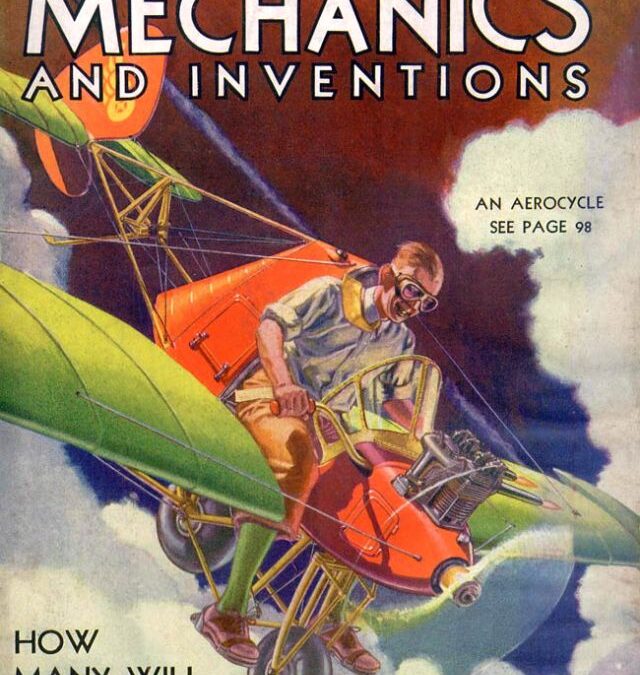
35 Vintage Cover Photos of Modern Mechanix Magazine in the 1930s

35 Vintage Cover Photos of Modern Mechanix Magazine in the 1930s

Modern Mechanix was an influential American monthly magazine launched in 1928 by Fawcett Publications to compete with established titles like Popular Science and Popular Mechanics. Initially titled Modern Mechanics and Inventions, the magazine, which adopted the name Modern Mechanix in the early 1930s, served as a fascinating snapshot of the era’s technological optimism and innovation.

Billed as “The How-To-Do Magazine”, it focused on a wide array of topics including science, technology, aviation, and military developments, but its most popular feature was empowering readers with “build-your-own” plans and DIY projects. From building simple home improvements to ambitious concepts like telescopes or even small aircraft, Modern Mechanix catered to the Depression-era fascination with invention and practical self-reliance.
The magazine later evolved into the long-running publication Mechanix Illustrated in 1938. These imaginative covers capture the boundless optimism and inventive spirit of the 1930s, offering a nostalgic glimpse into the futuristic dreams that once shaped the modern imagination.
Modern Mechanix cover, April 1930

Modern Mechanix cover, June 1930

Modern Mechanix cover, August 1931

Modern Mechanix cover, February 1931

Modern Mechanix cover, December 1932

See more »

read more
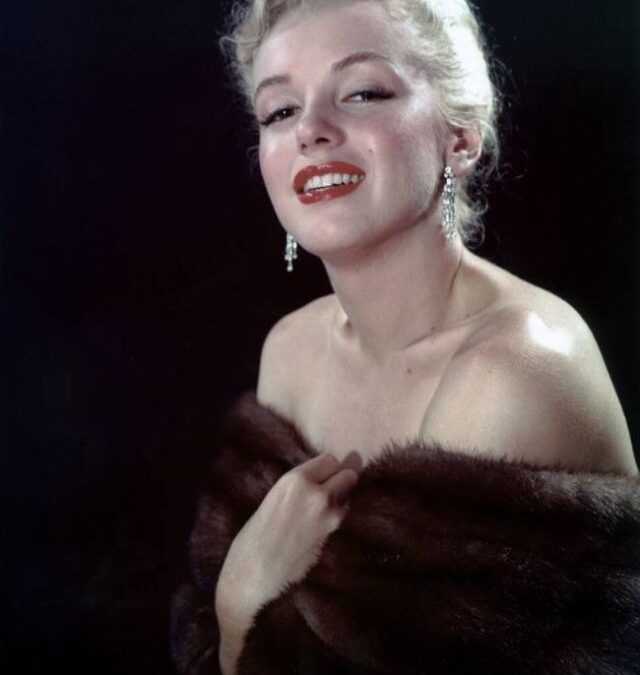
Stunning Portraits of Marilyn Monroe During the Filming of ‘All About Eve’ (1950)

Stunning Portraits of Marilyn Monroe During the Filming of ‘All About Eve’ (1950)

During the filming of All About Eve in 1950, Marilyn Monroe was still at the beginning of her rise, appearing in a small but memorable role as Miss Casswell. Though she shared only a handful of scenes, the production captured a series of striking portraits that reveal a young actress on the verge of stardom.

These images show Monroe as both poised and vulnerable, her now-iconic beauty softened by the uncertainty of a newcomer navigating Hollywood’s demanding spotlight. Even in these early photographs, it is clear that Marilyn Monroe possessed a magnetism the camera could not ignore, the quiet beginning of a legend in the making.

See more »

read more