
Yesteryear

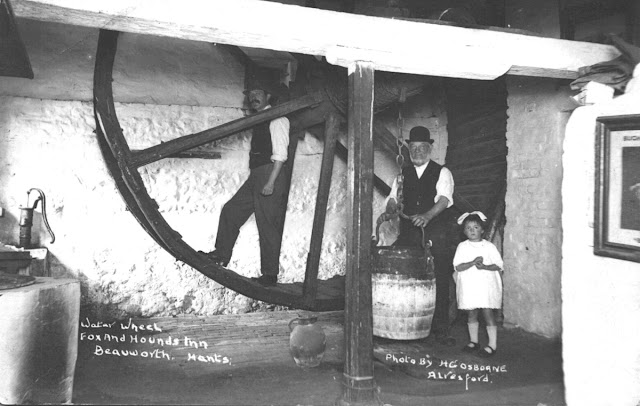
The Well With a Human-Powered Treadmill Inside the Milbury Pub at Beauworth

The Well With a Human-Powered Treadmill Inside the Milbury Pub at Beauworth

The Milbury Pub is a historic English country pub located in Beauworth, near Winchester, that features an ancient well with a human-powered treadmill and pulley system inside.

Lowering the bucket and hauling it back up demanded a full two miles of walking inside the treadmill wheel. The well inside the Milbury pub at Beauworth drops an astonishing 300 feet (about 100 meters).
Believed to have been hand-cut more than 800 years ago, it still features a 250-year-old human-powered treadmill and bucket pulley system. Operating it once required the equivalent of a two-mile walk inside the wheel. The well sits right inside the pub, close to the bar, as one of its most remarkable historic features.
The pub was purchased by Clive and Tanith Cummings in April 2023 and has since undergone a full refurbishment, now offering local ales, open fires, and views of the surrounding countryside.
read more
Meccano Magazine: The Voice of Engineering Enthusiasts

Meccano Magazine: The Voice of Engineering Enthusiasts

Meccano Magazine was a highly influential British monthly publication that ran from 1916 until 1982, serving as an extension of the iconic Meccano construction system brand.

More than just a promotional tool, the magazine became a comprehensive journal for young engineering enthusiasts and model builders. While it prominently featured Meccano models, including instructions and design ideas, it also covered a vast range of non-Meccano topics such as trains, cars, ships, aircraft, and general scientific and engineering news. It was known for its detailed technical drawings and articles that fostered an interest in practical mechanics and technology among generations of boys (and many girls) across the UK and the Commonwealth.
The magazine played a significant role in popularizing Meccano, Dinky Toys, and Hornby trains, making it a beloved piece of 20th-century British popular culture dedicated to inventive play and technical education. Here is a collection of Meccano Magazine covers from the 1930s.
Meccano Magazine cover, February 1930

Meccano Magazine cover, November 1930

Meccano Magazine cover, April 1931

Meccano Magazine cover, September 1931

Meccano Magazine cover, December 1932

See more »

read more
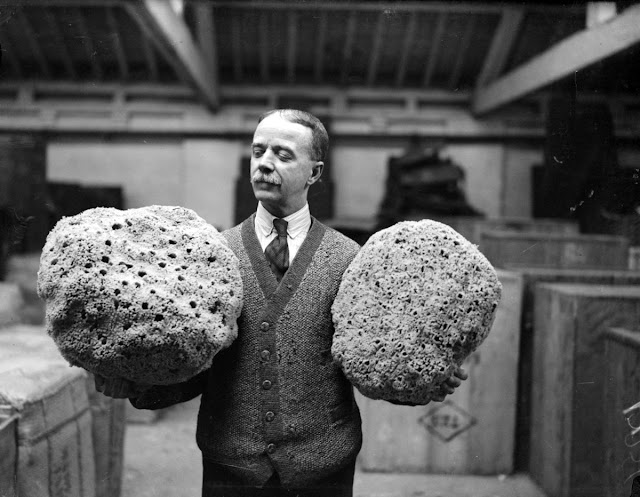
Amazing Photographs of People Posing With Giant Sponges in the Early 20th Century

Amazing Photographs of People Posing With Giant Sponges in the Early 20th Century

In the early 20th century, “giant sponges” were primarily a focus of the lucrative commercial sponge industry, particularly in the Mediterranean and Caribbean. Species considered giant by fishermen of that era were prized specimens for the bath sponge market, though modern science has since identified even larger sponges in deep, remote waters.

The natural sponge trade flourished in the early 1900s before collapsing due to disease and competition from synthetics. Greek divers migrated to the U.S., establishing major sponge harvesting operations in Florida, especially in Tarpon Springs.
Divers initially used surface-supplied air hoses to reach sponges at greater depths, which was more efficient than harvesting from shallow water. This allowed them to access larger specimens growing in deeper waters.
The Neptune’s Cup sponge (Cliona patera or a similar species) was a large, unique sponge known in the Indo-Pacific region. Overfishing in the late 19th and early 20th centuries led to its near-extinction, and it was considered lost for almost a century.
By the 1930s, the industry was already in decline due to overharvesting. This was made worse by a sponge blight and the introduction of synthetic sponges in the 1950s, which ended the golden age of natural sponge harvesting.

See more »

read more
Photos of Billy Idol of Generation X in New York City, 1978

Photos of Billy Idol of Generation X in New York City, 1978

In May 1978, Billy Idol was in New York City on a promotional tour for the debut Generation X album, though he came without the entire band. He was brought stateside by Chrysalis Records to promote the debut album Generation X, which had been released in March 1978 in the UK.
Idol made appearances at notable New York punk venues, including a stop at Max’s Kansas City on May 18, 1978. During this visit, these photos of Idol around New York City were taken by photographer Roberta Bayley. He was photographed with other figures in the punk and rock scene, such as Howie Pyro and possibly Debbie Harry, highlighting the cross-pollination of the London and NYC punk scenes at the time.

See more »

read more
The Fashion and Posing of ’90s Family Photos

The Fashion and Posing of ’90s Family Photos

Studio family portraits from the 1990s evoke a strong sense of nostalgia, characterized by distinct aesthetic choices that defined the era. These sessions typically featured families posed formally against neutral or subtly textured backdrops, like muted gray muslins or faux marble columns.

The fashion was decidedly nineties: matching outfits were highly popular, with many families opting for a coordinated ‘uniform’ of denim jeans paired with white turtlenecks or button-down shirts. The lighting was often soft and diffused, designed to cast an even, flattering glow that minimized shadows. Posing was precise, with parents seated and children carefully arranged around them, often leaning in towards one another with gentle, reserved smiles.
These portraits, often displayed prominently in homes, served as a glossy, meticulously planned record of the family unit, reflecting a desire for polished, aspirational imagery.

See more »

read more
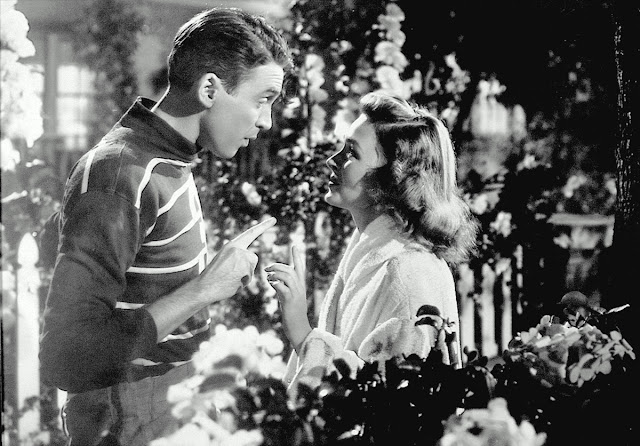
46 Nostalgic Photos From the Set of “It’s a Wonderful Life” (1946)

46 Nostalgic Photos From the Set of “It’s a Wonderful Life” (1946)

It’s a Wonderful Life (1946) is one of the most beloved American films ever made, an emotional blend of fantasy, drama, and small-town Americana that grew from a modest release into a timeless Christmas classic.
Directed by Frank Capra and starring James Stewart (George Bailey) and Donna Reed (Mary Hatch Bailey), the film tells the story of a man who’s spent his whole life helping others at the expense of his own dreams.
On Christmas Eve, overwhelmed by debt, guilt, and a sense of failure, George contemplates suicide. At that moment, a guardian angel named Clarence is sent from heaven to intervene. Clarence shows George what the world would’ve been like if he had never been born, a dark alternate reality where his small acts of kindness were the very things keeping the town of Bedford Falls alive. Realizing how profoundly he’s touched others, George chooses life, returns home, and finds that the community he once helped has come together to save him.
Although it was nominated for five Academy Awards, including Best Picture, It’s a Wonderful Life initially received mixed reviews and was unsuccessful at the box office. Theatrically, the film’s break-even point was $6.3 million, about twice the production cost, a figure it did not come close to achieving on its initial release. Because of the film’s disappointing sales, Capra was seen by some studios as having lost his ability to produce popular, financially successful films. Its copyright in the U.S. expired in 1974 following a lack of renewal and it entered the public domain, allowing it to be broadcast without licensing or royalty fees, at which point it became a Christmas classic.
Filming took place during a heatwave, and Capra famously created one of Hollywood’s first realistic artificial snow systems. This was Stewart’s first major film after returning from WWII combat; many believe his emotional intensity came from that real-life experience. The movie’s “failure” at first was partly due to tough competition in 1946 and the expensive production budget.

See more »

read more
45 Snapshots of People Having Fun at the Beach From Between the 1920s and 1940s

45 Snapshots of People Having Fun at the Beach From Between the 1920s and 1940s

In the early 20th century, people at the beach adhered to strict social norms of modesty and decorum, with activities focused more on leisurely wading and socializing than on swimming or sunbathing. Attire was cumbersome, often made of heavy wool, and covered most of the body, a stark contrast to modern beach culture.
Beachwear was heavily dictated by the era’s focus on modesty, with fashion evolving from full-coverage garments in the 1900s to slightly more streamlined, though still substantial, suits by the 1920s.
Despite the restrictive clothing, the beach was a popular social destination. Once on the sand or by the water, people would gather for picnics, gossip, flirt, and stroll along the promenade. Below is a collection of 45 candid snaps of people at the beach from between the 1920s and 1940s:

See more »

read more
Willem Steelink Jr.: Painter of the Dutch Rural Life

Willem Steelink Jr.: Painter of the Dutch Rural Life

Willem Steelink Jr. (1856–1928) was a Dutch painter and graphic artist, widely recognized for his evocative landscapes that often featured shepherds and flocks of sheep.

Born into an artistic family, he trained with his father before studying at the Royal Academy of Fine Arts in Amsterdam and Antwerp. Initially focusing on historical and genre scenes, Steelink Jr. later shifted his artistic focus after discovering the natural beauty of the Gooi region’s heathlands. His mature style was heavily influenced by both the Hague School, known for its soft, silvery tones, and the Laren School, which captured rural life with atmospheric light.
In addition to his popular paintings, he was an accomplished engraver and lithographer, illustrating books and creating etchings of works by contemporary Dutch masters. His art was popular with international collectors and can be found in several museums today, including the Gemeentemuseum in The Hague.
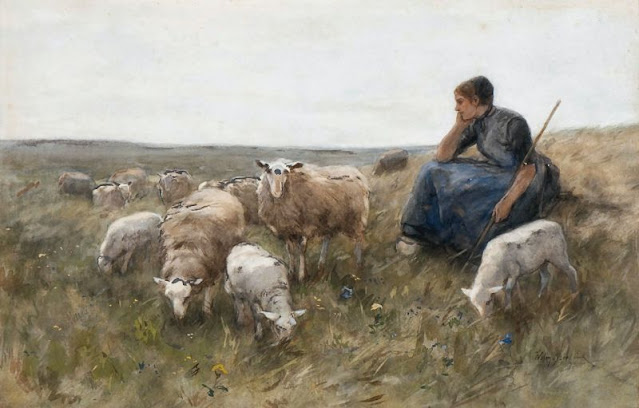
A Shepherdess With Her Flock

A Shepherd and Flock on a Shady Track

A Shepherd and His Flock by a Fen

A Shepherd With His Flock of Sheep on His Way Home

A Cheerful Welcome

See more »

read more
The Story of Roque José Florêncio, the Slave Turned Into a “Human-Breeding Machine” in the 19th Century

The Story of Roque José Florêncio, the Slave Turned Into a “Human-Breeding Machine” in the 19th Century

Roque José Florêncio was allegedly born around 1827 in Sorocaba. He was purchased around 1849 by the powerful landowner and coffee grower Francisco da Cunha Bueno, who later became the Viscount of Cunha Bueno, and was taken to the Fazenda Santa Eudóxia. He was nicknamed “Pata Seca” (Dry Paw), reportedly due to his long, thin hands.

Oral accounts describe him as an extraordinarily tall and strong man, possibly reaching 2.18 meters (over 7 feet). These physical characteristics, combined with a contemporary belief that tall men with thin shins were more likely to produce male offspring, sealed his fate.

Roque was systematically exploited by his enslaver as a “slave-breeder” (escravo reprodutor). This horrific practice was aimed at increasing the plantation’s enslaved labor force, particularly after the slave trade was banned in 1850 (Lei Eusébio de Queirós). He was allegedly forced to impregnate enslaved women regularly and is said to have fathered more than 200 children (some accounts suggest over 250).
Due to his role as a “breeding slave,” Roque was often granted a relatively different life than most other enslaved people. He reportedly did not work in the coffee fields and lived outside the senzala (slave quarters). He was entrusted with the care of the farm’s transport animals and tasked with riding a long distance daily to fetch his master’s correspondence.
With the abolition of slavery in 1888 (Lei Áurea), Roque was freed. While performing his duties as a courier, he had met and later married a woman named Palmira. The Viscount of Cunha Bueno allegedly granted the couple 20 alqueires (a measure of land), where they built a home and raised nine children together.
Tragically, much of the land Roque was given was gradually appropriated by influential, wealthy farmers through irregular demarcation, a common occurrence that left newly freed Black Brazilians marginalized and impoverished. He was reportedly left with only a small fraction of the promised land.
One of the most remarkable parts of the Pata Seca legend is his alleged extreme longevity. He is widely believed to have lived to be 130 years old, with his death recorded on February 17, 1958. While this claim places him as a supercentenarian and is a key part of his myth, it lacks rigorous historical confirmation.
Due to the forced reproduction and his later marriage, Roque José Florêncio is considered the direct ancestor of a significant portion of the population in the district of Santa Eudóxia, some estimates suggest up to 30%.
Today, Pata Seca is remembered as a legendary figure whose story highlights the brutal realities of Brazilian slavery, particularly the institutionalized sexual violence and the efforts to create a domestic supply of enslaved labor. His history is preserved through oral reports and the memory of his countless descendants in the region.
read more
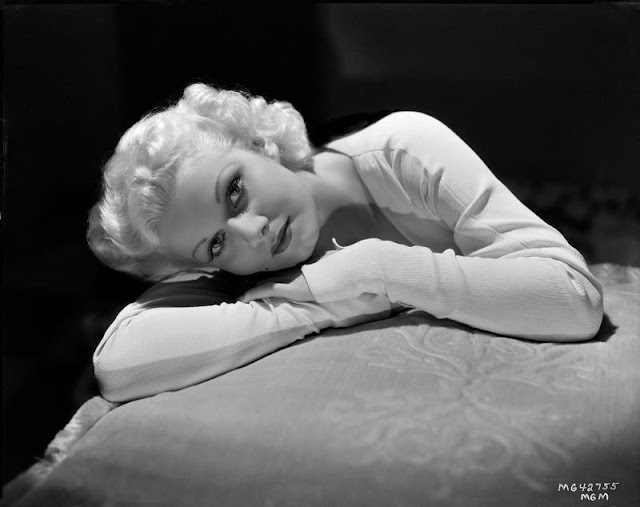
Beautiful Portraits of Jean Harlow From ‘The Girl from Missouri’ (1934)

Beautiful Portraits of Jean Harlow From ‘The Girl from Missouri’ (1934)

The Girl from Missouri is a sassy, pre-Code comedy-drama film released in 1934, starring the iconic Jean Harlow as Eadie Chapman, a spirited, ambitious young woman determined to marry a millionaire and escape her humble, small-town roots.

The film’s plot follows Eadie as she navigates the competitive and often ruthless world of New York’s elite, using her sharp wit and undeniable charm to secure her future. It is a classic example of pre-Code Hollywood cinema, where Eadie’s character embodies the era’s liberated female protagonists—she is overtly sexual, independent, and unapologetic about her pursuit of wealth, a portrayal that would become heavily censored after the full enforcement of the Production Code later that year.
Co-starring Franchot Tone, the movie is remembered for its snappy dialogue and Harlow’s vibrant performance, solidifying her status as the “Blonde Bombshell” of the 1930s. These beautiful photos capture portraits of Jean Harlow during the filming of The Girl from Missouri in 1934.

See more »

read more