
Yesteryear

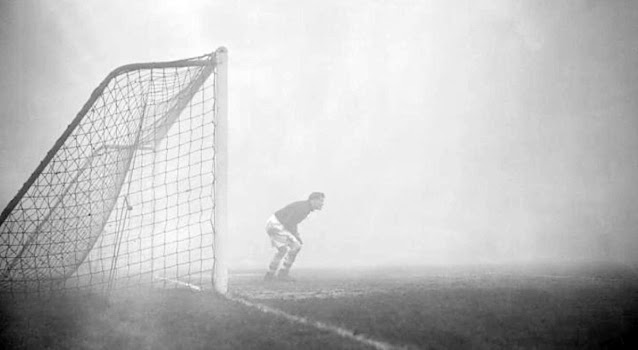
Goalkeeper Sam Bartram Standing Alone on the Pitch, 1937

Goalkeeper Sam Bartram Standing Alone on the Pitch, 1937

On Christmas Day, 1937, Charlton Athletic were playing Chelsea at The Valley (Charlton’s home ground) in London. Partway through the match, a dense fog began to roll in over the pitch. Visibility got worse and worse until players could barely see each other, let alone the ball.

Eventually, the referee decided to abandon the match because the fog made it impossible to continue safely. However, no one managed to inform Sam Bartram, Charlton’s goalkeeper, who was stationed at the far end of the field.

Oblivious to what had happened, Bartram remained alone in his goal, peering into the mist, convinced that play was still going on somewhere beyond the fog. He stood there patiently, occasionally shifting position and waiting for his teammates or opponents to appear.
“I saw less and less players,” Bartram recalled. “I was sure we were dominating the game, but it seemed clear to me that we hadn’t scored because my teammates would have gone back into their defensive positions and I would have seen one of them. There were not even shouts of celebration.”
After about ten minutes, a policeman emerged from the fog and approached him. The officer said something like, “The game’s been stopped! Everyone else has gone back to the dressing rooms!”
Arriving in the locker room, his teammates were surprised to see him running late and jeered when they learned the story. “After a long time, a figure loomed up in the fog and I shouted, ‘What’s happened?’ ‘The game’s been abandoned,’ came the reply. ‘The field’s been empty for ten minutes!’ I walked back to the dressing room, feeling my way, and found my teammates laughing at me.”
Sam Bartram made his debut at the age of 20 for Charlton and played 623 games in 22 years. He retired at the age of 42 as the club’s most capped player and was also part of the team that won the only trophy in their history: the 1947 FA Cup.
read more
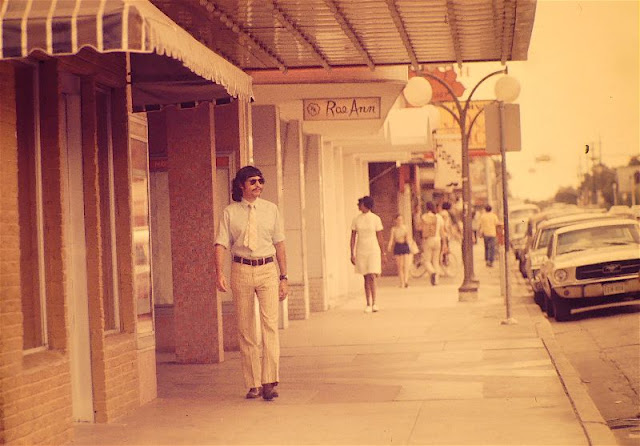
30 Fascinating Photos Capture Austin, Texas in the Early 1970s

30 Fascinating Photos Capture Austin, Texas in the Early 1970s

The early 1970s marked a pivotal transformation for Austin, Texas, establishing its identity as the world’s “Live Music Capital.” The city became a unique melting pot where hippies, rednecks, and college students coalesced around a new genre of music: the “Cosmic Cowboy” sound.
This period was characterized by a strong counterculture movement, political activism driven by the University of Texas campus, and a laid-back, inclusive atmosphere that celebrated creativity and individuality. This cultural boom, centered on music and liberal politics, set the foundation for Austin’s reputation as a progressive oasis in Texas, forever linking the city with the phrase: “Keep Austin Weird.”
These fascinating photos, taken by duckswim2, show various scenes from the University of Texas neighborhood and other corners of Austin in 1972.

Guadalupe Street, Austin, Texas, 1972

Artist selling her work at the 23rd Street Market, Austin, Texas, 1972

Austin, Texas and nearby, 1972

Austin, Texas, 1972

Austin, Texas, 1972

See more »

read more
Grace Kelly as an Advertising Model for Cleaning Products in New York City, June 1948

Grace Kelly as an Advertising Model for Cleaning Products in New York City, June 1948

In 1948, before she became a Hollywood icon and Princess of Monaco, Grace Kelly was a young aspiring actress and model living in New York City. At just 18, she supported herself by taking on commercial modeling jobs, which were among the most common ways for newcomers to gain visibility in the entertainment world.

Kelly appeared in print advertisements for consumer goods, including household and cleaning products, cosmetics, and fashion catalogs. These early ads often portrayed her as the wholesome, elegant “American girl next door,” qualities that later defined her screen presence.
Her modeling work was handled by the John Robert Powers Agency, one of the top agencies of the era. She appeared in ads for products such as Old Gold cigarettes, Maxwell House Coffee, and domestic cleaning brands, often wearing neat dresses and aprons, smiling in spotless kitchen settings.
These modest beginnings in New York’s advertising world were a key step in her journey, helping her pay for acting classes at the American Academy of Dramatic Arts, which launched her transition to Broadway and then Hollywood by the early 1950s.

See more »

read more
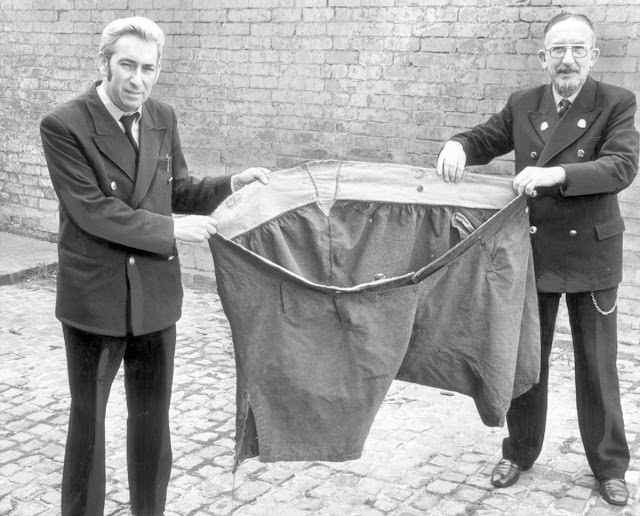
Two Men Holding Up a Pair of Oversized Trousers of Daniel Lambert, the Heaviest Man in England

Two Men Holding Up a Pair of Oversized Trousers of Daniel Lambert, the Heaviest Man in England

Daniel Lambert (1770–1809) was an English man renowned in Georgian England for his extraordinary size, intelligence, and dignified character. Despite his immense weight, he was a respected jailer and a keen sportsman. Here’s an image of two men holding up a pair of oversized trousers that belonged to Lambert, ca. 1956:

Daniel Lambert was born in Leicester, England on March 13, 1770. In his youth, he was a keen sportsman, enjoying activities like swimming, fishing, shooting, and horse racing. He was considered an expert in breeding sporting animals, particularly dogs and fighting cocks. He initially worked for four years as an apprentice at an engraving and die casting works in Birmingham. Around 1788, he returned to Leicester and succeeded his father as the keeper of Leicester’s gaol (prison). He was known for his strength and once reportedly fought a bear in the streets of Leicester.
He began to gain weight when he took up the more sedentary job as gaol keeper. By the time of his death, he weighed 52 stone 11 pounds (739 lb; 335 kg). He was known to have disliked changing his clothes and would wear the same ones, even if they were wet, though he claimed no ill effects.
Daniel Lambert’s clothes display at the Newarke Houses Museum in Leicester.
In 1806, his weight prevented him from working, and he was forced by poverty to put himself on exhibition to raise money, charging spectators to meet him. He moved to London and took up residence in Piccadilly. Visitors were impressed by his intelligence and personality, and it became highly fashionable to visit him.
After earning sufficient wealth, he returned to Leicester but continued to make short fundraising tours. He died suddenly in Stamford, Lincolnshire on June 21, 1809, at the age of 39. Due to his immense size, a window and part of a wall at the inn had to be dismantled to remove his body for burial. His coffin was enormous, requiring 112 to 156 square feet of wood, and it took “upwards of twenty men” to lower it into the grave.
Daniel Lambert became a celebrated icon in Leicester and his name became synonymous with immensity. His memory is preserved in various pubs named after him, and many of his personal belongings, including his large armchair and clothing, are on permanent display at the Newarke Houses Museum in Leicester. A life-size model can also be seen at the Stamford Town Hall.

read more
Disneyland Tickets Deal Brings Major Savings For 2026 Visits – Up To 50 Percent Off!

Disneyland Tickets Deal Brings Major Savings For 2026 Visits – Up To 50 Percent Off!

Disneyland tickets are at the center of the park’s newest announcement, and the news has stirred nostalgia for longtime fans who remember when a family trip felt a little more affordable. According to SFGATE, Disneyland released its full 2026 calendar along with a surprising discount that many California residents didn’t see coming. The update arrived […]

The post Disneyland Tickets Deal Brings Major Savings For 2026 Visits – Up To 50 Percent Off! appeared first on DoYouRemember? – The Home of Nostalgia. Author, Ruth A

read more
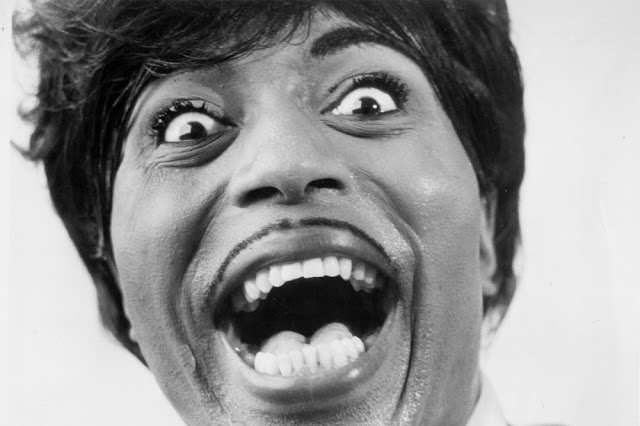
40 Amazing Black and White Photos of Little Richard in the 1960s

40 Amazing Black and White Photos of Little Richard in the 1960s

Richard Wayne Penniman (December 5, 1932 – May 9, 2020), better known by his stage name Little Richard, was an American singer-songwriter and pianist. He was an influential figure in popular music and culture for seven decades. Referred to as the “Architect of Rock and Roll,” Richard’s most celebrated work dates from the mid-1950s, when his charismatic showmanship and dynamic music, characterized by frenetic piano playing, pounding backbeat and powerful raspy vocals, laid the foundation for rock and roll.

Richard had abruptly abandoned his rock and roll career at its peak in 1958, viewing the music as “the Devil’s work,” and dedicated himself to a religious life. He formed the Little Richard Evangelistic Team and preached sermons as a traveling evangelical preacher. He recorded and released several gospel albums, including Sings Spirituals and Sings the Gospel, for various labels.
His return to the secular music scene was spurred by an offer to tour the UK in 1962, initially under the assumption he would perform only gospel. However, he soon resumed performing his classic rock and roll hits. His European tours, particularly in 1962 and 1964, were highly successful and influential.
During these tours, then-unknown British bands opened for him. The Beatles opened for him in Hamburg in 1962, and he provided them with musical advice. He also toured with the Rolling Stones on their first major tour, providing them with support and even loans. His touring bands during this time featured future legends such as Jimi Hendrix on guitar and Billy Preston on organ.
The success of British bands like The Beatles and Creedence Clearwater Revival, who frequently covered his songs like “Long Tall Sally,” generated renewed interest in Little Richard’s original sound and prompted his official return to the recording studio for pop music.
Although a 1964 comeback single, “Bama Lama Bama Loo,” didn’t achieve the chart success of his 1950s hits, he continued to tour and release new material throughout the decade. He also started appearing in films and television, maintaining his reputation as a flamboyant and revolutionary figure in music and culture.

See more »

read more
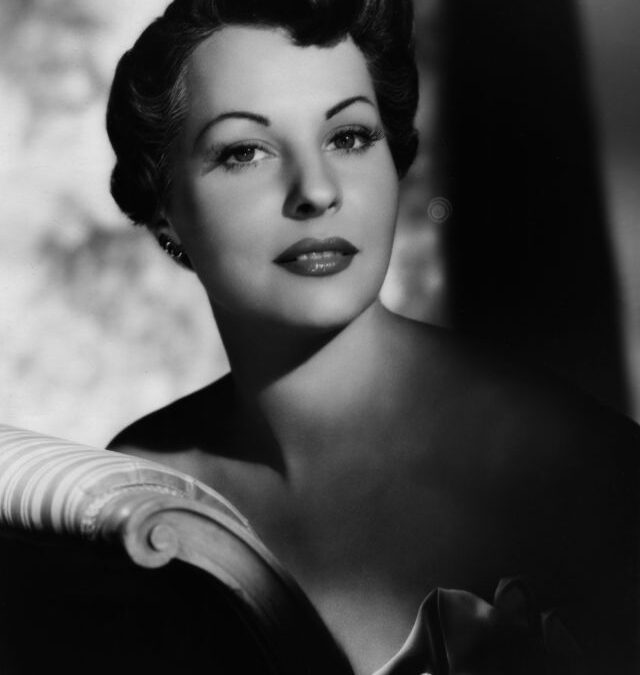
Beautiful Portraits of Gaby André in the 1940s and ’50s

Beautiful Portraits of Gaby André in the 1940s and ’50s

Gaby André (1920–1972) was a French film actress who had an extensive career spanning from the late 1930s through the 1970s. Born Gabrielle Louise Mathilde Andreu, she began her career in France, appearing in several films before World War II. After the war, she frequently worked in international co-productions and Italian cinema, showcasing her versatility across different genres.

André is perhaps best known for her roles in the American film noir Highway 301 (1950) and various European productions, including the Italian historical drama Verdi, the King of Melody (1953) and the horror/sci-fi film The Strange World of Planet X (1958). Her daughter, Carole André, also became an actress, following in her mother’s cinematic footsteps.
Take a look at these beautiful photos to see portraits of a young Gaby André in the 1940s and 1950s.

See more »

read more
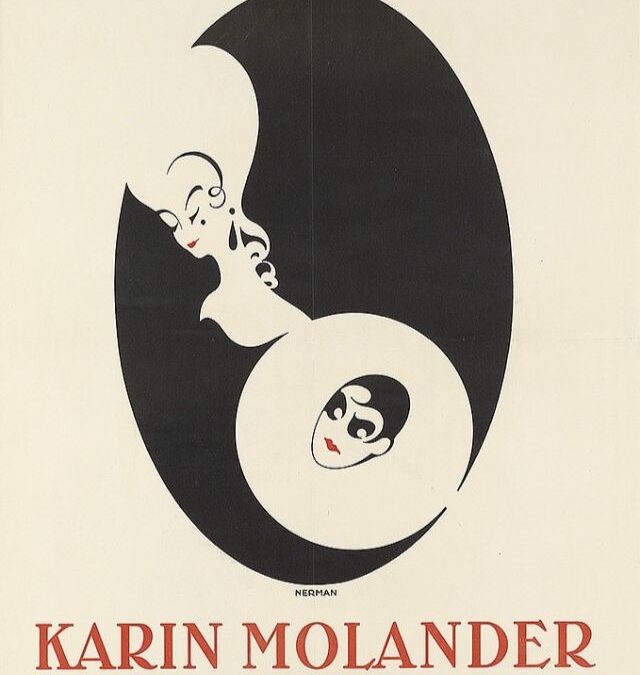
Einar Nerman: The Elegant Swedish Illustrator

Einar Nerman: The Elegant Swedish Illustrator

Einar Nerman (1888–1983) was a highly acclaimed Swedish artist and illustrator known for his elegant, distinctive Art Deco style and his witty, stylized portrayals of people. Having studied art in Paris, his career spanned several creative fields, including painting, set design, and composing, but he achieved his greatest fame through his commercial work and illustrations.

Nerman’s unique style was characterized by fluid lines, simplified forms, and a sophisticated, almost theatrical air, making him highly sought after internationally. He created famous illustrations for publications like Vogue and illustrated numerous books, including classics by Selma Lagerlöf. Perhaps his most iconic work, however, was his long-running series of charming silhouette-like illustrations for the British tea company, Lyons, which cemented his legacy as a master of visual elegance and commercial artistry in the mid-20th century.
Anders De Wahl, Karin Molander, Pierrots Drama, 1918

En Gyllene Medelväg, 1919

Turné Ivan Hedqvist, Från Kungliga Dramatiska Teatern, Dunungen av Selma Lagerlöf, 1919

En sjömansdrill, 1920

Naima Wifstrand, Karl-Gerhard, Nalle Halldén, circa 1920s

See more »

read more
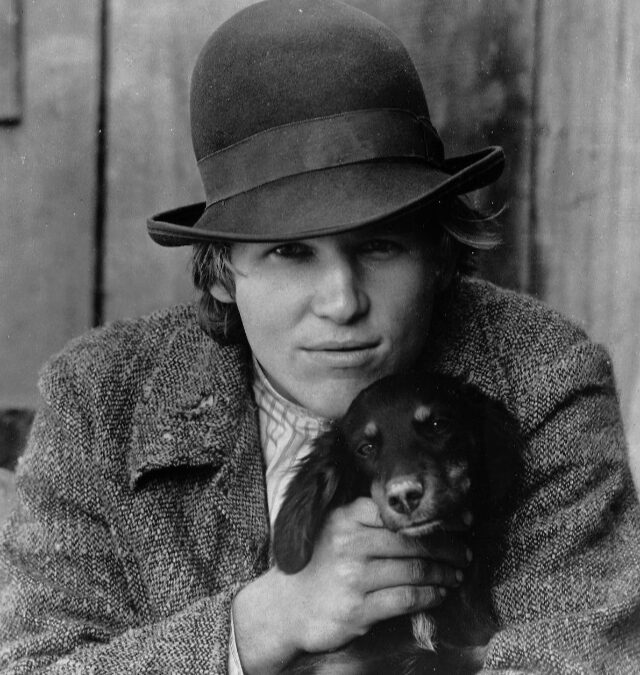
24 Amazing Photos of a Young Jeff Bridges on the Set of “Bad Company” (1972)

24 Amazing Photos of a Young Jeff Bridges on the Set of “Bad Company” (1972)

In the 1972 film Bad Company, Jeff Bridges stars as Jake Rumsey, a “scruffy scoundrel” and charismatic leader of a gang of young Civil War draft dodgers and runaways. He is a con man who robs the film’s main character, Drew Dixon (played by Barry Brown), before they ultimately join forces and head west.

The film is built on the chemistry and contrasting personalities of the two leads: the cultured, good-hearted Drew and the primitive, street-smart Jake. Drew’s Methodist upbringing is challenged as he’s forced to do things he once considered unthinkable in order to survive.
Critics noted Bridges’ seemingly effortless performance, highlighting his ability to convey a mix of cunning, youthful inexperience, fear, and confidence, often with subtle facial expressions. One memorable, tough-to-watch scene involved his character attempting to skin a rabbit he had no idea how to properly prepare, displaying a powerful exercise in mime and revealing his feigned experience. 
Bad Company was the directorial debut of Robert Benton, who co-wrote the screenplay with David Newman (the pair also co-wrote Bonnie and Clyde). The film is considered an “acid western” or revisionist western, offering a bleak and realistic take on the frontier, devoid of traditional Hollywood romanticism. Its themes of draft dodging and the absurdity of war resonated with audiences during the Vietnam War era.
Bridges’ character, Jake, was an early display of the “coltish version of the excellent actor” he would become. He was approximately 22 years old when the film was released, having already earned an Oscar nomination the year prior for The Last Picture Show.

See more »

read more
Christmas Tree Prices Remain Steady – Here’s Why This Might Be The Year To Buy A Real Tree

Christmas Tree Prices Remain Steady – Here’s Why This Might Be The Year To Buy A Real Tree

As the holidays approach, families across the country are preparing to choose their perfect Christmas tree. According to Good Morning America, this year may be ideal for a real tree. Experts say real trees provide a classic holiday experience and may be more cost-effective than artificial ones. This is good news for those who enjoy […]

The post Christmas Tree Prices Remain Steady – Here’s Why This Might Be The Year To Buy A Real Tree appeared first on DoYouRemember? – The Home of Nostalgia. Author, Ruth A

read more