
Yesteryear

In 1914, an Engineer Had the Idea to Raise the Titanic Using Many Magnets and a Special Submarine…

In 1914, an Engineer Had the Idea to Raise the Titanic Using Many Magnets and a Special Submarine…

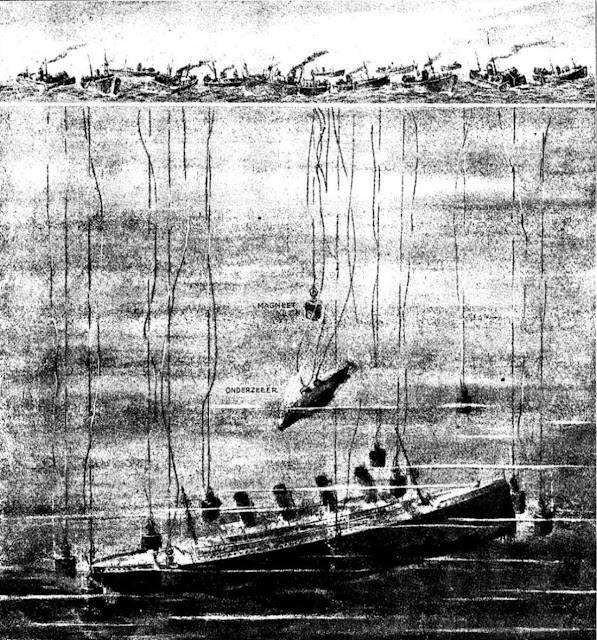
Back in 1914, just two years after the Titanic sank, someone came up with a bold idea: why not raise the ship using giant magnets and a special submarine? This concept showed up in a Dutch newspaper on May 17th of that year.

At the time, the Titanic’s story was still fresh, and people were fascinated by the tragedy. The illustration in the paper imagined an enormous recovery effort: ships hovering above the wreck, dropping long cables attached to huge magnets. At the center of it all was a submarine, labeled “ONDERZEEËR,” that would dive down, hook magnets onto the Titanic’s hull, and connect them to the surface ships.

The plan? All the ships would lift at once, hauling the massive liner back to the surface in one synchronized pull. Totally unrealistic by today’s standards, especially since the Titanic lies over 12,000 feet down in the North Atlantic, but back then, this kind of idea wasn’t as far-fetched as it sounds now.
In 1914, submarines were still cutting-edge, and magnetic tech was just getting started in industry. So while the plan was more sci-fi than science, it reflects the era’s belief that technology could solve anything, even pulling a sunken ship from the bottom of the ocean.
This newspaper image was probably meant to stir curiosity as much as it was to inform. But it captures something bigger: a moment in time when imagination, grief, and innovation collided in the shadow of one of history’s most famous disasters, decades before the Titanic was actually found in 1985.
read more
Heartwarming Mid-20th Century Snaps Capture Families Preparing for Christmas

Heartwarming Mid-20th Century Snaps Capture Families Preparing for Christmas

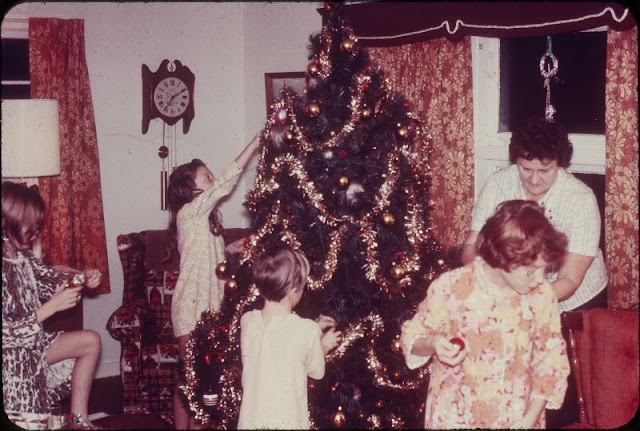
The mid-20th century was an era rich with holiday sentiment that these photos beautifully capture. These scenes of families and friends decorating for Christmas are genuinely heartwarming, showcasing a simpler time before mass commercialization dominated the season.

We see parents lifting beaming children to place shimmering tinsel and brightly colored glass ornaments on real fir trees. The mood is one of cozy domesticity, living rooms are filled with handmade decorations, often illuminated by the warm, soft glow of incandescent bulbs.
These snapshots offer a nostalgic glimpse into the traditions of an era, reminding us that the true spirit of Christmas lies in the shared joy and anticipation of the season, meticulously created within the family home.

See more »

read more
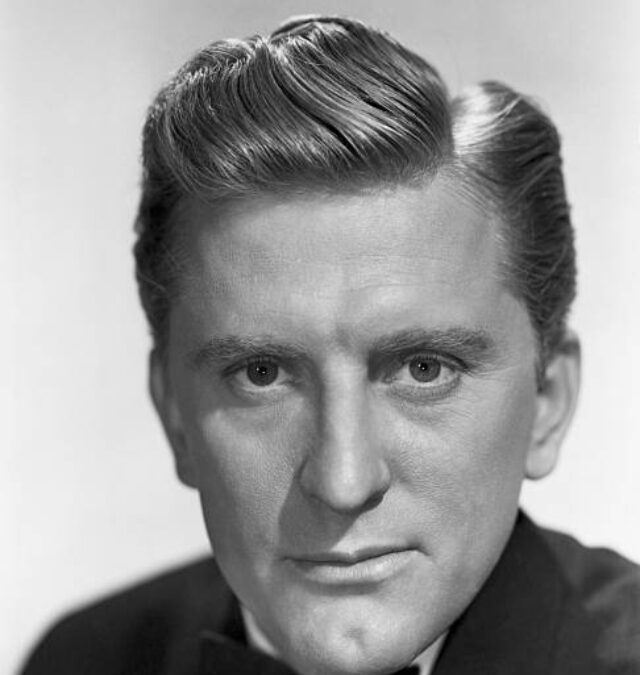
30 Portraits of a Young Kirk Douglas in the 1940s

30 Portraits of a Young Kirk Douglas in the 1940s

Kirk Douglas (December 9, 1916 – February 5, 2020) was an American actor and filmmaker. Born Issur Danielovitch, he graduated from St. Lawrence University in 1939 and attended the American Academy of Dramatic Arts (AADA) in New York. He legally changed his name to Kirk Douglas in 1941 before enlisting in the military.

Douglas volunteered for the U.S. Navy shortly after the attack on Pearl Harbor and served as a communications officer aboard an anti-submarine warfare vessel. He was medically discharged in June 1944 due to injuries. After his discharge, Douglas returned to New York, working in radio soap operas and theater. His friend and fellow AADA graduate, Lauren Bacall, recommended him to producer Hal B. Wallis, which led to an audition for his first film.
He made his screen debut in the film noir The Strange Love of Martha Ivers (1946), playing a “weak, insecure man” opposite Barbara Stanwyck. He later resolved never to play such a character again, opting for tougher roles. He quickly appeared in other notable film noirs, including Out of the Past (1947) with Robert Mitchum and his first collaboration with Burt Lancaster in I Walk Alone (1947).
Douglas’s image as a tough, intense actor was cemented in his eighth film, Champion (1949), where he portrayed a selfish boxer named Midge Kelly. The role earned him his first Academy Award nomination for Best Actor and established him as a major star. Following the success of Champion, Douglas founded his own production company, Bryna Productions (named after his mother), in September 1949 to gain more control over his projects and career trajectory.
Here’s a collection of 30 amazing portraits of a young and handsome Kirk Douglas in the 1940s:

See more »

read more
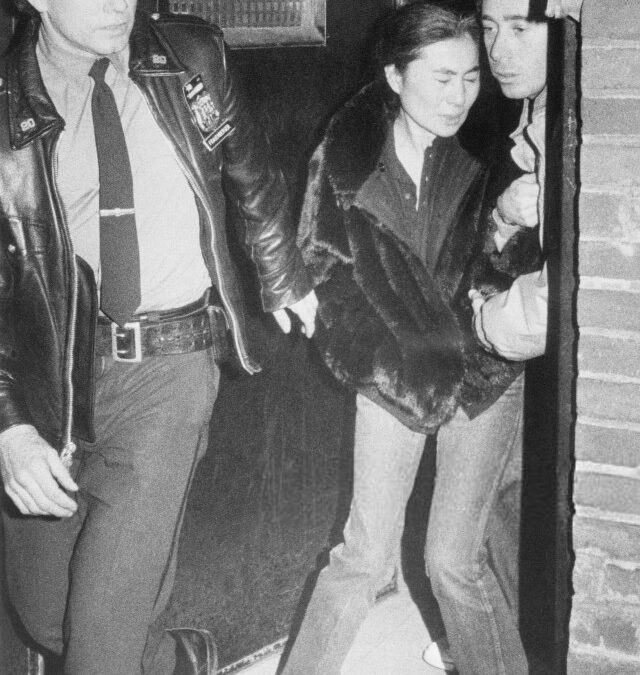
Yoko Ono Leaving Roosevelt Hospital in New York Late Monday Night, on December 8, 1980 After the Death of John Lennon

Yoko Ono Leaving Roosevelt Hospital in New York Late Monday Night, on December 8, 1980 After the Death of John Lennon

A distraught Yoko Ono leaving Roosevelt Hospital in New York City on the night of December 8, 1980. She is being supported by record executive David Geffen. Police officers transported John Lennon to Roosevelt Hospital in a patrol car after being shot by Mark Chapman, but he was pronounced dead on arrival.

“Even though it’s been more than 40 years, it’s a scene I’ll never forget. There was blood everywhere and one of the doctors had his hands inside Lennon’s chest and he could see him moving them to pump his heart. From there I went behind the ambulance to the hospital where the song ‘All My Loving’ just happened to be playing. The song ends and by the minute you hear a woman’s screams. I open the doors of a room and I see Yoko Ono leave crying inconsolably in the arms of music producer David Geffen. Then I knew it was all over.” – Alan Weiss, the reporter responsible for informing the world that John Lennon had been murdered.
On December 8, 1980, Alan Weiss, a producer for WABC-TV, was at Roosevelt Hospital for treatment after a motorcycle accident. While on a gurney, he overheard police officers mentioning John Lennon’s name as the shooting victim was brought into the emergency room. He managed to get a look at the scene and confirm the information. Weiss found a phone and called the news into his station’s assignment desk. This information was then relayed to the ABC network, who famously had Howard Cosell announce the tragedy during a Monday Night Football broadcast to a national audience. Weiss went on to win an Emmy Award for his coverage of the story. The events of that night, including Weiss’s role, were later depicted in the 2016 feature film The Lennon Report.
read more
Rare Photos of North Wales in the Late 1800s

Rare Photos of North Wales in the Late 1800s

North Wales in the late 19th century was a region defined by its striking natural beauty and robust industrial activity, primarily centered around quarrying and tourism. The massive slate industry was at its peak, particularly in areas like Bethesda and Llanberis (home to the Penrhyn and Dinorwic quarries), which scarred the landscape but fueled the local economy, employing thousands of men and creating a distinct, working-class culture.

This period saw rising social tensions, culminating in the Great Strike of Penrhyn Quarry (1900-1903), reflecting the growing labour movement. Simultaneously, the development of the railway network transformed coastal towns such as Llandudno and Rhyl into popular Victorian seaside resorts.
Wealthy tourists flocked to these areas, seeking both the bracing sea air and the dramatic scenery of Snowdonia. This contrast between the harsh, industrial heartland and the burgeoning leisure economy shaped the unique identity of North Wales as the century drew to a close.
These rare photos, found by Etchings Plus, capture North Wales in the late 1800s.
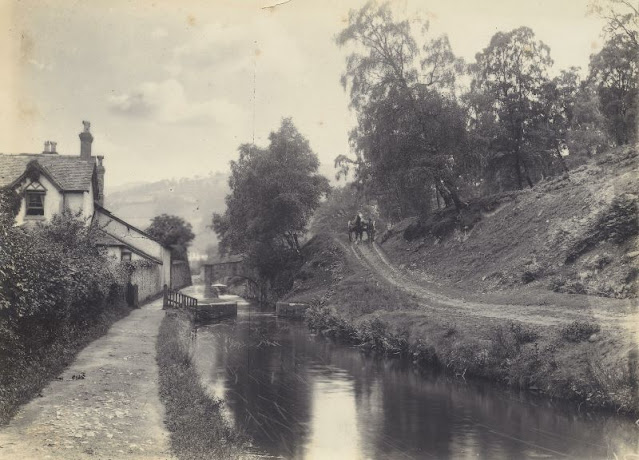
Canal possibly near Llangollen, North Wales, circa late 1800s

Canal possibly near Llangollen, North Wales, circa late 1800s

Arthog waterfall near Barmouth, North Wales, circa late 1800s

Beddgelert looking North towards Capel Curig, North Wales, circa late 1800s

Beddgelert, North Wales, circa late 1800s

See more »

read more
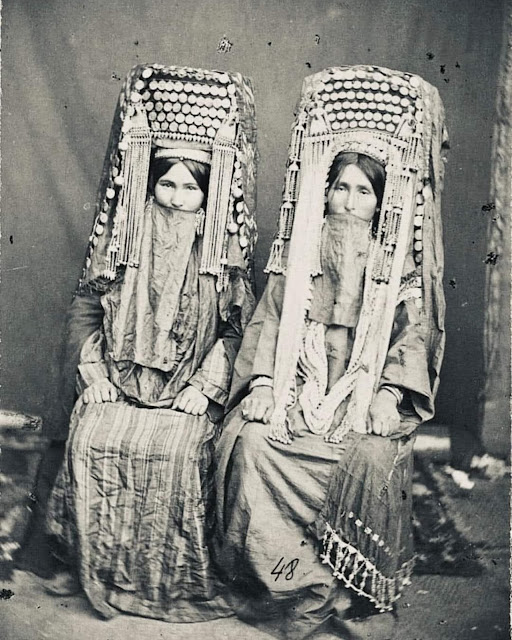
Portrait of High-Class Yomut Women From Krasnovodsk, Turkmenistan Wearing Kasaba, 1883

Portrait of High-Class Yomut Women From Krasnovodsk, Turkmenistan Wearing Kasaba, 1883

In 1883, Yomut women from Krasnovodsk, now known as Türkmenbaşy in Turkmenistan, were photographed wearing the striking Kasaba, a distinctive cylindrical headgear. The Kasaba was tall and elaborate, immediately drawing attention with its intricate design. This headgear was more than just a fashion statement; it symbolized status, wealth, and social position within the community, marking the wearer as a married woman of elevated standing.

The Kasaba was richly adorned with silver ornaments, semi-precious stones such as carnelian and turquoise, and elaborate embroidery. Each element carried meaning, reflecting both personal prosperity and a connection to the tribe’s cultural heritage. Beyond its decorative function, the headgear served as a visual declaration of identity, signaling pride in lineage and adherence to long-standing Turkmen traditions.
The Yomut are one of the major Turkmen tribes, traditionally divided into two groups: the western (Shagadam) Yomuts and the northern (Dashhowuz) Yomuts. A significant portion of the Yomut population lives in the Turkmen region of Iran (Turkmensahran, Etrek and Gurgen districts), while smaller subgroups can also be found in Afghanistan and Karakalpakstan.
Although the name Yomut is very ancient, the tribe appears to have reached formal tribal status only in the late Middle Ages, after the Mongol invasions (12th century onwards). In earlier sources, such as Abylgazy’s Genealogy of the Turkmens (16th century), the term “Yomut” is not used to refer to the tribe, but rather to a smaller lineage or clan. According to Abylgazy, the Yomuts descend from Ögürjik Alp, a grandson of Salyr Ghazan: Ögürjik Alp → Berdi → Gulmy → Yomut (Gulmy’s second son, Gultak, is considered a sibling lineage).
read more
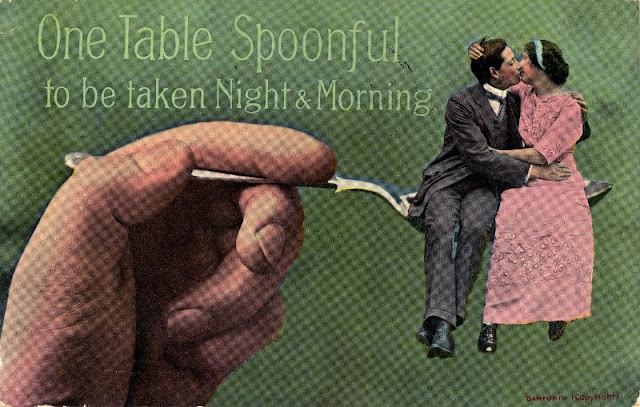
30 Romantic Postcards Show How Edwardian Couples Express Their Love

30 Romantic Postcards Show How Edwardian Couples Express Their Love

These romantic Edwardian postcards offer a tender glimpse into how couples expressed affection during the early 20th century, through handwritten notes, delicate poses, and beautifully stylized imagery.

At a time when public displays of emotion were modest and courtship was filled with ritual, these postcards became a quiet yet meaningful way for lovers to communicate their feelings. Together, they capture the sweetness, innocence, and romantic spirit of a bygone era.

See more »

read more
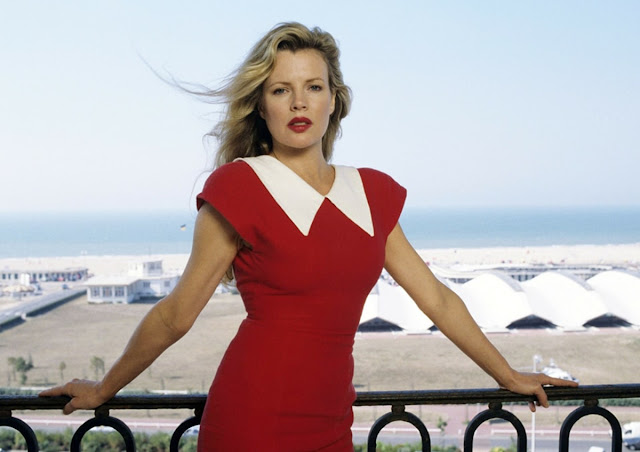
40 Amazing Photos of Kim Basinger in the 1980s

40 Amazing Photos of Kim Basinger in the 1980s

Kim Basinger (born December 8, 1953) is an American actress. She has garnered acclaim for her work in film, for which she has received various accolades including an Academy Award, a Golden Globe Award, a Screen Actors Guild Award, and a star on the Hollywood Walk of Fame.

Basinger transitioned from a successful modeling career to acting in the late 1970s, making her mark in film throughout the 1980s. She defined the look of the 1980s, becoming an iconic “screen siren” known for her striking beauty, cascading blonde hair, and versatility as an actress. Her career soared during this decade with several high-profile roles that balanced vulnerability and strength, solidifying her status as a major Hollywood star.
Her first feature film was the 1981 drama Hard Country. Basinger gained widespread attention as the seductive Domino Petachi in the James Bond film Never Say Never Again (1983) opposite Sean Connery. Her role in The Natural (1984) earned her a Golden Globe nomination and proved she had significant dramatic potential beyond her glamorous image.
She became a global sensation with the controversial but iconic erotic drama 9½ Weeks (1986), a film that became a cultural phenomenon and defined much of her public image for the era. Her minimalist yet sensual style in the film became a major fashion statement of the decade. She ended the decade strong as photojournalist Vicki Vale in Tim Burton’s Batman (1989), which remains the highest-grossing film of her career.
Her style throughout the 1980s was characterized by a blend of elegance and a relaxed, all-American look, often featuring denim, oversized sweaters, and her signature voluminous blonde hair. Here, below is a collection of 40 amazing photos of Kim Basinger in the 1980s:

See more »

read more
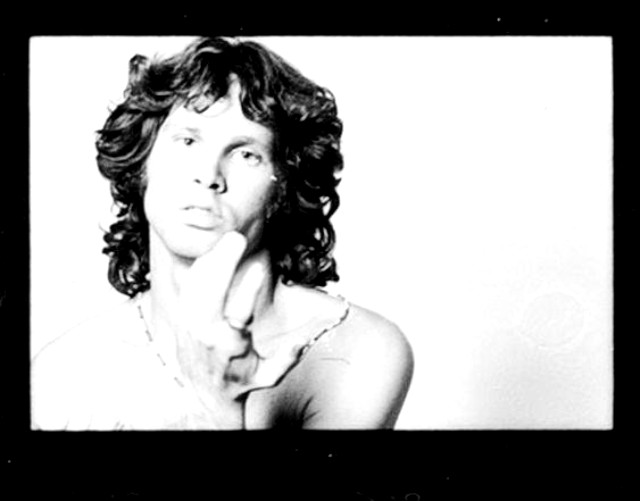
Jim Morrison in Joel Brodsky’s Famous “Young Lion” Photoshoot in 1967

Jim Morrison in Joel Brodsky’s Famous “Young Lion” Photoshoot in 1967

The iconic “Young Lion” photoshoot of Jim Morrison by photographer Joel Brodsky took place in September 1967, in New York City. The session produced some of the most recognizable and widely circulated images of the Doors frontman, solidifying his image as a rock icon. 
According to Brodsky, Morrison was “pretty loose” and quite drunk during the session, stumbling over the studio lights at times. Despite this, the photographer noted that Morrison was wonderful to photograph because of his unique look, and he felt he captured him at his best.
The photoshoot occurred during a significant period for the band, shortly after the release of their debut album. The images helped shape Morrison’s public image as a charismatic and enigmatic “Lizard King.” For the shoot, Morrison wore a specific glass-beaded cobra necklace, made for him by photographer Henry Diltz at the request of 16 Magazine editor Gloria Stavers.
The photos were originally intended to be used for the promotion of Strange Days but have since become the most widely used and iconic images of Jim Morrison, appearing on numerous compilation albums, books, and merchandise.

See more »

read more
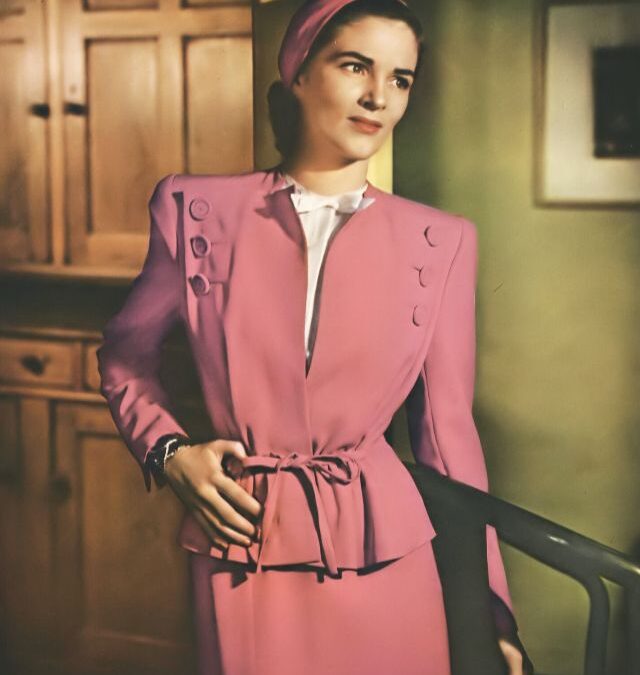
Elegant Portraits of Fashion Model Theo Graham in the 1940s and ’50s

Elegant Portraits of Fashion Model Theo Graham in the 1940s and ’50s

Theo Graham (1926–1994) was a highly successful American fashion model who achieved prominence during the mid-1940s to the early 1960s. Active during the golden age of high fashion photography, she worked with legendary photographers like Richard Avedon and graced the pages of influential magazines such as Harper’s Bazaar and Vogue.

Graham was a quintessential figure in the fashion world, known for wearing iconic pieces from designers like Christian Dior and Balenciaga. Her career spanned both New York and Europe, she spent significant time in Rome and embodied the sophisticated, post-war glamour that defined the era’s international jet set.
Take a look at these elegant photos to see portraits of Theo Graham in the 1940s and 1950s.
Theo Graham in a charming dressmaker suit with unexpected detail in all-wool Miron sheen gabardine by Jaunty Junior, Vogue, February 15, 1945

Theo Graham in an Empire nightgown with deep yoke of white net with body of white jersey piped in blue by Vanity Fair, photo by Richard Avedon, Harper’s Bazaar, April 1946

Theo Graham in playsuit by Groblue, photo by Richard Avedon, Nassau, Bahamas, March 1946

Theo Graham in Stroock tweed suit with topcoat by Peck & Peck, photo by Tom Palumbo, Harper’ Bazaar, August 1946

Theo Graham in wool gabardine suit of black trim against greige from Peck & Peck, photo by Richard Avedon, Harper’s Bazaar, February 1946

See more »

read more