
Yesteryear

Nastassja Kinski: A European Icon with Hollywood Reach

Nastassja Kinski: A European Icon with Hollywood Reach

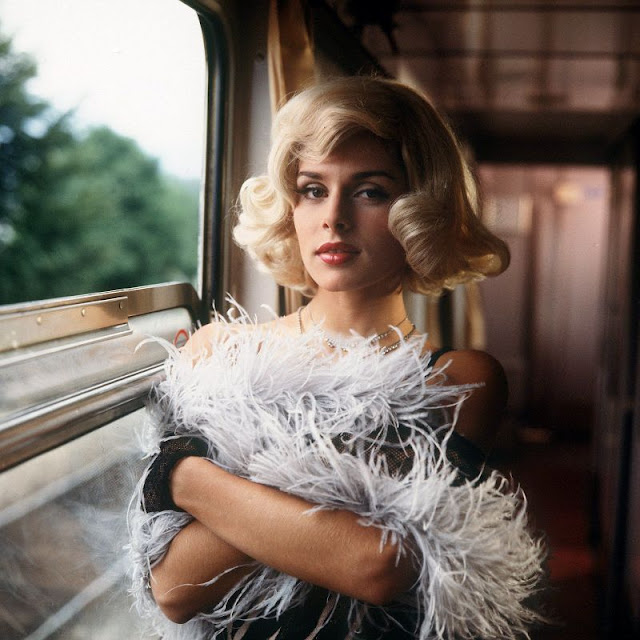
Nastassja Kinski is a German actress and former model who achieved international prominence in the late 1970s and ’80s. Born in 1961, she began her career as a model before making her film debut at a young age with German New Wave director Wim Wenders in The Wrong Move (1975). Her worldwide breakthrough came with her starring role in Roman Polanski’s Tess (1979), an adaptation of Thomas Hardy’s novel, for which she earned a Golden Globe Award.

Kinski swiftly became a fixture in both European and American cinema, known for her ethereal on-screen presence and versatility. Her other notable films include Francis Ford Coppola’s One from the Heart (1981), the fantasy horror Cat People (1982), and her acclaimed reunion with Wim Wenders in the road movie classic, Paris, Texas (1984).
Kinski’s striking beauty and intense performances solidified her status as one of the most recognizable actresses of her generation.

See more »

read more
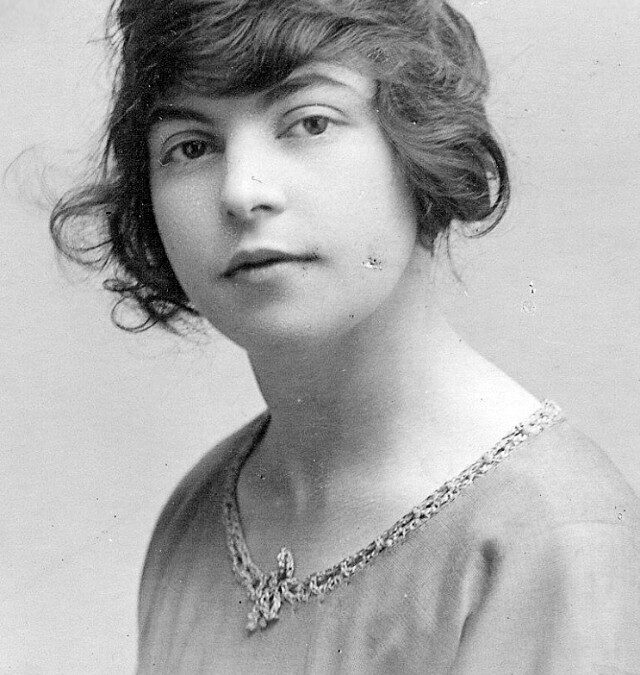
Portrait of Florrie Holmes, a Member of the Forty Elephants

Portrait of Florrie Holmes, a Member of the Forty Elephants

Among the seventy known members of London’s most infamous all-female criminal gang, Florrie Holmes stood out as a bold figure in a world where women were rarely seen as outlaws. The Forty Elephants, operating from South London between 1873 and the 1950s, were unlike anything the city’s underworld had seen before, stylish, stealthy, and shockingly effective.

Florrie didn’t start as a thief. She was first the girlfriend of a gangster, but it wasn’t long before she was drawn into the gang’s audacious world of crime. The Forty Elephants became legendary for their expertly coordinated shoplifting raids, especially in London’s high-end West End. Armed with tailor-made clothing lined with hidden pockets and voluminous knickers, they stole everything from jewelry and designer fashions to furs, leather goods, and lingerie – often in plain sight, undetected.
What set the Forty Elephants apart wasn’t just their technique, it was their sisterhood. They ran their own operations, supported each other, and used their illicit gains not just for personal luxury, but to support struggling women in their communities. When they weren’t stealing from the rich, they were throwing lavish parties, indulging in the very opulence society denied them.
In a time when organized crime was ruled by men, Florrie Holmes and her sisters defied every expectation. They were strategists, leaders, and rebels who built an empire from within the shadows, proving that women could run the streets on their own terms. Their legacy lives on as a fascinating, gritty, and empowering chapter in British criminal history.
read more
Beautiful Photos of the 1935 Bugatti Type 57 ‘Grand Raid’ Roadster

Beautiful Photos of the 1935 Bugatti Type 57 ‘Grand Raid’ Roadster

The 1935 Bugatti Type 57 ‘Grand Raid’ Roadster stands as an exquisite example of automotive artistry and high performance from the pre-war era. Designed by Jean Bugatti, son of founder Ettore, the Type 57 chassis was already a masterpiece of engineering.

The ‘Grand Raid’ was a particularly striking version, defined by its aerodynamic bodywork and a distinctive, aggressively raked windshield, giving it a powerful, streamlined profile indicative of its racing aspirations. It featured a supercharged 3.3-liter straight-eight engine, offering exceptional speed and luxury. The Roadster body, often custom-built, was characterized by elegant flowing lines and a low-slung stance.
This model is considered one of the rarest and most beautiful variations of the Type 57 line, perfectly blending Bugatti’s tradition of superior mechanical performance with unmatched bespoke elegance.

See more »

read more
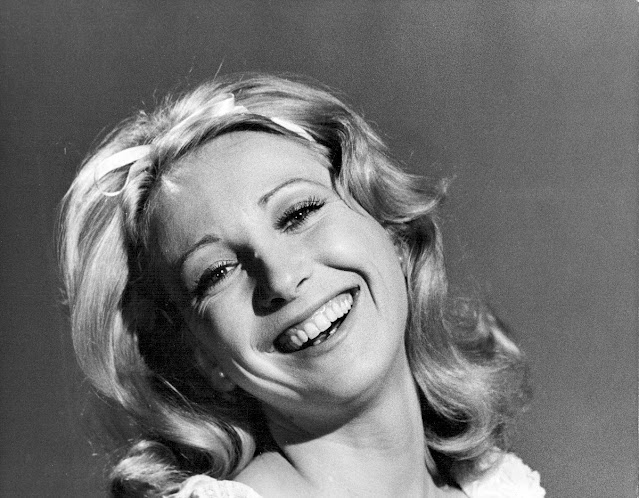
20 Portraits of a Young Teri Garr in the 1970s

20 Portraits of a Young Teri Garr in the 1970s

Terry Ann Garr (December 11, 1944 – October 29, 2024), known as Teri Garr, was an American actress, comedian and dancer. Early in her career, she was credited as Terry Garr. She later recalled changing her first name to “Teri” on the advice of a numerologist, who said she would be unsuccessful if she had repeating letters in her first and last names. Her movie debut was as an extra in A Swingin’ Affair (1963). During her senior year, she auditioned for the cast of the Los Angeles road company production of West Side Story, where she met one of the most important people in her early career, David Winters, who became her friend, dance teacher, and mentor. Winters cast her in many of his early movies and projects.

Garr began as a background go-go dancer in uncredited roles in youth-oriented films and TV shows choreographed by Winters. She often appeared on television during this time, performing as a go-go dancer on several musical variety shows, along with friend Toni Basil. Her first speaking role in a motion picture was a brief appearance as a damsel in distress in The Monkees’ film Head (1968), written by Jack Nicholson; Garr got the role after meeting Nicholson in an acting class.
Garr’s career made a significant leap in the 1970s, establishing her as a recognizable actress in both comedy and drama. She was a regular cast member on The Sonny & Cher Comedy Hour (1971–1974), where she performed as a dancer and acted in comedy sketches, playing various characters including Countess Legustav. She later reunited with Cher on her show Cher (1975–1976). She also had recurring roles on McCloud from 1970–1975.
Her big shift came with Francis Ford Coppola’s The Conversation (1974). Though her role was small, critics noticed her dramatic potential. It marked the first time audiences saw Teri Garr as more than a dancer, she could handle nuanced, subtle acting. The real explosion came the same year in Mel Brooks’ Young Frankenstein. As Inga, she delivered impeccable comic timing; the iconic “Roll, roll, roll in ze hay!” scene; a lovable, goofy, modern twist on the classic ingénue. This film made her a comedy star almost overnight.
By the late 1970s, Garr was a sought-after comedic actress. She co-starred as the wife of John Denver’s character in Oh, God! (1977). She appeared in Steven Spielberg’s science-fiction film Close Encounters of the Third Kind (1977) as Ronnie Neary, the wife of Richard Dreyfuss’s character. She played a dramatic role as the mother of the boy protagonist in The Black Stallion (1979).
Teri Garr was known for her unique brand of “offbeat” comedy and charm, often playing characters who were “refreshingly intelligent” rather than merely “ditzy.” Her style was quintessential 1970s, characterized by her blonde hair and expressive face.

See more »

read more
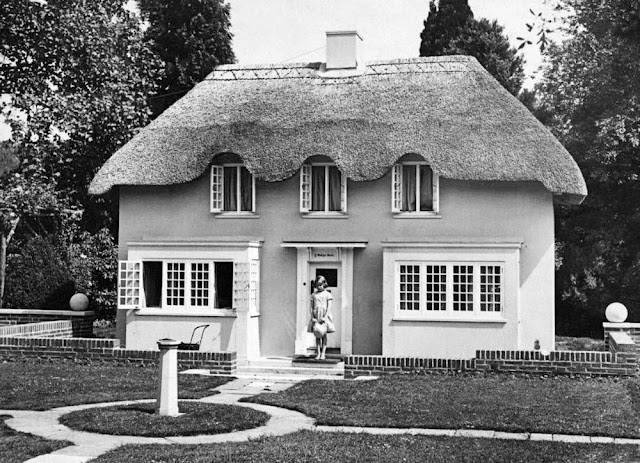
Y Bwthyn Bach: Queen Elizabeth II’s Childhood Playhouse in Windsor Great Park, England

Y Bwthyn Bach: Queen Elizabeth II’s Childhood Playhouse in Windsor Great Park, England

Queen Elizabeth II’s childhood playhouse in Windsor Great Park is one of the most charming and intimate artifacts of the royal family’s early life, a tiny pastel cottage known as Y Bwthyn Bach, or “The Little House.”
The playhouse was built in 1932 as a sixth-birthday present for Princess Elizabeth (the future Queen Elizabeth II). The idea came from the people of Wales, who wanted to offer a unique and heartfelt gift to the young princess.
Designed by architect Edmund Willmott, it is a two-thirds scale, thatched cottage built in the style of a traditional Welsh cottage. It was built using materials left over from the redevelopment of Llandough Hospital. It is 24 feet (7.3 meters) long, 8 feet deep (2.4 meters), with a ceiling height of only 5 feet (1.5 meters).
The most remarkable thing about Y Bwthyn Bach is that it was a fully functional home, just scaled down for a child. It features four main rooms: a living room, a kitchen, a bedroom, and a bathroom. It was equipped with the modern conveniences of the time, including hot and cold running water, electricity, a working gas cooker, a small fridge, and even a heated towel rail. The furniture and fittings, such as a tiny telephone, miniature Beatrix Potter books, and a blue and gold china set, were all made to scale.
Both Elizabeth and her younger sister Princess Margaret adored the cottage. They played house, cleaned it themselves, arranged the furniture, and even answered letters delivered to the tiny mailbox. Family visitors often recalled that Elizabeth loved tidying and organizing the cottage, treating it like her own little kingdom; Margaret preferred the dramatic play—songs, dances, and imaginary adventures. The playhouse became a small oasis of normal childhood within the formality of royal life.
Over the decades, the cottage weathered the elements. During Queen Elizabeth II’s reign, it was restored several times, including a major renovation in 2012 for her Diamond Jubilee.
Today, Y Bwthyn Bach still sits within the private grounds of Windsor Great Park, near the Royal Lodge. It is not open to the public, but remains in use by royal children, continuing the charming tradition begun in the 1930s.

See more »

read more
Inga Lindgren: An Iconic Scandinavian Face

Inga Lindgren: An Iconic Scandinavian Face

Inga Lindgren was a prominent Swedish fashion model who defined a certain sophisticated, clean aesthetic in the post-war era. Rising to fame in the late 1940s and ’50s, she quickly became a favorite subject for renowned photographers like Richard Avedon and Irving Penn.

Lindgren was frequently featured in major international fashion magazines, including Vogue and Harper’s Bazaar, where she embodied the transition from the formality of the 1940s to the lighter, more modern silhouettes of the New Look by Christian Dior. She was celebrated not only for her classic Scandinavian features, characterized by high cheekbones and an elegant composure, but also for her versatility and professional grace.
Lindgren’s image became synonymous with chic European style, making her an enduring icon of the golden age of high fashion modeling. Take a look at these vintage photos to see fashion portraits of Inga Lindgren in the 1940s.
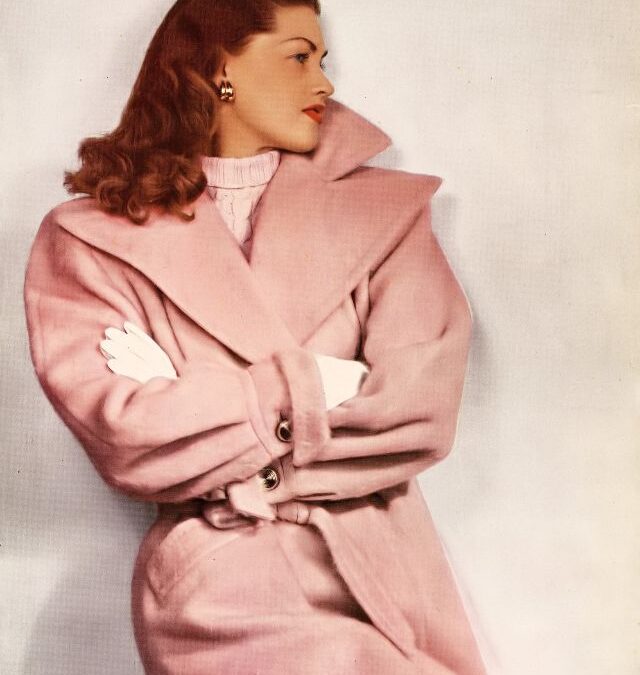
Inga Lindgren in pale pink fleecy coat of Stroock wool by Brittany, photo by Louise Dahl-Wolfe, Harper’s Bazaar, January 1946

Inga Lindgren in a fine-ribbed corduroy suit with a short jacket, balloon sleeves and snug cuffs, the skirt has well-placed pleats, by Ceil Chapman, photo by Louise Dahl-Wolfe, Harper’s Bazaar, October 1946

Inga Lindgren in sheath of gun-metal paillettes and gun-metal gloves cuffed with feathers by Traina-Norell, Kodachrome by Louise Dahl-Wolfe, Harper’s Bazaar, November 1946

Inga Lindgren in a cobalt faille gown, festooned from hip to hip, the bodice folded to a point and held by a thin strap by Charles James, photo by Louise Dahl-Wolfe, Harper’s Bazaar, October 1946

Inga Lindgren in beautifully cut gray flannel dress, gold threads lining the neck and sleeves by Jo Copeland, small gold braid hat by Chanda, jewelry by Verdura, photo by Richard Avedon, Harper’s Bazaar, October 1946

See more »

read more
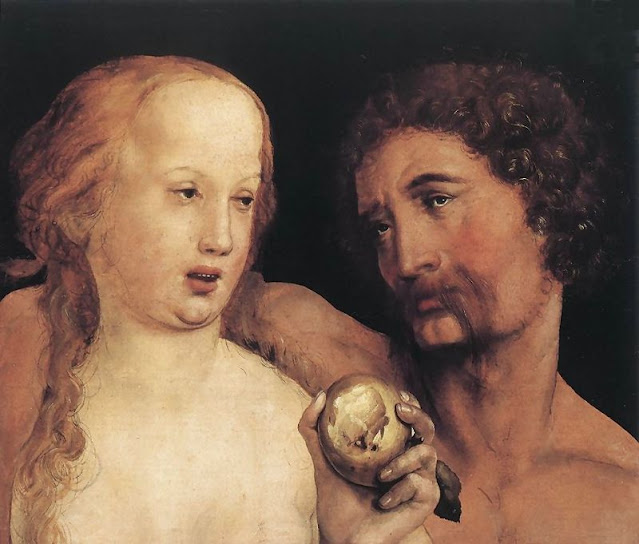
Hans Holbein the Younger: One of the Greatest Portraitists of the Northern Renaissance

Hans Holbein the Younger: One of the Greatest Portraitists of the Northern Renaissance

Hans Holbein the Younger (c. 1497–1543) was a German painter and printmaker who worked primarily in England and is regarded as one of the greatest portraitists of the Northern Renaissance. While he initially received training in Augsburg and Basel, his career reached its pinnacle in London, where he served as the King’s Painter to Henry VIII.

Holbein’s style is characterized by its extraordinary realism, precise detail, and a meticulous, almost photographic rendering of fabric, jewelry, and facial features. His most famous works include the portraits of Henry VIII, Anne of Cleves, and his striking depiction of the statesman Thomas Cromwell. His art transcended mere likeness, he often incorporated symbols and objects (anamorphosis or memento mori) into his compositions, as seen famously in The Ambassadors (1533), adding layers of intellectual depth to his masterful technique.
Holbein’s portraits remain our most vivid visual link to the powerful figures of the Tudor court.

Adam and Eve, 1517

Portrait of the Artist’s Wife, circa 1517

The Last Supper, 1524-25

Touch Me Not, 1524

Venus and Amor, 1524-25

See more »

read more
Curious Chicagoans Pack the Cook County Morgue to View the Body of Slain Fugitive John Dillinger on July 22, 1934

Curious Chicagoans Pack the Cook County Morgue to View the Body of Slain Fugitive John Dillinger on July 22, 1934

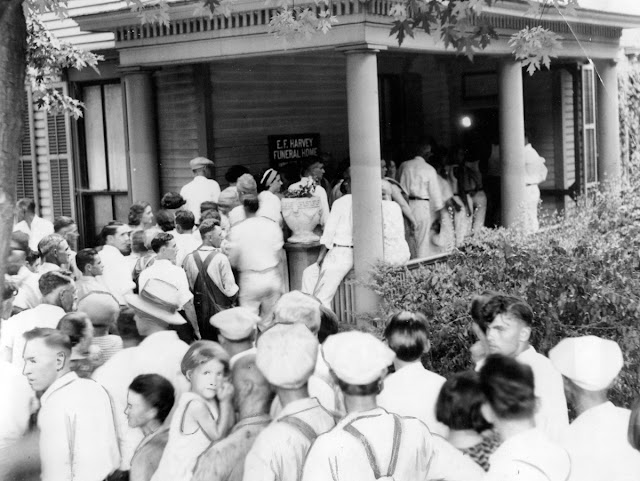
John Dillinger, one of the most notorious bank robbers in American history, was gunned down by FBI agents on July 22, 1934, outside the Biograph Theater in Chicago. Dillinger had become Public Enemy No. 1, the face of crime during the Great Depression, and a symbol of both rebellion and menace. His death sparked a frenzy among the public, turning the end of his life into a bizarre spectacle.

After news broke of his shooting, curious onlookers rushed to the crime scene. Some reportedly dipped their handkerchiefs in his blood, believing it held some sort of power or souvenir value. The fascination did not end there. Thousands descended upon the Cook County morgue to view his body. The morgue, overwhelmed by crowds, allowed people to file past Dillinger’s corpse for one final glimpse of the man who had eluded capture for months and embarrassed law enforcement with his bold prison escapes and daring heists.
People posed for photos, laughed, and treated the event like a social gathering. This scene of morbid tourism highlighted the strange celebrity status Dillinger had achieved. To some, he was a criminal menace. To others, he was a folk hero who robbed banks during an era of economic despair.
Dillinger’s death marked a turning point for the FBI. It gave the agency national credibility and helped solidify J. Edgar Hoover’s legacy. But the reaction of the public served as a chilling reminder of how infamy, even when born from violence, can captivate the American imagination.
A throng of people wait in line to view the body of slain gunman John Dillinger at the undertakers rooms in Mooresville, Indiana, in July 1934.

Betty and Rosella Nelson, along with a crowd of people, view the body of John Dillinger, 32, while in bathing suits at the Cook County morgue in Chicago. In the days after Dillinger was killed on July 22, 1934, massive crowds lined up outside the morgue to get a glimpse of the notorious public enemy.

Betty and Rosella Nelson, sisters and entertainers in Chicago, view the body of the notorious criminal John Dillinger in the morgue.

Coroner Frank J. Walsh stands next to the body of John Dillinger as a long line of people pass by on the other side of the glass panel to get a look at the famous criminal on July 23, 1934, at the Cook County Morgue.

Dillinger’s corpse at the morgue attracted crowds of onlookers in the days following his death. The photo, which shows sheet draped over Dillinger’s arm set in with rigor mortis, led to sensational interpretations by the public.

See more »

read more
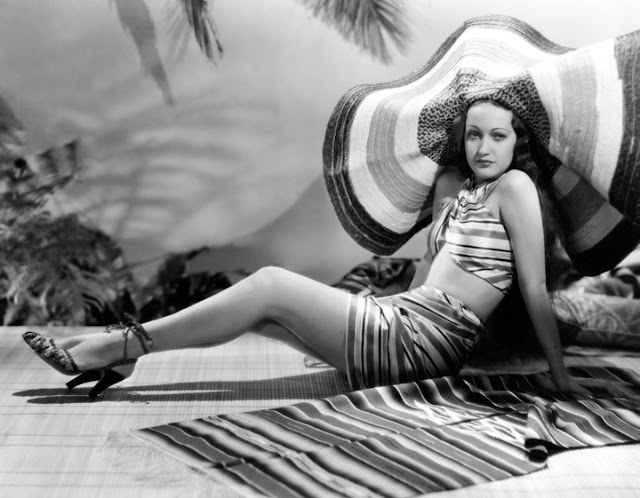
50 Gorgeous Photos of a Young and Beautiful Dorothy Lamour in the 1930s

50 Gorgeous Photos of a Young and Beautiful Dorothy Lamour in the 1930s

Born in New Orleans, Dorothy Lamour (December 10, 1914 – September 22, 1996) started her career by entering beauty pageants to support herself after leaving school in her teens. She was crowned “Miss New Orleans” in 1931. Lamour used her pageant prize money to move to Chicago and then New York, singing with the Herbie Kay Orchestra (whom she briefly married in 1935) in nightclubs and on popular NBC radio shows like the Rudy Vallée program.
Her radio work and sultry singing voice brought her to the attention of Hollywood studios, and she signed a contract with Paramount Pictures in 1936. Her breakthrough role came the same year in The Jungle Princess (1936), where she played a jungle native named Ulah and wore her signature sarong, designed by Edith Head. This role cemented her image as an exotic beauty and the “Sarong Queen,” a look that became iconic and a favorite pin-up for troops during World War II.
Throughout the rest of the decade, she starred in several more adventure films and musicals, including The Hurricane (1937) and Her Jungle Love (1938). By the end of the 1930s, she was a major star, ready for her next big phase.
Here, below is a gallery of 50 gorgeous photos of a young and beautiful Dorothy Lamour in the 1930s:

See more »

read more
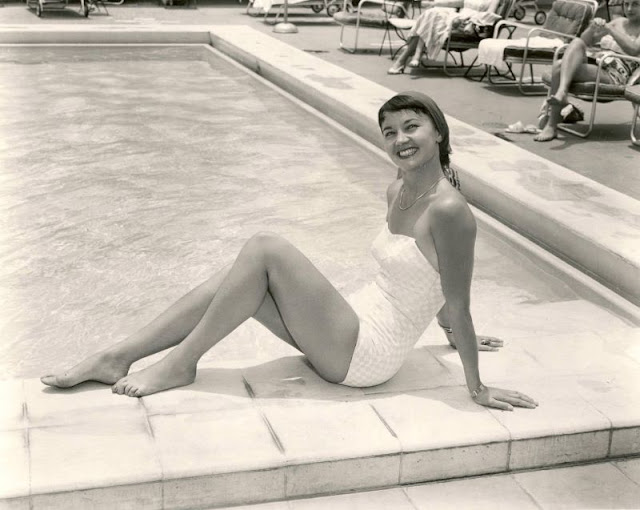
The Smiling Star: 30 Vintage Portraits of Liselotte Pulver in the 1950s and ’60s

The Smiling Star: 30 Vintage Portraits of Liselotte Pulver in the 1950s and ’60s

Liselotte Pulver is one of the most beloved and instantly recognizable Swiss-German actresses of the mid-20th century. Born in 1929, she became famous across Europe for her infectious laughter and radiant, often mischievous smile, which earned her the nickname “Lilo.”

Pulver rose to prominence in the 1950s and ’60s, starring in numerous German-language hits like Ich denke oft an Piroschka (1955), a classic that cemented her image as a charming, vivacious young woman. Her career was not limited to Europe, she also successfully crossed over into international cinema, starring opposite Hollywood giants such as James Cagney in the Billy Wilder comedy One, Two, Three (1961). In this film, her iconic, uninhibited dance on a desk remains one of her most memorable and definitive screen moments, perfectly embodying her spirited personality.
Pulver’s combination of talent, glamour, and distinctive cheerfulness made her a major cinematic figure whose influence spanned decades. Take a look at these vintage photos to see portraits of young Liselotte Pulver in the 1950s and 1960s.

See more »

read more