
Yesteryear

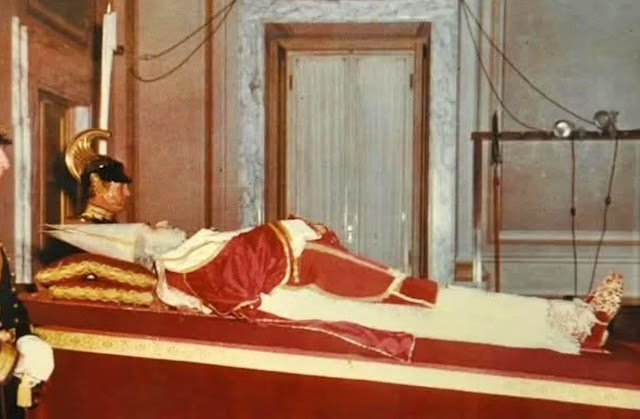
In October 1958, the Funeral for Pope Pius XII Was Ruined by a Botched Embalming

In October 1958, the Funeral for Pope Pius XII Was Ruined by a Botched Embalming

Pope Pius XII’s funeral in October 1958 was a macabre event due to a botched experimental embalming that caused his body to rapidly decompose, swell, emit a foul odor, and eventually rupture during the procession.

The Pope’s personal physician, Riccardo Galeazzi-Lisi, an ophthalmologist with no forensic experience, decided to use an experimental preservation technique that involved soaking the body in aromatic oils and wrapping it in cellophane, rather than the standard practice of removing internal organs. Pius XII had requested that his organs not be removed, in a departure from the usual procedure at the time.
The combination of the warm October weather, the lack of refrigeration, and the flawed method accelerated anaerobic decomposition. Within hours, the body began to bloat and turn a greenish-black color, emitting such an intense stench that members of the Swiss Guard fainted and had to be rotated every 15 minutes during the public viewing.
The body continued to bloat, and reports indicate his nose and fingers detached. A wax mask was eventually used to cover his face. During the funeral procession from Castel Gandolfo to Rome, built-up internal gases and heat reportedly caused his chest cavity to “explode” or “rupture” with a loud sound in front of shocked mourners and pallbearers.
The incident made global headlines and led to swift consequences. Galeazzi-Lisi was banned from practicing medicine by the Italian Medical Council, dismissed by the newly elected Pope John XXIII, and banned from Vatican City for life. In the wake of this disaster, the Vatican implemented strict new protocols for papal funerals to ensure that standard, professional embalming practices were followed in the future.

See more »

read more

Harts of the West

1 9 9 3 – 1 9 9 4 (USA) 15 x 60 minute episodes Dave Hart (Beau Bridges) is a 41-year-old underwear salesman in Chicago. He is married to Allison (Harley Jane Kozak) and he has a fascination with the Old West. He even named his children after his western heroes –  Duke (Nathan Watt) […]
read more

To Have & To Hold

1 9 9 8 (USA) 13 x 60 minute episodes Annie Cornell (Moira Kelly) and Sean McGrail (Jason Beghe) were newlyweds who lived and worked in Boston – she as a public defender for the DA’s office, and he as a police detective. This led to frequent clashes when Annie was assigned to a case that […]
read more

Martial Law

1 9 9 8 – 2 0 0 0 (USA) 44 x 45 minute episodes Shanghai detective Sammo Law (chubby former stuntman Sammo Hung) is on loan to the Los Angeles Police Department to learn American law enforcement methods and to institute a similar system upon his return home. Sammo does not believe in using guns, […]
read more
Impressive Fashion Photography by Arik Népo in the Early 1950s

Impressive Fashion Photography by Arik Népo in the Early 1950s

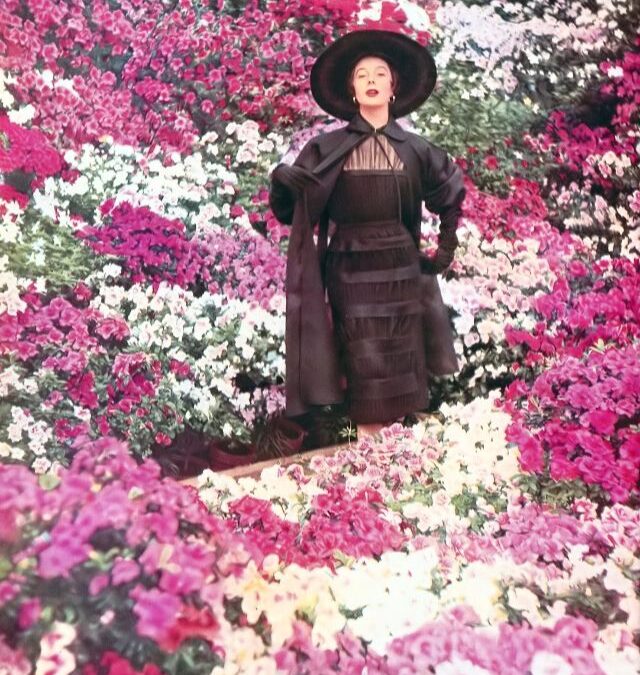
Arik Népo (1913–1961) was a prominent photographer whose work significantly contributed to the visual language of fashion and portraiture in the mid-20th century.

Born in Moscow, Népo became an active figure in the Parisian and New York photography scenes, capturing the elegance of high fashion from the 1930s through the 1950s. His images frequently appeared in prestigious publications like Vogue, featuring designs from renowned houses such as Maggy Rouff, Lucien Lelong, and Hermès.
Népo was known for his sophisticated style, which often focused on dramatic poses and precise composition to highlight the texture of the garments and the refined beauty of his subjects. His black and white gelatin silver prints are valued today as a stylistic record of post-war haute couture and the glamour of the era.
Bettina Graziani wearing a coat in Bianchini Lorganza over a tulle dress by Jean Patou, photo by Arik Nepo at the Serres de la Ville, Paris, Vogue, Paris, July/August 1950

Model wearing a natural mink cape by Lanvin-Castillo, photo by Arik Nepo, Vogue, Paris, November 1950

Model wearing a nightgown and robe by Schiaparelli, photo by Arik Nepo, Vogue, Paris, July/August 1950

Bettina Graziani wearing a beautiful white organdy dress with a multitude of braided balls that trim the tiered pleated frills by Carven, photo by Arik Nepo, Vogue, Paris, May 1950

Bettina Graziani wearing a charming dress in pink shantung embroidered with sparkling stars, her loose coat is in taffeta in the same shade, by Molyneux, photo by Arik Nepo, Vogue, Paris, May 1950

See more »

read more
Jean-Jacques Grandville: The Master of Anthropomorphic Satire

Jean-Jacques Grandville: The Master of Anthropomorphic Satire

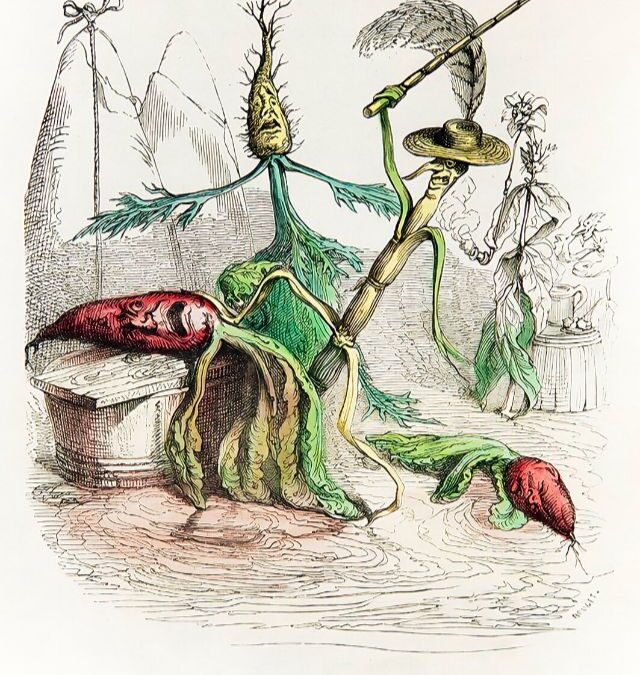
Jean-Jacques Grandville (born Jean Ignace Isidore Gérard, 1803–1847) was a highly influential French illustrator and caricaturist renowned for his elaborate, often surreal, and politically charged drawings during the Romantic era.

Grandville is best known for his mastery of anthropomorphism, depicting animals, objects, and even plants with human characteristics and poses. His work was frequently published in satirical journals of the time, such as La Caricature and Le Charivari, where he used his fantastical imagery to lampoon social mores and political figures under the July Monarchy. His most celebrated works include the illustrations for La Fontaine’s Fables and his original graphic novels, like Scènes de la vie privée et publique des animaux (Scenes from the Private and Public Life of Animals).
Grandville’s imaginative fusion of the human and animal worlds made him a precursor to Surrealism and cemented his legacy as a pivotal figure in 19th-century graphic art.
Combat de deux raffinés, Un Autre Monde, 1844

La Concurrence, Un Autre Monde, 1844

La Mode, Un Autre Monde, 1844

Pérégrinations d’une Comète, Un Autre Monde, 1844

Sol, Un Autre Monde, 1844

See more »

read more
Funny Behind the Scenes Photos of Jean Reno and Natalie Portman During the Filming of “Léon: The Professional” (1994)

Funny Behind the Scenes Photos of Jean Reno and Natalie Portman During the Filming of “Léon: The Professional” (1994)

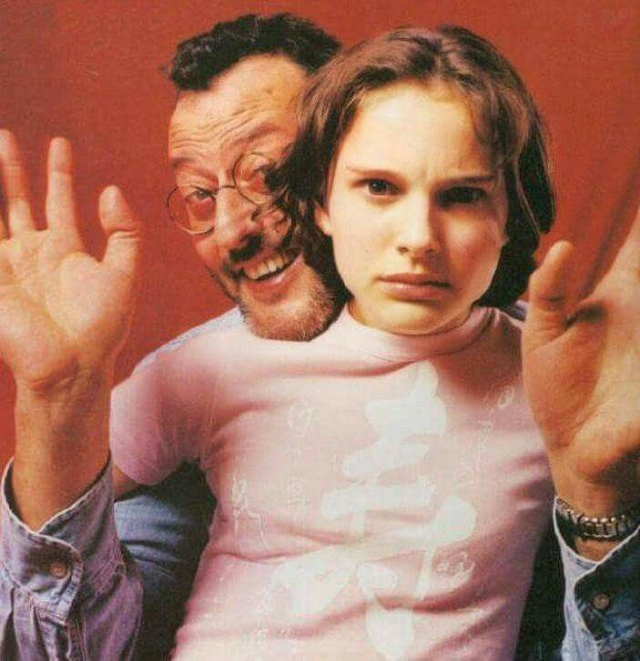
Jean Reno and Natalie Portman starred together in the critically acclaimed 1994 film Léon: The Professional (also known simply as The Professional in the US), written and directed by Luc Besson. The movie marks Portman’s film debut, in which she delivered a powerful and nuanced performance at just 12 years old.

Léon: The Professional is a French neo-noir action-thriller that follows the story of an unlikely and complex relationship. Léon (Jean Reno) is a solitary, professional hitman living in New York City. Mathilda (Natalie Portman) is a 12-year-old girl whose family is brutally murdered by corrupt Drug Enforcement Administration (DEA) agents led by the unhinged Norman Stansfield (Gary Oldman).
Mathilda takes refuge with Léon, who reluctantly takes her in. She persuades him to teach her the “hitman’s trade” so she can avenge her younger brother’s death, the only family member she truly loved. 
The film is celebrated as a cult classic, known for its strong character development, stylish direction, and emotional depth. It explores themes of loneliness, innocence, and redemption. Below are some funny behind the scenes photographs of Jean Reno and Natalie Portman during the making of Léon: The Professional:

See more »

read more
When Frogs Saved the Milk: A Russian-Finnish Tradition Backed by Science

When Frogs Saved the Milk: A Russian-Finnish Tradition Backed by Science

Long before refrigerators made life easier, rural communities in Russia and Finland faced a tricky problem, how to keep milk from spoiling. Their solution? Drop a live brown frog (Rana temporaria) into the milk jar.

This practice was common in the 19th and early 20th centuries and was a traditional, empirical method of food preservation passed down through generations. People observed that milk stayed fresh for a longer time when a frog was present, but they did not understand the underlying scientific reason.
Modern research, notably a 2012-2013 study led by Dr. Albert Lebedev at Moscow State University, investigated this folklore. Scientists discovered that the skin of the brown frog secretes potent antimicrobial peptides (natural antibiotic compounds) which inhibit the growth of bacteria and fungi that cause milk to sour.
The study confirmed that these natural compounds, such as Brevinin 1Tb, were effective at fighting off harmful bacteria like Staphylococcus and Salmonella, essentially acting as nature’s preservative.
This unusual tradition, which seems bizarre by today’s standards, was an ingenious, albeit unwitting, application of natural biochemistry that helped people preserve a vital food source in the absence of technology. 
read more
Paul McCartney and Dog Arrow on the Abbey Road Crossing for the “Paul Is Live” Album Cover Photoshoot, 1993

Paul McCartney and Dog Arrow on the Abbey Road Crossing for the “Paul Is Live” Album Cover Photoshoot, 1993

In August 1969, The Beatles gathered outside EMI Studios to walk across the zebra crossing on Abbey Road. Photographer Iain Macmillan was positioned on a stepladder in the middle of the street, equipped with a Hasselblad camera, to capture what would become the iconic cover photograph of their album Abbey Road.

Over time, fans began to spot several supposed “clues” on the album cover fueling the “Paul Is Dead” conspiracy theory, which gained momentum following the release of Abbey Road. Among them were Paul’s barefoot appearance and the license plate of the white Volkswagen Beetle in the background reading “28IF,” interpreted by some to mean Paul would have been 28 if he were still alive.
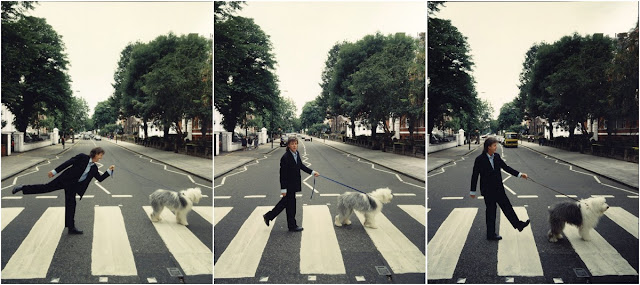
On July 25, 1993, Paul McCartney and Iain Macmillan were back at Abbey Road to recreate the iconic image for his album Paul Is Live. This time, Paul was wearing shoes and accompanied by Arrow, his Old English sheepdog and the offspring of Martha, the dog he famously owned during the 1960s.
“‘Paul is Live’! Well, that’s why we did the cover on the Abbey Road crossing with my little doggie,” McCartney said. “This rumour had come out; it was an American DJ that had started it. And because I was barefoot in the original Abbey Road crossing picture, which really was because it was a very hot day. And I had arrived wearing sandals and kicked them off for a couple of the shots. And one of the shots we used was me without the sandals. So, you know, in those days people were going, ‘Why has he got bare feet?’ Whereas I would say, ‘It was probably hot and he probably took his sandals off!’ If you’re looking for conspiracies, apparently it was some old mafia thing about being barefooted!”
The 1993 photograph was digitally superimposed over the original 1969 image. Notably, the Beetle’s license plate was altered to read “51 IS,” referencing Paul’s age at the time.
The front cover of the album Paul Is Live.

Excerpted from his shows in Australia, as well as from various cities in the United States, Paul Is Live followed McCartney’s previous live album Tripping the Live Fantastic by only three years. It became his lowest-selling live album, peaking at number 34 in the UK and number 78 in the US.

See more »

read more

Life and Times of Eddie Roberts

1 9 8 0 (USA) 65 x 30 minute episodes Premiering on 7 January 1980, Renny Temple starred in this half-hour nightly syndicated soap opera-style comedy series as Eddie Roberts, an assistant professor of anthropology scrambling for tenure at Cranepool University, a small California college. His wife, Dolores (Udana Power), was an aspiring major-league ball player. […]
read more