

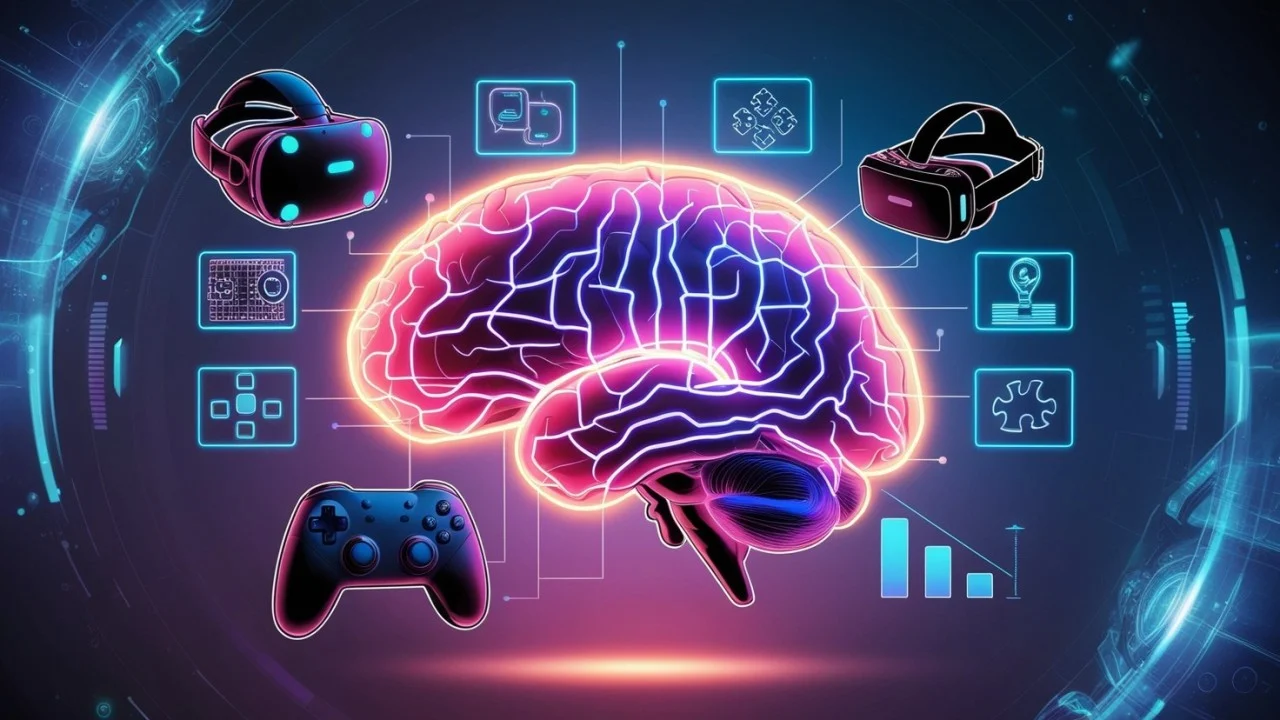
You have probably started playing a game for just twenty minutes, only to look up and realize three hours have passed. This happens to almost everyone who plays video games, and it is not an accident. Game psychology engagement is a carefully designed science that game developers study for years. They know exactly which buttons to push to keep you playing longer. Let me explain how game developers use psychology to increase engagement, sometimes without you even noticing what is happening.
Think of a video game as a well designed trap that your brain walks into willingly. Every level, every reward, and every notification is tested and optimized for one purpose. The goal is not just to make you play once, but to make you return daily. How game developers keep players hooked involves understanding human behavior better than most psychologists do. The tricks work because they target fundamental flaws in how our brains process effort, reward, and progress.
The Variable Reward System That Keeps You Playing
Video game engagement psychology starts with variable rewards, which are unpredictable payoffs that keep your brain interested. A reward that appears every time quickly becomes boring, but random rewards create anticipation and excitement that feel much stronger emotionally.
Loot boxes, random drops, and mystery rewards use this exact system to keep players engaged. Your brain stays alert because it never knows when the next valuable item will appear. Similar mechanics are also common in online entertainment platforms, where systems like Wanted Win Casino use bonuses, rewards, and uncertainty to maintain excitement and interaction.
Here is how variable rewards affect your brain during gameplay:
- Dopamine releases during anticipation
- Your brain craves uncertainty
- Small rewards maintain hope
- Rare rewards always feel possible
This unpredictability keeps players emotionally invested, because the brain constantly searches for patterns and future rewards that never feel completely out of reach.
The Progression Systems That Fake Productivity
Player retention psychology games include progression systems that make you feel like you are achieving something. Every click fills a bar, every kill gives experience points, every task moves you closer to the next level. These systems turn playing a game into feeling productive. You are not wasting time, you are making progress toward a goal.
A progress bar is one of the most powerful psychological tools in game design. Seeing a bar fill up triggers a sense of accomplishment, even for trivial tasks. Your brain releases dopamine when you complete a section, regardless of its importance. How game developers keep players hooked includes making sure you always have a progress bar to fill.
Here is what progression systems do to your motivation:
- They give you clear goals that feel achievable
- They provide constant feedback about your advancement
- They make you feel like quitting would waste your progress
- They create a sense of momentum that is hard to break
The sunk cost fallacy works powerfully with progression systems. You have invested twenty hours into a character, so leaving feels like wasting that time. The game has not changed, but your investment makes you stay. This is why experienced players are the most loyal players.
Loss Aversion and Daily Rewards
Game psychology engagement includes loss aversion, the discovery that losing hurts twice as much as winning feels good. Game developers use this by creating daily login bonuses that disappear if you miss a day. You are not playing because you want the reward, but because you fear losing it. This small fear of loss keeps you logging in every single day.
Here is how daily rewards use loss aversion against you:
Video game engagement psychology makes the seventh day reward feel essential. You have already invested six days, so missing the seventh feels like wasting that effort. The reward might be small, but your perceived loss is large. This keeps you coming back even when you do not want to play.
The IKEA Effect and Character Customization
The IKEA effect is your tendency to value things more when you helped create them. Game developers use this by letting you customize your character, build your base, or design your loadout. Game design psychological tricks include giving you choices that feel meaningful, even when they are purely cosmetic. Your customized character feels more valuable than a default one, so you are less likely to abandon it.
Here is why customization increases player retention:
- You invest time in creating something unique
- Your choices reflect your personality and taste
- The result feels like an extension of yourself
- Abandoning the game feels like abandoning your creation
Social Proof and What Other Players Are Doing
How game developers keep players hooked includes showing you what other players are achieving. Leaderboards, achievement feeds, and friend activity all serve as social proof. Seeing others succeed makes you want to succeed too. Seeing others play makes you feel like you are missing out.
Multiplayer games are especially effective at using social pressure. Your friends are online, so you should join them. Your guild is raiding, so you should be there. Your teammates are counting on you, so you cannot let them down. Why games are so addictive is that they turn playing into a social obligation rather than a choice.
Fear of missing out, or FOMO, drives engagement in live service games. Limited time events, seasonal rewards, and rotating shops all create urgency. You must play now, or you will miss something forever. This urgency bypasses your rational decision making and triggers impulsive play.
Here is how FOMO affects your gaming behavior:
- Limited time events force you to play on the game’s schedule
- Seasonal rewards lose value if you start late
- Exclusive items become status symbols among players
- Your friends talking about events makes you feel left out
The Endowment Effect and Digital Collections
The endowment effect is your tendency to overvalue things you already own. Game developers use this by giving you free items, starter packs, and participation rewards. Once you own something, even a digital sword, you value it more than an identical item you do not own. Player retention psychology games turn this into a reason to keep playing.
Your collection of skins, cards, or characters becomes valuable to you. Losing access to that collection would feel like a real loss. The game might be free, but your emotional investment keeps you returning. This is why cosmetic microtransactions are so effective, they give you something to lose.
The Zeigarnik Effect and Unfinished Quests
The Zeigarnik effect is your brain’s tendency to remember unfinished tasks better than completed ones. Game developers use this by giving you dozens of partially completed quests. Your brain keeps reminding you about them, even when you are not playing. Game psychology engagement turns this into a reason to log back in.
Here is what the Zeigarnik effect does to your gaming experience:
- Unfinished quests linger in your memory between sessions
- Your brain creates a feeling of tension until they are complete
- Completing them provides relief and satisfaction
- This relief becomes associated with playing the game
Notice how games always give you a new quest immediately after finishing one. They never let you reach a state of complete accomplishment. There is always one more task, one more level, one more reward. This constant state of near completion keeps you playing indefinitely.
Why Developers Study These Principles So Carefully
Video game engagement psychology is not a side project but the core of modern game design. Developers track exactly how long players stay, where they quit, and what brings them back. They run A/B tests on reward timing, difficulty curves, and social features. Every change is measured against player retention, because retention equals revenue.
Most entertainment industries do not study psychology this deeply. A movie studio does not track how often you rewatch scenes. A music label does not study why you skip certain songs. But game developers must keep you engaged for hundreds of hours. This is why how game developers keep players hooked is a science, not guesswork.
The game industry hires psychologists, neuroscientists, and behavioral economists. They study addiction, motivation, and habit formation. Their work is not hidden, it is openly discussed at industry conferences. Understanding these principles helps you recognize when a game is manipulating your behavior.
FAQ
1. Why do games use variable rewards instead of fixed rewards?
Fixed rewards become predictable and boring, causing players to lose interest quickly. Variable rewards create uncertainty that keeps the brain engaged and alert. The dopamine system responds more strongly to unpredictable rewards than predictable ones. This is why loot boxes and random drops are more engaging than guaranteed rewards.
2. How do daily login bonuses keep players coming back?
Daily bonuses exploit loss aversion, your fear of losing something you could have. Missing a day means losing the streak and the accumulated rewards. The rewards themselves are often small, but the perceived loss feels large. This fear of missing out is powerful enough to change your daily behavior.
3. What makes progression systems so effective at retention?
Progression systems make you feel productive and accomplished while playing. Every action fills a bar or earns experience points toward a clear goal. The constant feedback creates a sense of momentum that is hard to break. Quitting feels like wasting all the progress you have already made.