

By Sprite Gravier
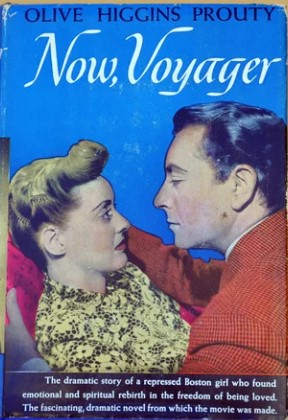
If you think Now, Voyager is just another Hollywood melodrama with grand declarations of love, cigarette-sharing symbolism, and Bette Davis at her most luminous, think again. At its core, this is a story about transformation—about finding oneself against all odds and reclaiming a life long thought lost. It is as much about breaking free as it is about falling in love. And if you’re wondering whether the book or film tells it best, the answer is simple: read it, watch it, and decide for yourself.
Olive Higgins Prouty’s 1941 novel unfolds with psychological nuance that few books of its era dared explore. Charlotte Vale—timid, emotionally battered, and suffocating under the weight of her mother’s tyranny—doesn’t simply emerge into the world overnight. Her self-actualization is a painstaking process, full of setbacks and epiphanies. The book allows readers to sit with her thoughts, feel the depth of her anxieties, and experience the slow-burning realization that life is hers to claim. The story doesn’t rush her transformation, nor does it frame it solely through the lens of romance. Instead, it follows Charlotte’s internal evolution—one rooted in psychological realism, emotional resilience, and the quiet victories of self-worth.
Then came the 1942 film adaptation starring Bette Davis, and suddenly Now, Voyager wasn’t just a novel—it was a cultural phenomenon. The film distilled Charlotte’s journey into something visually arresting, emotionally potent, and undeniably cinematic. The dialogue sings with impact, culminating in that legendary closing line: “Don’t let’s ask for the moon. We have the stars.” The romance between Charlotte and Jerry (Paul Henreid) is heightened, making him more central to her story than he is in the book. Does it lean more into the melodrama? Certainly. Does it lose some of the novel’s introspection? Without a doubt. But what it sacrifices in complexity, it makes up for in sheer emotional weight.
While Prouty’s novel provides a richer psychological portrait of Charlotte, the film transforms her journey into a sweeping cinematic experience. The brilliance of Davis’s performance lies in her ability to convey not just Charlotte’s external transformation—the change in clothes, posture, and hairstyle—but her emotional rebirth. From her first hesitant steps into independence to the powerful moment when she rejects societal expectations in favor of self-worth, Davis ensures Charlotte’s story resonates far beyond the screen.
The differences between the two versions are profound, particularly in tone. The novel’s introspective nature allows Charlotte’s growth to feel deeply personal. Her toxic relationship with her mother is explored in excruciating detail, making her eventual freedom all the more triumphant. The film, while effective, streamlines this aspect. The tension between mother and daughter is present, but it doesn’t linger in the same psychological depths. Instead, the romance between Charlotte and Jerry takes precedence, framing her transformation through the lens of love rather than personal empowerment.
So, which version tells the story best? That depends on what you seek from Now, Voyager. If you want depth, introspection, and a character study that explores emotional resilience with psychological realism, the novel is a masterpiece of personal growth. If you want grand cinematic moments, heightened drama, and an unforgettable performance that brings Charlotte’s rebirth to life with visual poetry, the film delivers an experience that remains powerful decades later.
But don’t just take my word for it. Reviews from the novel’s original 1941 release praised Prouty’s handling of mental health and self-discovery—though you’ll have to dig through archival sources like the Library of Congress and newspapers of the time to find them. The film, released in 1942, was instantly recognized for Davis’s powerhouse performance and remains one of classic Hollywood’s most beloved dramas. Rotten Tomatoes and Frank’s Movie Log offer a glimpse into its legacy, but there’s no substitute for experiencing it firsthand.
In the end, Now, Voyager is more than just a book or a film—it’s a testament to personal reinvention, the battle for self-acceptance, and the freedom to shape one’s own destiny. Whether you choose the novel’s quiet depth or the film’s soaring drama, Charlotte Vale’s journey remains an unforgettable one. And isn’t that what makes stories worth telling? ♦