

I claim no expertise whatsoever in Hawaiian art (and I declare an interest as I am a trustee of the British Museum). But the Museum’s new exhibition, “Hawai‘i: a kingdom crossing oceans”, of which I have just had a preview, is an eye-opener. It is not just the extraordinary ceremonial cloaks made of feathers (or the feather helmet above); it is also the active collaboration between the exhibition organizers and Hawaiian artists and scholars. It is that the show is asking you to see the works on display from different perspectives, and from different places and standpoints.
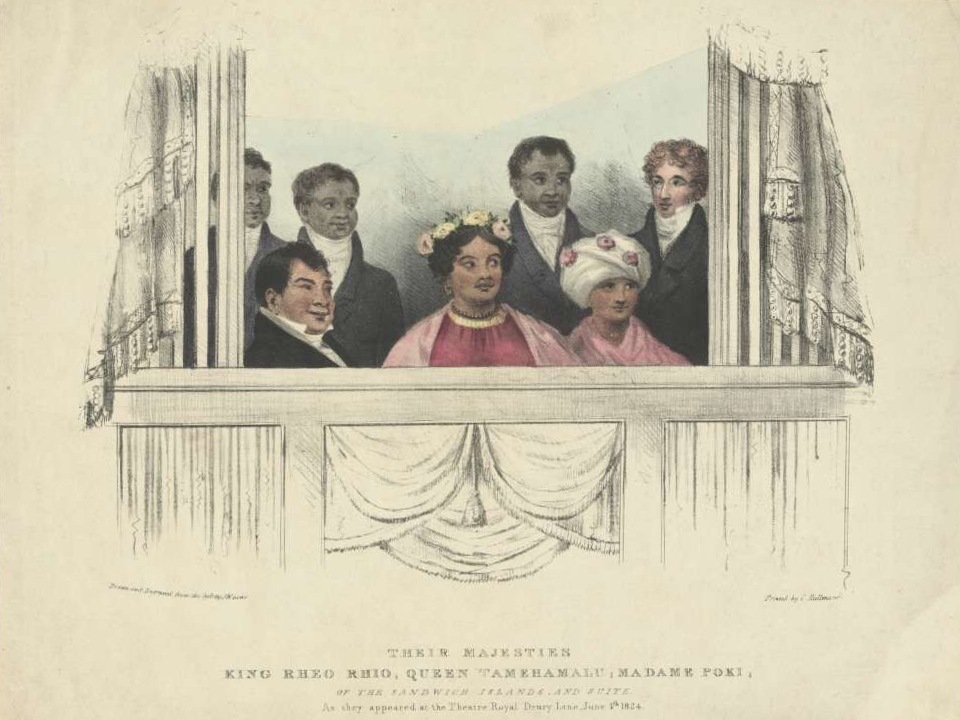
But there are two things (a story and a pair of exhibits) that I shall particularly take away. The story goes back to the early nineteenth century, when the young rulers of Hawaii, King Liholiho and Queen Kamāmalu, came to London to strengthen their ties with George IV. It took them almost six months to get here, and when they arrived, they were greeted with a mixture of curiosity, racism and admiration. They went to receptions, to the theatre and opera, but still had not yet met the King when they both caught measles and died. They then lay in state, their bodies visited by crowds of Londoners, before George – a little belatedly, perhaps – authorized a Royal Navy ship to take them back home. I’d never come across this sad story before (a forgotten piece of imperial history) but the exhibition is partly centred around their visit and death.
The pair of objects is a ceremonial Hawaiian feather cloak on show next to a dress cloak that had belonged to George IV. The fact is that ceremonial power-dressing often has much in common the world over, but we still tend to treat foreign, and especially far-flung, ceremonial dress as if it were over-the-top and slightly weird (unlike “ours”, which we tend to take for granted). My husband always used to say this when the British press ridiculed photographs of President Gaddafi, dressed in a military uniform loaded with medals given for campaigns in which he had never fought. This is not to defend Gaddafi, but on reflection such a display of gongs is not all that different from that of our own royal family.
The nineteenth-century British cartoons in the exhibition certainly thought they had found an easy target in Hawaiian dress: xenophobia bordering on racism. But the juxtaposition of the feather cloak and the British royal dress cloak nicely gave the lie to that. There may have been a difference of material, but – that apart – there was not much to choose between them. In both cases, royalty displayed itself by wearing gloriously impractical swathes of red (and gold).
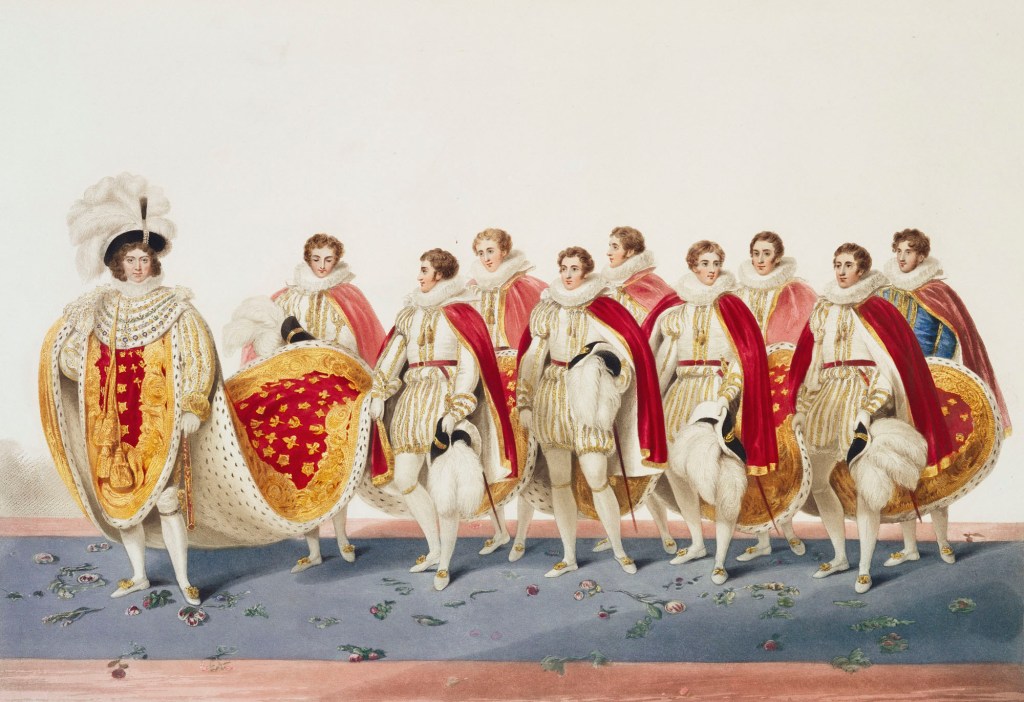
As with the line-up of medals, one of the things that different cultures help us to recognize is the weirdness of our own.
The post Hawaii at the British Museum appeared first on TLS.