

By Sprite Gravier for The Vulgarian
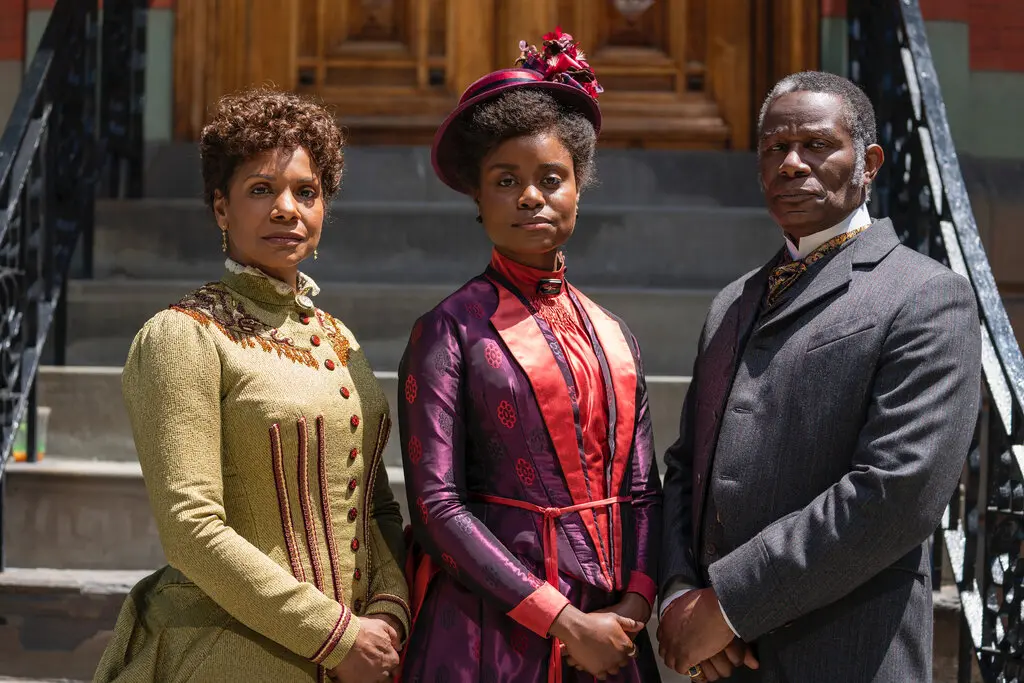
HBO’s The Gilded Age isn’t just corsets and robber barons—it’s a velvet-gloved slap in the face of historical erasure. While Julian Fellowes is best known for Downton Abbey and his obsession with white aristocratic angst, this series dares to ask: What if Black people had money, power, and social standing in the 1880s—and what if they were just as snobby, strategic, and status-obsessed as their white counterparts?
Spoiler: They were. And they still are.

Courtesy of The Library of Congress
Who Were These Wealthy Black Americans?
The show’s depiction of Peggy Scott’s family—her father a successful pharmacist, her mother a cultured pianist—is rooted in historical reality. The Black elite of the Gilded Age were real, and they were fabulous. They included:
– Thomas Downing, the “New York Oyster King,” who ran an upscale oyster house frequented by the city’s elite
– Pierre Toussaint, a formerly enslaved Haitian who became a sought-after hairdresser and philanthropist in NYC
– Mary Ellen Pleasant, a self-made millionaire in San Francisco who funded abolitionist causes
These weren’t anomalies—they were part of a small but powerful class of Black Americans who owned businesses, property, and social capital. Many were descendants of freed slaves, but some—like Phylicia Rashad’s character Elizabeth Kirkland—came from families who had never been enslaved.
Old Money vs. New Money: The Black Edition
The central tension of The Gilded Age—old money vs. new money—is mirrored within Black society. Elizabeth Kirkland looks down on Peggy Scott not because she’s uneducated or uncouth, but because her father was formerly enslaved. The horror! The scandal! The melanin!
This isn’t just classism—it’s colorism, elitism, and generational snobbery wrapped in lace gloves and polite disdain. As Julian Fellowes put it:
“It’s important to remember that every community has its own snobberies, its own separations, its own divisions. To believe otherwise is a myth.”
Phylicia Rashad’s Elizabeth is the Black Mrs. Astor—guarding the gates of Newport’s Black aristocracy with a side-eye sharp enough to cut diamonds. Her disdain for Peggy’s outspokenness, ambition, and darker skin tone is a masterclass in internalized racism.
Why This Matters Today
The show’s depiction of Black wealth and intra-racial class tension isn’t just historical—it’s painfully current. The legacy of respectability politics, colorism, and class gatekeeping still shapes Black communities today.
As actor Jordan Donica (Dr. Kirkland) said:
“Exploring [colorism] in the 1800s, I think, will help our audience have the tools to have that conversation today.”
The show doesn’t just depict Black excellence—it interrogates it. It asks: Who gets to be “our kind of people”? And what does it cost to belong?
Enter: Our Kind of People by Lawrence Otis Graham
This 1999 book is the Rosetta Stone of Black aristocracy. Graham, himself a member of the elite, spent six years interviewing wealthy Black families across the U.S. He documented:
– Debutante balls, Martha’s Vineyard summers, and Ivy League legacies
– Membership in exclusive clubs like The Links, Jack & Jill, and Boule
– Obsessions with skin tone, pedigree, and “the right kind of Blackness”
It’s the nonfiction counterpart to The Gilded Age—and it’s just as juicy. Graham’s work was controversial, exposing the elitism and exclusion within Black high society. But it also validated a history that had long been ignored.
What Can We Learn?
– Representation matters—but nuance matters more.
This isn’t just about showing Black wealth. It’s about showing its contradictions, its costs, and its complexity.
– History isn’t flat.
The Black experience isn’t just slavery and struggle—it’s also ambition, legacy, and yes, snobbery.
– Art can provoke uncomfortable truths.
Fellowes and co-writer Sonja Warfield didn’t sanitize the Black elite—they dramatized it. And in doing so, they gave us a mirror.
Final Thought:
The Gilded Age doesn’t just gild the lily—it gilds the wound. It shows us that class warfare isn’t just between rich and poor—it’s within communities, within families, within ourselves.
And if you think this is just a costume drama, darling, you’re missing the plot. ♦
 The Vulgarian is a recurring column from Creative Underworld that blends cultural critique with soap-operatic drama, biting wit, and unapologetic truth-telling. Written by Sprite Gravier, the series explores art, media, history, and identity through a lens that’s equal parts satirical and soulful. It’s where highbrow meets lowbrow, where respectability gets roasted, and where the messy beauty of being human is laid bare—in sequins, sarcasm, and self-awareness.